
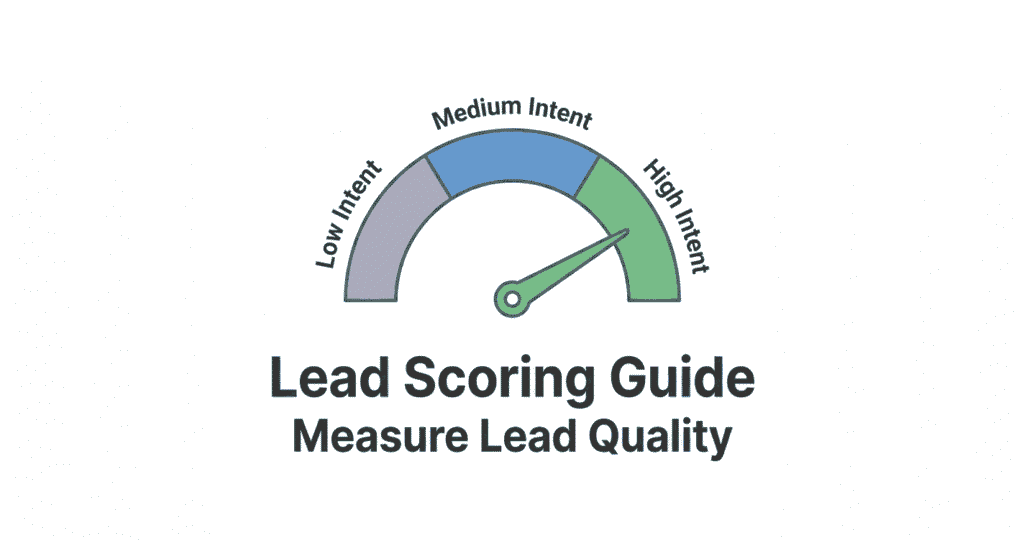
Lead Scoring for Small Business Sales Teams: A Simple Guide to Close More Deals
What is Lead Scoring?
Lead scoring is a method used to rank and prioritize potential customers based on how likely they are to become paying clients.
Instead of treating every lead the same, businesses assign numerical values (points) to each lead based on their behavior, interest level, and profile fit.
👉 This helps your sales team focus on high-quality leads first, rather than wasting time on unqualified prospects.
Why Lead Scoring is Important
Without lead scoring:
- Sales teams chase every lead blindly
- Time is wasted on low-quality prospects
- High-intent leads may get ignored or delayed
With lead scoring:
✅ You prioritize leads who are ready to buy
✅ You respond faster to high-value prospects
✅ You increase conversion rates
✅ You align marketing and sales efforts
👉 In simple terms: Lead scoring turns guesswork into a clear system
How Lead Scoring Works
Lead scoring works by assigning points based on two key factors:
1. Behavior (What the Lead Does)
These are actions that show interest:
- Visiting your website
- Checking your pricing page
- Opening or clicking emails
- Downloading a resource
- Requesting a demo
👉 The more engaged a lead is, the higher their score.
2. Profile (Who the Lead Is)
These are attributes that define fit:
- Job role (decision-maker vs intern)
- Company size
- Industry relevance
- Location
👉 A perfect-fit customer gets higher points.
Simple Insight:
A lead who fits your ideal customer profile AND shows interest = highest chance to convert.
📊Real Example of Lead Scoring
Here’s how a simple scoring system might look:
- Visited your pricing page → +10 points
- Opened your email → +5 points
- Clicked a link → +8 points
- Requested a demo → +20 points
- Unsubscribed from emails → -15 points
👉 Higher score = higher buying intent
Lead Scoring in Action
Let’s say you have two leads:
Lead A:
- Opened emails
- Visited homepage
👉 Score: 10–15 → Low interest
Lead B:
- Visited pricing page
- Clicked multiple emails
- Requested demo
👉 Score: 40+ → High intent
Who should your sales team contact first?
👉 Lead B (because they’re closer to making a decision)
What Most Beginners Miss
Lead scoring is not just about assigning points—it’s about understanding buying intent.
Many beginners:
- Focus only on actions (clicks, opens)
- Ignore whether the lead is actually a good fit
👉 But the real power comes from combining:
- Interest (behavior)
- Fit (profile)
Simple Lead Scoring Formula
You can think of it like this:
👉 Lead Score = Interest Level + Customer Fit
- High interest + High fit → 🔥 Hot Lead
- Low interest + High fit → 🟡 Needs nurturing
- High interest + Low fit → ⚠️ Not ideal
- Low interest + Low fit → ❌ Ignore
Final Takeaway
Lead scoring helps you stop guessing and start prioritizing.
Instead of asking:
❓ “Which lead should I contact?”
👉 You already know:
✔️ Focus on leads with the highest score
✔️ Nurture the rest
To turn high-scoring leads into actual conversations, learn how to reach out effectively in our Cold email outreach guide for beginners.
🔍Why Lead Scoring Matters for Small Business Sales Teams
Small business sales teams often work with limited time, fewer resources, and high pressure to close deals.
Chasing every lead equally is not just inefficient—it can actually hurt your sales performance.
👉 This is where lead scoring becomes a game-changer.
The Real Problem Small Teams Face
Without lead scoring:
- You spend time on low-quality or unready leads
- High-intent prospects are missed or contacted too late
- Sales efforts become inconsistent and unpredictable
- Marketing and sales teams work without alignment
👉 Result: Lower conversions and wasted effort
How Lead Scoring Solves This
Lead scoring gives your team a clear system to prioritize and act fast.
1. Focus on High-Intent Leads First
Not all leads are ready to buy.
Lead scoring helps you instantly identify:
- People visiting pricing pages
- Leads requesting demos
- Users actively engaging with emails
👉 These are your hot leads—contact them first.
2. Save Time and Increase Efficiency
Instead of guessing who to contact:
- Your team follows a priority list
- Less time wasted on cold leads
- More time spent on closing deals
👉 This is critical for small teams with limited bandwidth.
3. Improve Conversion Rates
When you reach out to the right lead at the right time:
- Conversations become easier
- Objections are fewer
- Closing rates improve
👉 Timing + relevance = higher conversions
4. Align Marketing and Sales
Lead scoring creates a shared system between teams:
- Marketing generates and nurtures leads
- Sales focuses only on qualified leads
👉 No more confusion about:
- “Which leads are good?”
- “When should sales step in?”
5. Make Data-Driven Decisions
Instead of relying on intuition:
- You use real behavior and data
- You track what actions lead to conversions
- You continuously improve your strategy
👉 This turns your sales process into a repeatable system
Real Insight (What Actually Happens Without It)
Many small businesses:
- Reply late to high-intent leads
- Waste time on uninterested prospects
- Lose deals to faster competitors
👉 Lead scoring fixes this by helping you act at the right moment
Simple Before vs After
Without Lead Scoring:
- Random follow-ups
- Low conversion rate
- High effort, low return
With Lead Scoring:
- Prioritized outreach
- Faster response time
- Higher ROI from the same leads
Final Takeaway
Lead scoring is not just a “nice-to-have”—it’s essential for small sales teams.
👉 Instead of asking:
“Which lead should I contact?”
You already know:
✔️ Focus on the highest-scoring leads
✔️ Nurture the rest strategically
Lead Scoring vs No Lead Scoring: What’s the Real Difference?
If you’re unsure whether lead scoring is worth it, this comparison makes it clear.
👉 The difference is not just about process—it directly impacts your sales efficiency, conversions, and growth.
Lead Scoring vs No Lead Scoring
| Without Lead Scoring ❌ | With Lead Scoring ✅ |
|---|---|
| Random follow-ups | Prioritized outreach |
| Equal focus on all leads | Focus on high-intent leads |
| Wasted time on poor leads | Efficient use of time |
| Inconsistent conversions | Predictable sales process |
| Slow response to hot leads | Faster response to hot leads |
| No clear lead stages | Defined cold, warm, hot leads |
| Guesswork decisions | Data-driven decisions |
🚫What Happens Without Lead Scoring
When you don’t use lead scoring:
- You treat all leads the same
- High-value prospects get delayed responses
- Low-quality leads consume your time
- Your sales process becomes reactive, not strategic
👉 Result: Lower conversions and missed opportunities
✅What Changes When You Use Lead Scoring
With a proper lead scoring system:
- You instantly identify high-intent leads
- Your team knows exactly who to contact first
- Follow-ups become structured and consistent
- You close deals faster with less effort
👉 Result: Higher efficiency and better ROI
Real Insight (What Actually Makes the Difference)
The biggest shift is this:
👉 Without lead scoring → You chase leads
👉 With lead scoring → You attract and prioritize the right leads
📊 Simple Example
- Without scoring:
You contact 10 random leads → 1 converts - With scoring:
You contact top 3 high-scoring leads → 1–2 convert
👉 Same effort, better results
Final Takeaway
Lead scoring is not just an optimization—it’s a competitive advantage.
👉 It helps you:
- Focus on the right opportunities
- Respond at the right time
- Close more deals with less effort
To see how this works in real scenarios, check our real-life lead scoring example section below.
☑️When Should You Start Using Lead Scoring?
Not every business needs lead scoring from day one—but if you’re starting to feel overwhelmed managing leads, it’s probably time.
👉 This section helps you quickly decide when lead scoring becomes necessary.
Signs You Need Lead Scoring
If you relate to any of these, you should start using lead scoring immediately:
1. You’re Getting 10+ Leads Per Week
When lead volume increases, it becomes harder to track and prioritize manually.
👉 Without a system:
- You may miss high-quality leads
- Follow-ups become inconsistent
Insight:
Even a simple scoring system helps you stay organized and focused
2. Your Follow-Ups Feel Messy or Random
If your sales process looks like this:
- Random emails
- Delayed responses
- No clear priority
👉 You’re losing potential deals.
Insight:
Lead scoring creates a clear follow-up structure, so you know who to contact and when.
3. Your Conversion Rates Are Inconsistent
If some weeks you close deals and others you don’t, the issue is often:
👉 You’re not focusing on the right leads at the right time Insight:
Lead scoring helps you identify high-intent leads, improving consistency.
If you want to improve how your emails land in inboxes, check our Complete Email warm-up and deliverability guide.
4. You’re Spending Too Much Time on Low-Quality Leads
Many small businesses:
- Reply to every lead equally
- Spend time on uninterested prospects
👉 This reduces efficiency and slows growth.
Insight:
Lead scoring helps you filter out low-value leads and focus on those that matter.
5. You Don’t Have a Clear Sales Process
If you’re unsure:
- When to follow up
- Which leads to prioritize
- How to categorize leads
👉 You need a structured system.
Insight:
Lead scoring brings clarity and consistency to your sales workflow.
Quick Decision Guide
👉 Start using lead scoring if:
- You have consistent lead flow
- You struggle to prioritize leads
- You want to improve conversions
👉 You can wait if:
- You get very few leads
- You handle everything manually without issues
Final Takeaway
You don’t need to wait until things get complicated.
️️🌐How Lead Scoring Works
Lead scoring works by assigning points based on who the lead is and how they behave.
👉 The goal is simple:
Identify which leads are most likely to convert so your sales team can act faster and smarter.
The Two Core Factors of Lead Scoring
To build an effective system, you need to evaluate every lead based on:
- 👤 Demographic Data (Fit)
- 📈 Behavioral Data (Interest)
👉 The best leads score high in both.
1. Demographic Data (Who They Are)
Demographic data helps you understand whether a lead is a good fit for your business.
What to Look At:
- Job Title → Decision-maker vs employee
- Company Size → Small business vs enterprise
- Industry → Relevant vs irrelevant market
- Location → Target region vs non-target
How It Works in Practice
You assign higher points to leads that match your ideal customer profile (ICP).
Example Scoring:
- CEO / Founder → +15 points
- Marketing Manager → +10 points
- Intern / Student → +2 points
- Target industry → +10 points
- Non-relevant industry → 0 points
Real Insight
Many beginners make this mistake:
👉 They focus only on activity (clicks, opens)
👉 But ignore whether the lead can actually buy
⚠️ Example:
- A student downloading your content = high activity
- But low buying potential
👉 That’s why fit matters as much as interest
2. Behavioral Data (What They Do)
Behavioral data shows how interested a lead is in your product or service.
What to Track:
- Website visits
- Pricing page views
- Email opens & link clicks
- Resource downloads (PDFs, guides)
- Demo or contact requests
How It Works in Practice
You assign points based on engagement level and intent.
Example Scoring:
- Visited homepage → +5 points
- Visited pricing page → +15 points
- Opened email → +5 points
- Clicked email link → +10 points
- Requested demo → +25 points
Real Insight
Not all actions are equal.
👉 A demo request is far more valuable than:
- A blog visit
- An email open
So your scoring should reflect intent, not just activity
Real Walkthrough Example
Let’s compare two leads:
👨🏻💼Lead A (High Fit, Low Activity)
- CEO of a relevant company → +15
- Visited homepage → +5
👉 Total Score: 20 (Warm Lead)
👩💼Lead B (Medium Fit, High Activity)
- Marketing Executive → +10
- Visited pricing page → +15
- Clicked email → +10
- Downloaded guide → +10
👉 Total Score: 45 (Hot Lead)
Who should you contact first?
👉 Lead B (higher engagement + clear buying signals)
The Key Formula (Simple & Powerful)
Think of lead scoring like this:
👉 Lead Score = Fit (Demographic) + Interest (Behavioral)
Lead Types Based on Score:
- 0–20 → Cold Leads ❄️
- 21–40 → Warm Leads 🌤️
- 41+ → Hot Leads 🔥
What Actually Works (Practical Tip)
For small businesses, don’t overcomplicate:
- Start with 5–7 key scoring rules
- Focus on high-impact actions (pricing visits, demos)
- Adjust scores based on real results
👉 Simple systems perform better than complex ones.
Final Takeaway
Lead scoring works best when you combine:
✔️ Right audience (fit)
✔️ Right timing (behavior)
👉 This helps your team:
- Contact the right people
- At the right time
- With the right message
🧮 Lead Scoring Models (Which One Should You Use?)
Not all businesses use the same lead scoring method. The right model depends on your team size, tools, and sales process.
👉 Let’s break down the most effective lead scoring models for small businesses.
1. Rule-Based Lead Scoring (Best for Beginners)
This is the simplest and most commonly used model.
You manually assign points based on:
- Lead behavior (clicks, visits, downloads)
- Lead profile (job role, company size, industry)
✅️Example:
- Visited pricing page → +15
- Opened email → +5
- CEO / Founder → +15
- Student → +2
Why It Works
- Easy to set up
- No advanced tools required
- Full control over scoring rules
Limitation
- Requires manual updates
- May become inaccurate as you scale
Best for:
Small businesses just starting with lead scoring
2. Predictive Lead Scoring (AI-Based)
This model uses AI and data analysis to automatically score leads based on patterns.
Instead of setting rules manually, the system:
- Analyzes past conversions
- Identifies patterns
- Predicts which leads are likely to convert
✅️Example:
- Leads similar to past buyers → higher score
- Leads with low engagement patterns → lower score
Why It Works
- More accurate over time
- Saves manual effort
- Scales easily with large data
Limitation
- Requires tools/software
- Needs sufficient data to perform well
Best for:
Growing businesses using CRM or automation tools
3. Negative Lead Scoring (Often Ignored but Critical)
This model focuses on reducing points for bad signals.
❌ Example:
- Unsubscribed from emails → -20
- No activity for 30 days → -10
- Irrelevant industry → -15
Why It Works
- Prevents wasting time on poor leads
- Keeps your scoring system accurate
- Filters out low-quality prospects
Best Practice:
Always combine this with other models
Which Lead Scoring Model Should You Choose?
For most small businesses:
👉 Start with Rule-Based Scoring + Negative Scoring
Then later:
👉 Upgrade to Predictive Scoring when you have data
Final Takeaway
You don’t need a complex system to start.
👉 A simple, clear scoring model that you actually use
is better than a perfect system you never implement.
🛠️ How to Create a Lead Scoring System (Step-by-Step)
Now let’s build a practical lead scoring system you can actually use.
Step 1: Define Your Ideal Customer (ICP)
Before scoring leads, you need to know:
👉 Who is your perfect customer?
Ask:
- Who usually buys from you?
- What industry are they in?
- What is their job role?
- What problem are they trying to solve?
Example ICP:
- Small business owners
- Marketing managers
- SaaS companies
👉 This becomes your baseline for scoring
Step 2: Identify High-Value Actions
Not all actions are equal.
Focus on actions that indicate buying intent:
High-Intent Actions:
- Visiting pricing page
- Requesting demo
- Booking a call
Medium-Intent Actions:
- Clicking email links
- Downloading guides
Low-Intent Actions:
- Visiting blog pages
- Opening emails
👉 Assign higher points to higher intent
Step 3: Assign Point Values
Create a simple scoring system:
Example:
- Pricing page visit → +15
- Email click → +10
- Email open → +5
- Demo request → +25
Add Negative Scoring:
- No activity (30 days) → -10
- Unsubscribe → -20
Keep it simple:
Start with 5–10 rules max
Step 4: Define Lead Stages
Group leads based on score:
- 0–20 → Cold Leads ❄️
- 21–40 → Warm Leads 🌤️
- 41+ → Hot Leads 🔥
👉 This helps your team take clear actions
Step 5: Align Sales Actions
Now connect scoring with action:
- 🔥 Hot leads → Immediate follow-up
- 🌤️ Warm leads → Nurture with emails
- ❄️ Cold leads → Ignore or retarget later
👉 This is where scoring turns into real results
Step 6: Track and Improve
Your scoring system is not fixed.
Monitor:
- Which leads convert?
- Which scores perform best?
- Where are you losing opportunities?
👉 Adjust your scoring over time
Real-World Workflow (Simple Example)
- Lead visits your website
- Downloads a guide → +10
- Clicks email → +10
- Visits pricing page → +15
👉 Total Score: 35 → Warm Lead
➡️ Send targeted follow-up email
👉 If they request demo → +25 → HOT lead
➡️ Sales team contacts immediately
What Actually Works (Real Insight)
Most small businesses fail because:
- They overcomplicate scoring
- They don’t act on scores
- They don’t update the system
👉 What works:
- Simple scoring rules
- Clear follow-up process
- Consistent tracking
Final Takeaway
Lead scoring is not just about assigning points—it’s about:
✔️ Identifying the right leads
✔️ Taking the right action
✔️ At the right time
🚀Lead Scoring Best Practices That Actually Work
If you want your lead scoring system to deliver real results, focus on what actually matters—not complexity.
👉 These proven best practices will help you improve accuracy, save time, and increase conversions.
1. Focus on High-Intent Actions First
Not all lead activities are equal.
👉 Give more weight to actions that show buying intent, such as:
- Visiting pricing or product pages
- Requesting a demo or consultation
- Clicking key email links
Pro Tip:
Prioritize signals that indicate a lead is ready to make a decision, not just browsing.
2. Keep Your Scoring System Simple
Overcomplicating lead scoring is one of the biggest mistakes.
👉 Start with:
- 5–10 clear scoring rules
- Easy-to-understand point values
Pro Tip:
A simple system that your team actually uses is far more effective than a complex one that gets ignored.
3. Update Your Scores Regularly
Lead behavior changes over time—your scoring should too.
👉 Review and adjust your scoring:
- Based on conversion data
- When your target audience changes
- As your sales process evolves
Pro Tip:
Treat lead scoring as a living system, not a one-time setup.
4. Align with Your Sales Team
Your sales team knows which leads convert best.
👉 Work closely with them to:
- Identify high-quality lead signals
- Remove low-value criteria
- Improve scoring accuracy
Pro Tip:
Regular feedback from sales ensures your scoring reflects real-world results, not assumptions.
5. Combine Positive and Negative Scoring
Don’t just add points—subtract them too.
👉 Reduce scores for:
- Inactive leads
- Irrelevant profiles
- Negative actions (unsubscribes, no engagement)
Pro Tip:
This helps you filter out poor-quality leads and focus only on valuable prospects.
6. Define Clear Lead Stages
Scores are useful only if they lead to action.
👉 Create clear categories:
- Cold leads
- Warm leads
- Hot leads
Pro Tip:
Map each stage to a specific sales action (nurture, follow-up, close).
Quick Summary
👉 A high-performing lead scoring system is:
- Simple
- Action-focused
- Regularly updated
- Aligned with real sales data
🧠Advanced Lead Scoring Tips (For Better Results)
Once you’ve set up a basic lead scoring system, the next step is optimizing it for better accuracy, automation, and higher conversions.
👉 These advanced tips will help you move from a simple setup to a high-performing lead management system.
1. Combine Lead Scoring with Automation
Manual scoring works—but automation is what makes it scalable.
👉 Use tools or workflows to:
- Automatically update lead scores based on actions
- Trigger follow-up emails for high-scoring leads
- Assign hot leads directly to sales
Real Insight:
Speed matters. Automated responses to high-intent leads can significantly increase conversion chances.
2. Track Conversion Patterns (Not Just Scores)
Don’t just assign scores—analyze what actually converts.
👉 Look for patterns like:
- Which actions lead to closed deals?
- Which lead profiles convert the most?
- What score range performs best?
Real Insight:
Sometimes a “warm lead” converts more than a “hot lead” depending on timing and intent.
👉 Use real data to refine your scoring rules
3. Use Negative Scoring Strategically
Most businesses either ignore negative scoring or overuse it.
👉 Use it smartly to:
- Reduce scores for inactivity
- Filter out irrelevant audiences
- Avoid wasting time on poor-fit leads
Pro Tip:
Don’t aggressively penalize leads—just adjust scores to reflect reduced priority
4. Segment Leads Based on Behavior
Not all leads follow the same journey.
👉 Segment your leads into groups like:
- Highly engaged (pricing page, demos)
- Moderately engaged (email clicks, downloads)
- Low engagement (blog visits only)
Real Insight:
Different segments need different follow-ups:
- Hot leads → Direct sales outreach
- Warm leads → Nurture campaigns
- Cold leads → Awareness content
5. Continuously Test and Improve Your Model
Advanced lead scoring is not static—it evolves.
👉 Regularly:
- Test new scoring rules
- Remove low-impact signals
- Adjust point values based on performance
Pro Tip:
Even small changes in scoring logic can improve conversions over time.
6. Align Scoring with Your Sales Funnel
Your scoring system should reflect your actual sales journey.
👉 Map scores to funnel stages:
- Awareness → Low score
- Consideration → Medium score
- Decision → High score
Real Insight:
This alignment helps your team deliver the right message at the right stage
Final Takeaway
Advanced lead scoring is not about complexity—it’s about precision and adaptability.
👉 Focus on:
- Automation
- Real data insights
- Continuous improvement
✔️ This is what turns a basic system into a revenue-driving engine
To implement these advanced strategies with the right tools, explore our best sales automation tools for small businesses.
⚠️Common Lead Scoring Mistakes to Avoid
Even though lead scoring looks simple, many small businesses get poor results because of a few critical mistakes.
👉 Avoid these to build a system that actually works.
1. Overcomplicating the Scoring System
One of the biggest mistakes is trying to create a perfect, complex model from day one.
What happens:
- Too many rules and conditions
- Confusing scoring logic
- Hard to manage and update
Why it’s a problem:
- Your team won’t follow it consistently
- It slows down decision-making
✅ What to do instead:
- Start with 5–10 simple scoring rules
- Focus only on high-impact actions (pricing visits, demos)
👉 Simple systems = better adoption + better results
2. Ignoring Negative Lead Signals
Most beginners only add points—but never subtract them.
What happens:
- Bad leads still get high scores
- Sales teams waste time on unqualified prospects
Examples of negative signals:
- Unsubscribing from emails
- No activity for weeks
- Irrelevant job roles or industries
✅ What to do instead:
- Add negative scoring rules
- Regularly clean low-quality leads
👉 A good system filters leads—not just ranks them
3. Treating All Actions Equally
Not all actions show the same level of intent.
What happens:
- A blog visit gets the same weight as a demo request
- Scores become misleading
Reality:
- Visiting pricing page ≠ reading a blog post
- Requesting demo = strong buying signal
✅ What to do instead:
- Assign higher points to high-intent actions
- Reduce weight for low-value interactions
👉 Focus on intent, not just activity
4. Not Defining Clear Lead Stages
Without clear categories, scores become meaningless.
What happens:
- Sales teams don’t know when to act
- Leads get ignored or contacted too late
✅ What to do instead:
Define clear stages like:
- Cold Leads (0–20) → No action
- Warm Leads (21–40) → Nurture
- Hot Leads (41+) → Immediate follow-up
👉 This turns scoring into actionable strategy
5. No Follow-Up Strategy
Lead scoring alone doesn’t close deals.
What happens:
- You identify good leads but don’t act on them
- Opportunities are lost
✅ What to do instead:
- Create a clear follow-up process
- Respond quickly to high-scoring leads
👉 Speed is a major factor in conversions
6. Not Updating Your Scoring System
Lead behavior and markets change over time.
What happens:
- Your scoring becomes outdated
- You miss new patterns and opportunities
✅ What to do instead:
- Review scores every few weeks
- Adjust based on real conversion data
👉 Treat lead scoring as a living system
7. Ignoring Sales Team Feedback
Your sales team interacts with leads daily—but many businesses ignore their input.
What happens:
- Scoring doesn’t reflect real-world conversations
- Mismatch between score and actual quality
✅ What to do instead:
- Ask sales:
- “Which leads convert best?”
- “Which ones waste time?”
👉 Use feedback to refine scoring rules
8. Focusing Only on Quantity, Not Quality
More leads doesn’t always mean more sales.
What happens:
- You chase volume instead of value
- Conversion rates stay low
✅ What to do instead:
- Prioritize high-quality leads
- Optimize for conversion, not just traffic
👉 Quality leads = higher ROI
Real Insight (What Most Businesses Miss)
The biggest mistake is this:
👉 They treat lead scoring as a tool, not a system
But in reality, it should be:
✔️ A decision-making framework
✔️ A prioritization system
✔️ A bridge between marketing and sales
Final Takeaway
Avoiding these mistakes can dramatically improve your results.
👉 A successful lead scoring system is:
- Simple
- Action-driven
- Regularly updated
- Aligned with real sales behavior
🔍Lead Scoring vs Lead Qualification: What’s the Difference?
Many beginners confuse lead scoring with lead qualification—but they serve different purposes in your sales process.
👉 Understanding this difference helps you prioritize better and close deals faster.
What is Lead Scoring?
Lead scoring is a system of assigning points to leads based on:
- 👤 Who they are (profile/fit)
- 📈 What they do (behavior/actions)
👉 It helps you rank leads from low to high priority
Simple Example:
- Visited pricing page → +15
- Opened email → +5
- Requested demo → +25
👉 Higher score = higher buying intent
What is Lead Qualification?
Lead qualification is the process of evaluating whether a lead is worth pursuing.
Instead of points, you ask questions like:
- Do they need your product?
- Do they have the budget?
- Are they decision-makers?
- Are they ready to buy?
👉 It helps you decide:
✔️ Should sales contact this lead or not?
Once your scoring system is ready, the next step is reaching out effectively—learn how in our Cold email outreach guide for beginners.
Lead Scoring vs Lead Qualification
| Factor | Lead Scoring | Lead Qualification |
|---|---|---|
| Purpose | Rank leads | Decide if lead is worth pursuing |
| Method | Points-based system | Criteria/questions-based |
| Focus | Behavior + profile | Need, budget, authority, timing |
| Used by | Marketing + Sales | Mainly Sales |
| Output | Score (e.g., 45 = hot lead) | Qualified / Not Qualified |
How They Work Together (Real Workflow)
👉 Lead scoring and qualification are not competitors—they work as a system
Step-by-Step Flow:
- Lead enters your system (form, website, email)
- Lead scoring assigns points based on behavior and profile
- High-scoring leads are flagged
- Sales team qualifies the lead using questions or calls
- Qualified leads move to sales pipeline
Real Example:
- A lead scores 45 (high engagement)
- Sales checks:
- Budget? ✅
- Decision-maker? ✅
- Need? ✅
👉 Result: Qualified Lead → Ready to close
⚠️Common Mistake to Avoid
Many businesses rely on only one:
❌ Only Lead Scoring:
• You may chase leads who are active but not a good fit
❌ Only Lead Qualification:
• You waste time manually checking every lead
✅ Best Approach:
👉 Combine both:
- Use lead scoring to prioritize
- Use lead qualification to confirm
Simple Framework to Remember
👉 Lead Scoring = Who to focus on first
👉 Lead Qualification = Who is worth closing
Practical Tip for Small Businesses
Start simple:
- Use a basic scoring system (points)
- Qualify leads using 2–3 key questions:
- Are they interested?
- Can they buy?
- Are they the right fit?
👉 This avoids complexity while delivering real results
What Actually Works (Real Insight)
High-scoring leads don’t always convert.
Why?
- They may be curious, not serious
- They may not have budget
- They may not be decision-makers
👉 That’s why qualification is critical after scoring
Final Takeaway
Lead scoring and lead qualification are both essential:
✔️ Scoring helps you prioritize faster
✔️ Qualification ensures you focus on the right leads
👉 Together, they create a complete lead management system
Want to understand this deeper? Read our Complete guide on Lead qualification for small business sales teams.
💰Best Tools for Lead Scoring
If you want to save time and improve accuracy, using the right lead scoring tools can make a huge difference.
Instead of manually tracking every lead, these tools help you automate scoring, prioritize prospects, and improve conversions.
Do You Really Need a Lead Scoring Tool?
You don’t always need a tool—but it becomes essential when:
- You’re handling multiple leads daily
- You want to automate scoring and follow-ups
- You’re running cold email or outbound campaigns
- You need better visibility into lead behavior
👉 If you’re scaling your sales process, tools are a smart investment.
Applying these strategies becomes easier when combined with the right outreach system—see our Cold email strategy and templates guide.
Types of Lead Scoring Tools
Before choosing a tool, understand the categories:
1. CRM-Based Lead Scoring Tools
These tools come with built-in scoring features and help manage your entire sales pipeline.
Best for:
👉 Small businesses managing leads in one place
What they offer:
- Contact management
- Lead scoring rules
- Pipeline tracking
- Basic automation
If you’re looking for an all-in-one platform, check our detailed Apollo.io review for lead generation and scoring.
2. Sales Engagement Tools
These tools focus on outreach + engagement tracking, which helps improve scoring accuracy.
Best for:
👉 Cold email and outbound sales teams
What they offer:
- Email tracking (opens, clicks)
- Automated sequences
- Lead activity insights
3. Marketing Automation Tools
These tools combine lead generation, nurturing, and scoring.
Best for:
👉 Businesses running inbound marketing campaigns
What they offer:
- Behavioral tracking
- Automated scoring workflows
- Email marketing integration
For automated outreach and engagement tracking, see our Reply.io review and features breakdown.
4. AI-Powered Lead Scoring Tools
These tools use machine learning to predict which leads are most likely to convert.
Best for:
👉 Growing businesses with larger datasets
What they offer:
- Predictive scoring
- Pattern recognition
- Advanced analytics
Not sure which tool to choose? Read our Apollo.io vs Reply.io comparison guide.
Recommended Lead Scoring Tools (By Use Case)
Instead of listing randomly, choose based on your goal:
👉 For Beginners (Simple & Easy Setup)
- Tools with basic CRM + scoring
- Easy interface and quick setup
☑️ Start here if you’re new to lead scoring
👉 For Cold Email & Outreach
- Tools that track engagement (opens, clicks)
- Integrate with email platforms
☑️ Best if you rely on outbound sales
👉 For Automation & Scaling
- Tools with workflows and automation
- Combine scoring + nurturing
☑️ Ideal for growing teams
👉 For Advanced Users (AI-Based)
- Predictive scoring tools
- Data-driven recommendations
☑️ Best for optimizing performance at scale
Many of these scoring actions can be tracked automatically using modern tools—explore the Best options in our Sales automation tools for small businesses guide.
How to Choose the Right Tool
Don’t just pick the most popular tool—choose based on your workflow.
Ask Yourself:
- Do I need simple scoring or automation?
- Am I doing inbound marketing or cold outreach?
- How many leads do I handle per week?
- Do I need integrations with other tools?
👉 Simple rule:
- Start small → Scale later
- Don’t overpay for features you won’t use
⚖️Tool vs Manual Lead Scoring
| Factor | Manual Scoring | Tool-Based Scoring |
|---|---|---|
| Setup | Easy | Moderate |
| Time Required | High | Low |
| Accuracy | Medium | High |
| Scalability | Limited | High |
| Automation | No | Yes |
👉 Tools become valuable when you want to save time and scale efficiently
If you’re just starting:
👉 Begin with a simple scoring system manually
If you’re growing:
👉 Start using a tool to automate and improve accuracy
The goal is not to use more tools—but to use the right tool for your stage
Real Insight (What Most Blogs Don’t Tell You)
Most tools don’t magically improve results.
👉 They only work if:
- Your scoring logic is clear
- Your follow-up process is defined
- Your data is accurate
Final Takeaway
Lead scoring tools help you:
- Save time
- Improve prioritization
- Increase conversions
👉 But the real power comes from combining:
✔️ Good strategy
✔️ Consistent usage
✔️ The right tool
📊 Real-Life Lead Scoring Example
Understanding theory is helpful—but seeing how lead scoring works in a real business scenario makes it much easier to implement.
Let’s walk through a simple, practical example 👇
Scenario: Small SaaS Business (Lead Generation Tool)
Let’s say you run a small SaaS company that offers a lead generation and sales automation tool.
Your goal:
👉 Identify which leads are most likely to convert and prioritize them.
Step 1: Define Your Ideal Customer
Your ideal customer looks like:
- Small to mid-sized businesses
- Founders, sales managers, or marketing heads
- Companies actively doing outbound sales
👉 These leads will receive higher demographic scores
Step 2: Assign Lead Scoring Rules
You create a simple scoring system based on:
👤 Demographic (Fit-Based Scoring)
- Founder / CEO → +15 points
- Sales or Marketing Manager → +10 points
- Non-relevant role → +0 points
- SaaS / B2B company → +10 points
- Non-target industry → +0 points
📈 Behavioral (Interest-Based Scoring)
- Visited homepage → +5 points
- Visited pricing page → +15 points
- Opened email → +5 points
- Clicked email link → +10 points
- Downloaded guide → +10 points
- Requested demo → +25 points
❌ Negative Scoring
- No activity for 14 days → -10 points
- Unsubscribed → -20 points
Step 3: Evaluate Real Leads
Now let’s analyze two real leads:
🧍Lead A: Low Engagement
- Job Role: Marketing Executive → +10
- Visited homepage → +5
- Opened email → +5
👉 Total Score: 20 (Cold–Warm Lead)
🧍Lead B: High Intent
- Job Role: Founder → +15
- Company: SaaS → +10
- Visited pricing page → +15
- Clicked email → +10
- Requested demo → +25
👉 Total Score: 75 (Hot Lead) 🔥
Step 4: Final Decision & Action
Now your sales team knows exactly what to do:
For Lead A:
- Add to email nurturing sequence
- Share educational content
- Wait for more engagement
For Lead B:
- Immediate sales follow-up
- Book a call/demo
- Move to sales pipeline
👉 This ensures your team focuses on high-value opportunities first
What This Example Shows
This simple system helps you:
- Identify who is ready to buy
- Avoid wasting time on low-quality leads
- Respond faster to high-intent prospects
- Improve overall conversion rates
Key Takeaway from This Example
Lead scoring is not about complex systems—it’s about:
✔️ Assigning clear values to actions
✔️ Prioritizing based on real intent
✔️ Taking the right action at the right time
Bonus Tip
Start with a basic model like this and improve over time:
- Track which leads convert
- Adjust scoring rules accordingly
- Focus more on high-performing signals
👉 This turns your lead scoring into a data-driven growth system
Conclusion: Start Using Lead Scoring to Close More Deals
Lead scoring is one of the simplest ways to improve your sales process and focus on the right opportunities.
Instead of chasing every lead, you now have a clear system to:
✔️ Identify high-quality prospects
✔️ Prioritize outreach effectively
✔️ Improve conversion rates
✔️ Align your sales and marketing efforts
The Key Takeaway
You don’t need a complex system to get started.
👉 Start with:
- A simple scoring model
- Clear lead stages (cold, warm, hot)
- A basic follow-up process
As your business grows, you can refine your system and introduce tools to automate and scale.
🫵What to Do Next
Now that you understand how lead scoring works, the next step is to turn those high-scoring leads into real conversations and sales.
Learn how to reach out effectively in our cold email outreach guide for beginners.
Final Insight
Lead scoring is not just about assigning points—it’s about making smarter decisions at the right time.
👉 When done correctly, it helps small business sales teams:
- Work more efficiently
- Close deals faster
- Grow revenue consistently
👉 Start simple, stay consistent, and optimize as you grow—that’s what actually works.
FAQs
-
What is lead scoring in simple terms?
Lead scoring is a method of assigning points to potential customers based on their behavior and profile to determine how likely they are to buy.
-
How does lead scoring help small businesses?
Lead scoring helps small businesses focus on high-quality leads, save time, and improve conversion rates by prioritizing prospects who are most likely to become customers.
-
What factors are used in lead scoring?
Lead scoring is typically based on:
Demographic data (job role, company, industry)
Behavioral data (website visits, email engagement, downloads)
👉 These factors help measure both fit and interest -
What is a good lead score?
A good lead score depends on your system, but generally:
0–20 → Cold lead
21–40 → Warm lead
41+ → Hot lead
👉 Higher scores indicate stronger buying intent -
What is the difference between lead scoring and lead qualification?
Lead scoring ranks leads based on points, while lead qualification determines whether a lead is worth pursuing based on criteria like budget, need, and authority.
-
Can small businesses do lead scoring without tools?
Yes, small businesses can start with a simple manual lead scoring system using spreadsheets and basic rules. Tools can be added later as the business grows.
-
What are the best tools for lead scoring?
The best tools include CRM systems, sales engagement platforms, and marketing automation tools that offer lead tracking, scoring, and automation features.
-
How often should you update your lead scoring system?
You should review and update your lead scoring system regularly (every few weeks or months) based on conversion data and changing customer behavior.
-
What are common mistakes in lead scoring?
Common mistakes include:
Overcomplicating the scoring system
Ignoring negative signals
Not updating scores
Not aligning scoring with sales actions -
Does lead scoring improve conversion rates?
Yes, lead scoring improves conversion rates by helping sales teams focus on high-intent leads and respond at the right time.
-
How do you assign points in lead scoring?
Points are assigned based on:
High-intent actions (demo requests, pricing visits) → more points
Low-intent actions (email opens, blog visits) → fewer points -
Is lead scoring useful for B2B businesses?
Yes, lead scoring is especially useful for B2B businesses because it helps identify decision-makers and prioritize high-value prospects.
-
What is the difference between lead scoring and no lead scoring?
Lead scoring prioritizes leads based on interest and fit, while no lead scoring treats all leads equally, leading to inefficient follow-ups and lower conversion rates.