Lead Qualification for Small Business Sales Teams: A Complete Beginner-Friendly Guide
Are you generating leads but struggling to convert them into paying customers?
You’re not alone. Many small business sales teams face the same frustrating situation—spending time, money, and effort to bring in leads, only to see very few of them turn into actual sales.
The truth is, the problem isn’t always the number of leads you generate.
👉 It’s the quality of those leads—and how effectively you identify the right ones.
This is where lead qualification becomes a game-changer.
Instead of chasing every potential customer, lead qualification helps you focus on the people who:
- Actually need your product or service
- Have the budget to afford it
- Are ready (or close) to make a purchase
By filtering out low-intent prospects early, you can:
- Save valuable time and resources
- Improve your sales team’s efficiency
- Increase your conversion rates
- Close deals faster with less effort
In today’s competitive market, especially for small businesses with limited resources, working smarter is more important than working harder.
👉 And that’s exactly what lead qualification allows you to do.
Whether you’re running a small business, managing a sales team, or just starting your journey in sales and marketing, understanding how to qualify leads properly can significantly impact your growth.
In this beginner-friendly guide, you’ll learn:
- What lead qualification really means (in simple terms)
- Why it’s critical for small business success
- Proven frameworks like BANT and CHAMP
- Step-by-step methods to qualify leads effectively
- Tools and AI strategies to automate and improve your process
By the end of this article, you’ll have a clear system to identify high-quality leads—and turn more of them into paying customers.
🔍What is Lead Qualification?
Lead qualification is the process of evaluating whether a potential customer is a good fit for your product or service—and how likely they are to become a paying customer.
Instead of spending time on every lead that comes in, you focus only on the ones that truly matter.
👉 In simple terms, lead qualification helps you separate:
- Serious buyers from casual browsers
- High-potential prospects from low-interest leads
Why This Matters
Not all leads are equal.
Some people may:
- Just be exploring options
- Have no immediate need
- Lack the budget
- Or simply not be the right fit
If you treat all leads the same, you’ll end up:
- Wasting time on the wrong prospects
- Missing out on high-quality opportunities
- Lowering your overall conversion rate
👉 That’s why qualification is critical—it ensures your effort goes where it matters most.
What Makes a Lead “Qualified”?
A qualified lead typically meets key criteria such as:
- Need → They have a real problem your product solves
- Budget → They can afford your solution
- Authority → They can make or influence the buying decision
- Timing → They are ready (or close) to take action
👉 These factors are often used in popular frameworks like BANT (which you’ll learn later in this guide).
Lead Qualification in Simple Terms
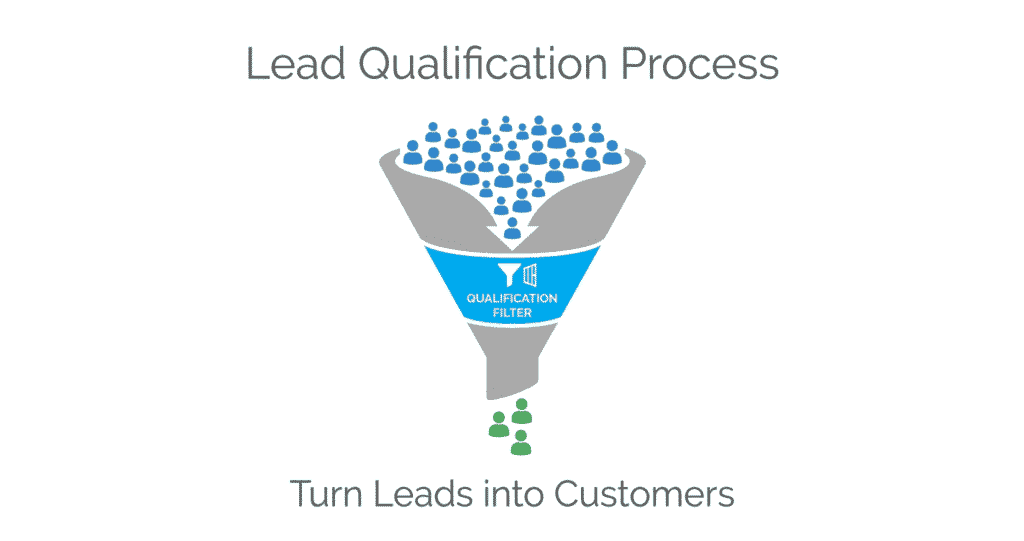
Think of lead qualification like a filter or funnel:
- You generate many leads (top of funnel)
- You evaluate and filter them
- You focus only on the best ones (bottom of funnel)
👉 Instead of chasing 100 random leads, you focus on the 10 that are most likely to convert.
Quick Example
- 100 people sign up on your website
- Only 20 actually need your service
- Out of those, 10 are ready to buy
👉 Lead qualification helps you identify those 10 quickly—so you can focus your time and effort where it matters most.
Key Takeaway
Lead qualification is not about reducing opportunities—it’s about improving efficiency and increasing conversions.
👉 It helps you work smarter, not harder..
🚀Why Lead Qualification is Important for Small Businesses
Lead qualification isn’t just a sales technique—it’s a growth strategy, especially for small businesses with limited time, budget, and manpower.
When done right, it transforms your entire sales process from random effort into a focused, high-converting system.
Let’s break down why it matters in real-world terms 👇
1. Saves Time (Your Most Valuable Resource)
For small businesses, time is limited—and every minute counts.
Without lead qualification:
- You spend hours chasing uninterested prospects
- Your sales team follows up with people who will never convert
With lead qualification:
- You identify high-potential leads early
- You prioritize only serious buyers
👉 Result:
Your team spends less time chasing and more time closing deals.
2. Improves Conversion Rates (More Sales, Less Effort)
Not all leads convert—and that’s normal.
But when you focus on qualified leads, your chances of success increase dramatically.
Instead of:
- Talking to 100 random leads → 2 conversions
You get:
- Talking to 20 qualified leads → 8–10 conversions
👉 Why this happens:
- Qualified leads already have intent
- They understand their problem
- They are closer to making a decision
3. Reduces Costs (Smarter Spending)
Generating leads costs money:
- Ads
- Tools
- Marketing campaigns
If your leads are low quality:
👉 You’re wasting money on people who won’t buy.
Lead qualification helps you:
- Filter out low-value leads early
- Focus your budget on high-intent prospects
- Improve ROI from your marketing spend
👉 Especially important for small businesses with tight budgets.
4. Increases ROI (Better Results from Same Effort)
Return on Investment (ROI) is not about how many leads you get—it’s about how many convert.
With proper qualification:
- Less effort is wasted
- More deals are closed
- Revenue increases without increasing workload
👉 This means:
You don’t need more leads—you need better leads.
5. Improves Sales Team Efficiency
Without qualification:
- Sales teams feel overwhelmed
- Follow-ups become inconsistent
- Motivation drops due to poor results
With qualification:
- Clear focus on high-quality prospects
- Better conversations with the right audience
- Higher confidence and productivity
👉 A focused team performs better than a busy team.
6. Creates Better Customer Relationships
Qualified leads are:
- More interested
- More informed
- More engaged
This leads to:
- Better conversations
- Stronger trust
- Higher customer satisfaction
👉 You’re not just selling—you’re solving real problems.
Real Insight
Small businesses don’t fail because they lack leads…
👉 They fail because they focus on the wrong leads.
Lead qualification fixes this by helping you:
- Work smarter, not harder
- Focus on opportunities that actually matter
- Build a predictable and scalable sales process
⚖️Lead Quantity vs Lead Quality
Many businesses believe that more leads automatically mean more sales.
But in reality, that’s one of the biggest misconceptions in sales and marketing.
👉 The truth is:
Not all leads are equal—and more leads don’t guarantee better results.
The Core Difference
- Lead Quantity focuses on how many people enter your funnel
- Lead Quality focuses on how likely those people are to convert
You can generate hundreds—or even thousands—of leads…
👉 But if they’re not the right people, your sales won’t grow.
What Most Businesses Get Wrong
Here’s something rarely discussed:
👉 High lead volume often hides poor strategy.
Many businesses:
- Celebrate large numbers (“We got 1,000 leads!”)
- Focus on vanity metrics instead of real outcomes
- Ignore conversion rates and customer intent
But behind the scenes:
- Sales teams struggle to convert
- Follow-ups increase but results don’t
- Time and effort are wasted
👉 More leads can actually create more confusion, not more clarity.
The Hidden Problem with Too Many Leads
Getting too many low-quality leads can:
- Overwhelm your sales team
- Slow down response times
- Reduce personalization
- Lower overall conversion rates
👉 This leads to what’s called:
“Lead fatigue” — where your team spends energy on leads that go nowhere.
Why Lead Quality Wins (In the Long Run)
High-quality leads:
- Already understand their problem
- Are actively looking for a solution
- Are more likely to trust and engage
👉 This means:
- Faster sales cycles
- Higher conversion rates
- Better customer relationships
The Smart Approach (Not Either/Or)
It’s not about choosing quantity or quality.
👉 The real strategy is:
- Generate enough leads (quantity)
- Filter and prioritize them (quality)
- Focus your effort on high-converting prospects
This is exactly where lead qualification becomes essential.
Advanced Insight (Rare but Powerful)
👉 Lead quality is not fixed—it can be improved.
Most people think:
- Leads are either good or bad
But in reality:
- The way you attract leads determines their quality
For example:
- Generic content → attracts random leads
- Problem-specific content → attracts serious buyers
👉 So improving lead quality starts with:
- Better targeting
- Better messaging
- Better positioning
Want the Full Breakdown?
This is just a quick insight.
👉 For a deeper understanding (with examples, comparisons, and strategies), read:
Lead Quantity vs Lead Quality: What Actually Drives Sales for Small Businesses
🧭The Lead Qualification Process (Step-by-Step)
Lead qualification is not just a theory—it’s a repeatable system that helps you consistently identify the right prospects.
Instead of guessing which leads to pursue, you follow a structured approach to filter, prioritize, and convert.
Let’s start with the most important foundation.
Step 1: Define Your Ideal Customer Profile (ICP)
Before you qualify leads, you need to know:
👉 Who is the right customer for your business?
This is called your Ideal Customer Profile (ICP)—a clear description of the type of customer who is most likely to:
- Benefit from your product
- Stay long-term
- Generate revenue
What Should You Include in Your ICP?
To build a strong ICP, identify:
1. Industry
Which industries benefit the most from your solution?
👉 Example:
- SaaS companies
- E-commerce businesses
- Local service providers
2. Company Size
Are you targeting:
- Solopreneurs?
- Small teams (5–20 employees)?
- Growing businesses?
👉 This affects:
- Budget
- Decision-making speed
- Needs
3. Budget
Can they realistically afford your product or service?
👉 Important insight:
Many leads may be interested—but not financially ready.
4. Pain Points
What specific problems are they trying to solve?
👉 Example:
- “Struggling to generate quality leads”
- “Wasting time on manual outreach”
- “Low conversion rates”
👉 The clearer the pain point, the higher the intent.
Real Insight (Most Businesses Miss This)
👉 Your ICP is not about “who you can sell to”—it’s about “who you should sell to.”
Many small businesses make the mistake of:
- Targeting everyone
- Accepting every lead
- Trying to serve all audiences
👉 Result:
- Poor conversions
- Confused messaging
- Wasted effort
Common Mistake to Avoid
❌ “My product is for everyone”
👉 This is one of the biggest reasons for:
- Low-quality leads
- Weak positioning
- Ineffective marketing
✔ Instead:
Be specific and focused.
Simple ICP Example (For Clarity)
Let’s take a common business example—a digital marketing agency offering social media management services.
❌ Weak ICP:
- Any business owner
👉 This is too broad and unclear. It attracts:
- Random inquiries
- Low-budget clients
- Businesses that may not even need your service
✅ Strong ICP:
- Local retail or service-based businesses
- 5–15 employees
- Struggling to get customers through social media
- Already posting but not getting engagement
- Willing to invest in marketing to grow
👉 See the difference?
The second ICP is:
- More specific
- Problem-focused
- Better aligned with your service
👉 This means:
- Higher-quality leads
- More meaningful conversations
- Better chances of closing deals
Key Insight :
The more clearly you define who you want to serve, the easier it becomes to:
∘ Improve your overall conversion rate
∘ Attract the right audience
∘ Filter out poor-fit leads
How ICP Improves Lead Qualification
When your ICP is clear:
- You attract better leads from the start
- You filter out irrelevant prospects faster
- Your sales conversations become more effective
👉 Lead qualification becomes easier because:
You already know what a “good lead” looks like.
Action Step (Do This Now)
Write down your ICP using this format:
- Target Industry: ______
- Business Size: ______
- Budget Range: ______
- Main Problem: ______
👉 This simple exercise can dramatically improve your lead quality.
Pro Insight
👉 Your ICP should evolve over time.
As you get more customers:
∘ Identify your best clients
∘ Analyze their traits
∘ Refine your ICP
👉 This turns your sales process into a data-driven system, not guesswork.
Key Takeaway
Defining your Ideal Customer Profile is the first and most important step in lead qualification.
👉 If you get this wrong:
Everything else becomes harder.
👉 If you get this right:
∘ Better leads
∘ Faster conversions
∘ Higher ROI
Step 2: Collect the Right Information
Once you’ve defined your Ideal Customer Profile (ICP), the next step is to collect the right information from your leads.
👉 This step is critical because:
You can’t qualify what you don’t understand.
Many businesses collect basic details—but miss the information that actually determines whether a lead will convert.
What Information Should You Collect?
To effectively qualify leads, focus on collecting both basic details and intent-based insights.
1. Basic Contact Information
- Name
- Email address
- Phone number (optional but useful)
👉 This helps you:
- Identify the lead
- Follow up effectively
- Build a relationship
2. Company Details (For Better Targeting)
- Company name
- Industry
- Company size (number of employees)
👉 Why this matters:
- Helps you match leads with your ICP
- Filters out irrelevant businesses early
3. Needs and Challenges (MOST IMPORTANT)
This is where real qualification begins.
Ask questions like:
- What problem are you trying to solve?
- What challenges are you facing right now?
- What goal are you trying to achieve?
👉 These answers reveal:
- Buying intent
- Urgency
- Fit with your solution
Real Insight (Most Businesses Miss This)
👉 The quality of your questions determines the quality of your leads.
If you only ask:
“Name” and “Email”
👉 You’ll get:
More leads (quantity)
But lower conversion rates
If you ask:
Problem-focused questions
👉 You’ll get:
Fewer leads
But much higher quality
Common Mistake to Avoid
❌ Asking too many questions upfront
This can:
- Reduce form submissions
- Frustrate users
- Lower conversions
👉 Balance is key:
- Keep it short
- But meaningful
Smart Approach (Best Practice)
Use a 2-step information strategy:
Step 1 (Initial Form)
Collect:
- Name
- One key qualifying question
👉 Keep it simple to increase conversions.
Step 2 (After Engagement)
Collect deeper insights through:
- Follow-up emails
- Calls
- Surveys
👉 This improves lead quality without losing volume.
Tools That Can Help
You can simplify this process using tools like:
- HubSpot CRM → Capture and organize lead data
- Apollo.io → Enrich lead profiles automatically
- Reply.io → Collect responses and automate follow-ups
👉 These tools reduce manual work and improve accuracy.
Example (Before vs After)
❌ Weak Data Collection:
- Name
👉 Result:
- High number of leads
- Low conversion
✅ Strong Data Collection:
- Name
- “What challenge are you facing right now?”
👉 Result:
- Better understanding of lead intent
- Higher conversion rates
What This Means
Collecting the right information is not about gathering more data—it’s about gathering useful data.
👉 When you understand your leads better:
- Qualification becomes easier
- Sales conversations become stronger
- Conversions increase naturally
Action Step
Update your lead forms today:
✔ Add at least one problem-focused question
✔ Keep forms short and simple
✔ Use tools to track and organize responses
Step 3: Use Qualification Frameworks
Once you’ve collected the right information, the next step is to evaluate your leads in a structured way.
👉 This is where lead qualification frameworks come in.
Instead of guessing whether a lead is worth pursuing, frameworks give you a clear checklist to decide:
- Is this lead worth your time?
- Should you follow up now or later?
- Is this a high-priority opportunity?
👉 Think of frameworks as your decision-making system for sales.
The BANT Framework (Classic & Widely Used)
One of the most popular lead qualification frameworks is BANT:
🔹Budget
Does the lead have the financial ability to buy your product?
👉 Insight:
Many leads are interested—but can’t afford your solution yet.
🔹Authority
Is the person you’re talking to the decision-maker?
👉 Example:
- Employee → may need approval
- Founder/Manager → can decide faster
👉 This helps avoid long, unproductive sales cycles.
🔹Need
Does the lead actually need your solution?
👉 This is the most important factor.
If there’s no real problem:
👉 There will be no urgency to buy.
🔹Timeline
When are they planning to take action?
- Immediate → High priority
- 3–6 months → Nurture
- No timeline → Low priority
What this means:
BANT helps you quickly identify:
👉 Who is ready to buy now vs who needs nurturing
The CHAMP Framework (Modern & Customer-Focused)
A more modern approach is CHAMP, which focuses more on the customer’s situation:
🔹Challenges
What problem is the lead facing?
👉 This comes first—because:
Problems drive buying decisions
🔹Authority
Who makes the final decision?
(Same as BANT—but still important)
🔹Money
Do they have the budget?
👉 Instead of asking directly:
- Understand spending capacity
- Position value accordingly
🔹Prioritization
How important is solving this problem right now?
👉 This reveals urgency and intent.
Here’s the real insight:
👉 CHAMP focuses on understanding before selling
That’s why it often works better for:
- Small businesses
- Relationship-based selling
- Modern buyers
BANT vs CHAMP (Which One Should You Use?)
| Factor | BANT | CHAMP |
|---|---|---|
| Focus | Company readiness | Customer problems |
| Approach | Sales-driven | Customer-driven |
| Best For | Quick qualification | Deep understanding |
| Style | Traditional | Modern |
What you should do:
👉 Use BANT when:
- You need quick filtering
- You have many leads
👉 Use CHAMP when:
- You want better conversations
- You focus on long-term relationships
Advanced Insight
👉 Most businesses use frameworks as a checklist…
But top performers use them as a conversation guide.
Instead of asking directly:
❌ “What’s your budget?”
👉 Ask naturally:
✔ “How are you currently solving this problem?”
✔ “What kind of investment have you considered?”
👉 This makes:
- Conversations smoother
- Leads more comfortable
- Information more accurate
Common Mistakes to Avoid
- Treating frameworks like a rigid script
- Asking questions too aggressively
- Ignoring context and conversation flow
👉 Remember:
Frameworks should guide—not control—the conversation.
How Tools Can Help
You can apply these frameworks more effectively using tools like:
- HubSpot CRM → Track lead details and qualification stages
- Apollo.io → Enrich data for better qualification
- Reply.io → Automate follow-ups based on lead stage
👉 These tools help you turn frameworks into automated systems.
Simple Example (Real Scenario)
Let’s say a lead contacts you:
Without Framework:
- You follow up randomly
- No clear direction
- Low chance of conversion
With Framework:
- Need → Yes (struggling with leads)
- Budget → Yes
- Authority → Decision-maker
- Timeline → Immediate
👉 Result:
You prioritize this lead → higher chance of closing.
The Bottom Line
Lead qualification frameworks help you:
∘ Ask the right questions
∘ Focus on the right leads
∘ Make better sales decisions
👉 Instead of guessing, you follow a structured and repeatable process.
Step 4: Score Your Leads (Prioritize What Matters)
Once you’ve gathered information and applied qualification frameworks, the next step is to assign value to each lead.
👉 This process is called lead scoring.
Lead scoring helps you rank your leads based on how likely they are to convert—so your team knows exactly where to focus.
What is Lead Scoring (In Simple Terms)?
Lead scoring is a system where you assign points to leads based on their actions, profile, and level of interest.
👉 The higher the score:
- The more qualified the lead
- The higher the priority for follow-up
What Factors Should You Score?
To build an effective scoring system, focus on three key areas:
1. Behavior (What They Do)
Track how leads interact with your business:
- Website visits
- Clicking emails
- Downloading resources
- Visiting pricing pages
👉 Real insight:
Not all actions are equal.
- Visiting homepage → low intent
- Visiting pricing page → high intent
👉 Behavior reveals buying intent.
2. Demographics (Who They Are)
Check if the lead matches your Ideal Customer Profile (ICP):
- Industry
- Job role
- Company size
- Location
👉 Example:
A decision-maker in your target industry = higher score
A random visitor outside your niche = lower score
3. Engagement Level (How Interested They Are)
Measure how actively the lead interacts with you:
- Replies to emails
- Books a call
- Requests a demo
👉 Insight:
Engagement is often a stronger signal than demographics.
Real Insight (Most Businesses Miss This)
👉 Lead scoring is not about collecting data—it’s about prioritizing attention.
Many businesses:
- Collect tons of data
- But don’t use it effectively
👉 Result:
- High-value leads get ignored
- Low-value leads get too much attention
Simple Lead Scoring Example
Here’s a basic scoring model:
| Action | Score |
|---|---|
| Visited website | +5 |
| Downloaded resource | +10 |
| Visited pricing page | +20 |
| Booked a call | +30 |
| Not in target industry | -10 |
What this means:
- A lead with 50+ points → High priority
- A lead with 20–40 points → Medium priority
- A lead below 20 points → Low priority
👉 This helps your team focus instantly.
Common Mistakes to Avoid
- Giving equal weight to all actions
- Ignoring negative signals (wrong audience)
- Not updating scores over time
👉 Lead scoring should be dynamic, not static.
Smart Approach (Best Practice)
👉 Use a progressive scoring system:
- Start with basic scoring
- Track real conversions
- Adjust scores based on results
👉 This turns your system into a data-driven engine.
Tools That Can Automate Lead Scoring
Instead of doing this manually, use tools like:
- HubSpot CRM → Built-in lead scoring and tracking
- Apollo.io → Advanced filtering and scoring
- Reply.io → Track engagement and automate follow-ups
👉 These tools help you:
- Save time
- Reduce errors
- Focus on high-value leads
Real Scenario (Before vs After)
❌ Without Lead Scoring:
- All leads treated equally
- Random follow-ups
- Missed opportunities
✅ With Lead Scoring:
- High-intent leads identified instantly
- Prioritized follow-ups
- Higher conversion rates
The Bigger Picture
👉 Lead scoring connects everything:
- Your ICP
- Your data collection
- Your qualification frameworks
👉 It turns all of this into a clear action plan.
Action Step
Start simple:
✔ Assign basic scores to key actions
✔ Identify high-intent behaviors
✔ Focus on top-scoring leads first
👉 You don’t need a perfect system—just a working one.
Step 5: Segment and Prioritize Leads (Focus on What Converts)
After scoring your leads, the next step is to organize them into clear groups based on their readiness to buy.
👉 This process is called lead segmentation and prioritization.
Instead of treating all leads the same, you categorize them so your sales efforts are:
- More focused
- More personalized
- More effective
Why Segmentation Matters
Without segmentation:
- You send the same message to everyone
- You follow up randomly
- You miss high-value opportunities
With segmentation:
- You know exactly who to contact first
- You tailor your message based on intent
- You improve conversion rates significantly
👉 This is where lead qualification turns into real sales results.
The 3 Core Lead Segments
🔴 1. Hot Leads (Ready to Buy)
These are your highest priority leads.
They:
- Have a clear need
- Match your Ideal Customer Profile (ICP)
- Show strong buying intent
- Are ready to take action soon
🔥 Common Signals:
- Requested a demo or consultation
- Visited pricing or service pages multiple times
- Asked specific questions about your offer
👉 What you should do:
- Follow up immediately
- Offer personalized solutions
- Focus on closing the deal
🟡 2. Warm Leads (Interested but Not Ready Yet)
These leads are interested—but need more time or information.
They:
- Understand their problem
- Are exploring options
- Are not fully ready to commit
🔥 Common Signals:
- Downloaded a guide
- Opened emails
- Visited your website occasionally
👉 What you should do:
- Nurture them with helpful content
- Send follow-up emails
- Build trust over time
⚪ 3. Cold Leads (Low Interest or Not a Fit)
These leads are:
- Not ready to buy
- Not aligned with your ICP
- Just exploring or browsing
🔥 Common Signals:
- Minimal engagement
- No clear need
- No response to follow-ups
👉 What you should do:
- Avoid spending too much time
- Add them to long-term nurturing campaigns
- Focus your energy elsewhere
Real Insight (Most Businesses Get This Wrong)
👉 Not all leads should be treated equally—and that’s okay.
Many small businesses:
- Try to convert every lead
- Spend too much time on cold prospects
- Ignore high-intent opportunities
👉 Result:
- Lost sales
- Burnout
- Low efficiency
👉 The smart approach:
Focus 80% of your effort on hot leads,
and automate the rest.
The Power of Prioritization
Segmentation helps you answer:
- Who should I contact today?
- Who needs follow-up later?
- Who can be ignored for now?
👉 This creates a clear action plan, instead of confusion.
Simple Workflow (How It Works in Practice)
- Leads enter your system
- You score them (Step 4)
- You segment them into Hot / Warm / Cold
- You take action based on category
👉 This turns your sales process into a predictable system.
Tools to Manage Segmentation Easily
You can automate segmentation using tools like:
- HubSpot CRM → Automatically segment leads into pipelines
- Apollo.io → Filter and prioritize high-quality prospects
- Reply.io → Automate follow-ups based on lead stage
👉 These tools help you:
- Save time
- Stay organized
- Never miss high-value leads
Real Example (Before vs After)
❌ Without Segmentation:
- Same email sent to all leads
- No prioritization
- Low response rates
✅ With Segmentation:
- Personalized follow-ups
- Immediate focus on hot leads
- Better engagement and conversions
What This Means
Segmentation is where strategy meets execution.
👉 It helps you:
- Focus on the right leads
- Take the right actions
- At the right time
Action Step
Start implementing today:
✔ Divide your leads into Hot / Warm / Cold
✔ Prioritize high-intent leads first
✔ Create simple follow-up strategies for each group
👉 You don’t need a complex system—just a clear one.
Types of Qualified Leads
Understanding different types of qualified leads is the foundation of building an efficient sales process. Not all leads are ready to buy immediately—some need nurturing, while others are ready for direct sales conversations.
Let’s break down the three most important types of qualified leads every small business should know:
1. Marketing Qualified Leads (MQL)
Definition:
Marketing Qualified Leads (MQLs) are potential customers who have shown interest in your business but are not yet ready to make a purchase.
They are at the top or middle of the sales funnel and are still in the research or awareness stage.
Examples of Marketing Qualified Lead (MQL) Behavior
Marketing Qualified Leads (MQLs) don’t just “show interest”—they leave intent signals across different touchpoints. The key is recognizing these signals based on your business type.
Below are practical, real-world scenarios across industries:
1. Content Engagement (Awareness Stage Behavior)
These leads are learning and exploring solutions.
Examples:
- Reading multiple blog posts on your website (e.g., “best CRM tools,” “how to automate sales”)
- Watching your educational videos or tutorials
- Downloading:
- eBooks
- Checklists
- Templates (e.g., sales scripts, email templates)
- Spending a long time on “how-to” or guide pages
Different Business Cases:
- Digital Marketing Agency: User reads 3–4 SEO-related blogs
- Finance Consultant: Downloads a “small business budgeting template”
- HR Services: Reads hiring or employee onboarding guides
👉 Insight: These users are problem-aware but still researching solutions.
2. Email & Newsletter Engagement
These leads have allowed you into their inbox—this is a strong early signal.
Examples:
- Subscribing to your newsletter
- Opening multiple emails consistently
- Clicking links inside emails
- Downloading resources via email campaigns
Different Business Cases:
- E-commerce Brand: User signs up for discount emails
- SaaS Tool: Subscribes for product updates and tips
- Consulting Business: Engages with weekly insights emails
👉 Insight: Engagement matters more than just signup—track clicks and activity.
3. Website Behavior Signals (Intent Tracking)
These are high-value MQL signals because they show buying curiosity.
Examples:
- Visiting your pricing page multiple times
- Checking your “Services” or “Solutions” page
- Comparing different product/service pages
- Visiting FAQ or case study sections
- Returning to your website multiple times
Different Business Cases:
- Web Design Agency: User checks portfolio + pricing page
- AI Tools Website: User compares multiple tool reviews
- Local Service Business: Visits service page + contact page
👉 Insight: Repeated visits = growing intent (but still not ready to buy yet).
4. Social Media Engagement
These leads are interacting with your brand but not taking direct action yet.
Examples:
- Liking, commenting, or sharing posts
- Following your business page
- Watching your reels/videos regularly
- Clicking links from social media to your website
Different Business Cases:
- Personal Brand / Coach: User frequently comments on posts
- Small Business Brand: Saves product-related posts
- B2B Business: Engages with LinkedIn posts
👉 Insight: Social engagement builds familiarity and trust before conversion.
5. Lead Magnet Interaction
This is one of the strongest MQL indicators.
Examples:
- Signing up for:
- Free webinars
- Workshops
- Free tools (calculators, templates)
- Downloading gated content
- Registering for email courses
Different Business Cases:
- AI Tools Blog: Downloads “Top AI Tools for Sales” guide
- Business Coach: Joins a free webinar on scaling revenue
- Real Estate: Downloads property investment guide
👉 Insight: These users are actively seeking solutions.
6. Early Product Interaction (Pre-PQL Stage)
Before becoming a PQL, users may show light product interest.
Examples:
- Signing up but not actively using the product
- Exploring features without deep usage
- Watching demo videos without booking a call
Different Business Cases:
- SaaS Tool: Creates account but doesn’t fully use features
- App-Based Business: Installs app but low activity
- Software Company: Watches demo but doesn’t request trial
👉 Insight: These are “warm” leads—ready for nurturing into PQL.
7. Event & Webinar Participation
These leads are investing time, which indicates serious interest.
Examples:
- Attending live webinars
- Joining Q&A sessions
- Participating in workshops
- Asking questions during sessions
Different Business Cases:
- Marketing Agency: Attends webinar on lead generation
- Finance Expert: Joins tax-saving workshop
- Tech Company: Attends product demo webinar
👉 Insight: Higher engagement = higher chance of moving to SQL.
8. Interaction with Ads (Paid Traffic Behavior)
Paid campaigns often generate MQLs at scale.
Examples:
- Clicking on Facebook/Google ads
- Visiting landing pages but not converting
- Engaging with retargeting ads
- Watching video ads partially or fully
Different Business Cases:
- E-commerce: Clicks product ad but doesn’t purchase
- Service Business: Clicks “Get Quote” ad but doesn’t submit form
- Online Course: Watches ad but doesn’t enroll
👉 Insight: Retargeting these users is critical.
Key Insight: Not All MQLs Are Equal
You can further segment MQLs into:
- Cold MQLs: Just subscribed or downloaded something
- Warm MQLs: Engaging repeatedly (emails, website visits)
- Hot MQLs: Visiting pricing pages, comparing options
Real-Life Example
A startup founder wants to improve their sales outreach,
👉 Searches for ways to generate more leads
👉 Finds your guide on lead generation strategies
👉 Reads multiple blog posts and tutorials
👉 Downloads a resource or template
👉 Subscribes to your email list for more insights
➡️ This is a perfect MQL journey—they’ve moved from awareness → interest → engagement
Why This Works
- They are aware of their problem
The user is actively looking for ways to improve their sales or lead generation. - They are exploring possible solutions
Reading blogs and guides shows they are still researching and comparing options. - They are engaging with your brand
Actions like downloading resources and subscribing indicate growing interest and trust. - They are entering your ecosystem
Joining your email list allows you to nurture and guide them further. - They are not ready to buy yet
They need more information, clarity, and confidence before making a decision.
🎯 Why It Matters
MQLs are in the early-stage learning phase.
👉 Your goal is to:
- Educate consistently
- Build trust over time
- Stay top-of-mind
➡️ So they naturally progress toward becoming a Sales Qualified Lead (SQL)
How to Handle Marketing Qualified Leads (MQLs)
Once you identify MQLs, the goal is simple:
👉 Move them from interest → intent → decision
Here’s how to do it effectively:
1. Use Email Nurturing Sequences
- Send educational emails (not sales-heavy)
- Share:
- Guides
- Tips
- Use cases
- Build a relationship over time
👉 Example:
If someone downloads your “Product Guide,” send a 5-day email series explaining tools, benefits, and use cases.
2. Share Educational Content
Focus on value-first content, such as:
- Blog posts
- YouTube videos
- Case studies
- Tutorials
👉 Goal: Position yourself as an expert, not a seller
3. Retarget Them with Ads
Most MQLs won’t convert on the first visit.
Use retargeting ads to:
- Bring them back to your website
- Show relevant offers
- Reinforce brand awareness
👉 Works best for:
- Pricing page visitors
- Blog readers
- Lead magnet users
4. Build Trust Before Selling
This is where most small businesses fail.
Avoid:
❌ Pushing sales too early
❌ Aggressive follow-ups
Instead:
✔ Educate
✔ Solve problems
✔ Show proof (testimonials, results)
Pro Strategy for Small Businesses
To maximize conversions:
- Track behavior using tools like:
- Google Analytics
- CRM systems
- Email marketing tools
- Assign lead scores based on actions:
- +5 points → Blog visit
- +10 points → Email click
- +20 points → Pricing page visit
👉 This helps you identify when an MQL becomes an SQL.
Final Takeaway
An MQL is not just a “lead”—it’s a pattern of behavior.
The more behaviors a user shows:
➡️ The closer they are to buying
➡️ The easier it becomes to convert them
2. Sales Qualified Leads (SQL)
Definition:
Sales Qualified Leads (SQLs) are leads who have been vetted and are ready for direct interaction with your sales team.
These leads have shown clear buying intent and are closer to making a decision.
Examples of Sales Qualified Lead (SQL) Behavior
Sales Qualified Leads (SQLs) show clear buying intent. These are not just interested users—they are actively considering a purchase and are ready for direct sales interaction.
Let’s break down real-world SQL behavior across different business types:
1. High-Intent Conversion Actions
These are the strongest signals that a lead is ready to talk to sales.
Examples:
- Requesting a demo or consultation
- Filling out a “Contact Sales” or “Get a Quote” form
- Booking a discovery or strategy call
- Signing up for a free trial with serious intent
Different Business Cases:
- SaaS Tool: User books a product demo
- Marketing Agency: Submits a “Get Proposal” form
- Consultant/Coach: Schedules a paid or free consultation
- Local Service Business: Requests a quote (e.g., web design, renovation)
👉 Insight: These leads are already evaluating solutions—timing is critical.
2. Pricing & Purchase-Oriented Behavior
SQLs often focus on cost, value, and ROI.
Examples:
- Asking detailed questions about pricing plans
- Comparing packages or service tiers
- Inquiring about discounts or custom pricing
- Visiting pricing page repeatedly before converting
Different Business Cases:
- E-commerce (B2B): Asking for bulk pricing
- Software Tools: Comparing monthly vs annual plans
- Agency Services: Requesting custom pricing based on needs
👉 Insight: These leads are mentally calculating ROI before committing.
3. Direct Communication & Engagement
SQLs are more responsive and open to interaction.
Examples:
- Replying to emails with specific questions
- Responding positively to outreach (cold or warm)
- Engaging in live chat conversations
- Asking for clarifications about features or services
Different Business Cases:
- B2B Sales: Replies to LinkedIn outreach
- SaaS: Chats with support about advanced features
- Service Business: Responds to follow-up emails
👉 Insight: When a lead starts a conversation, they are moving closer to a decision.
4. Decision-Making Signals
These behaviors indicate the lead is nearing a final decision.
Examples:
- Asking about onboarding or implementation
- Involving team members or stakeholders
- Requesting case studies or proof of results
- Asking about timelines or delivery process
Different Business Cases:
- Corporate Client: Includes team in demo call
- Startup Founder: Asks about setup time and ROI
- Small Business Owner: Wants to know “how fast can I see results?”
👉 Insight: These leads are not just interested—they are preparing to buy.
5. Repeated High-Intent Engagement
Consistency in high-intent actions = strong SQL.
Examples:
- Multiple demo requests or follow-ups
- Repeated visits to key pages (pricing, case studies)
- Downloading comparison or decision-stage content
- Engaging across multiple channels (email + website + calls)
👉 Insight: The more touchpoints they engage with, the higher the conversion probability.
Real-Life Example
A business owner reads your comparison article on AI sales tools,
👉 Visits your pricing page
👉 Downloads a case study
👉 Then books a demo call
➡️ This is a perfect SQL journey—they’ve moved from research → evaluation → action.
Why This Works
- They have clear buying intent
Actions like booking a demo or requesting pricing show they are actively considering a purchase. - They are evaluating solutions
Visiting pricing pages, downloading case studies, and asking questions indicate they are comparing options before deciding. - They are engaging directly with your business
Responding to outreach or initiating contact shows readiness for real conversations. - They are closer to decision-making
Their behavior reflects urgency and interest in solving their problem quickly. - They need clarity, not convincing
At this stage, they are not looking for more information—they want reassurance and confidence to move forward.
What You Should Know
SQLs convert faster because they are already in the decision-making stage.
👉 Your goal is to:
- Respond quickly
- Address objections
- Provide clear value
➡️ So they confidently move toward becoming a paying customer.
How to Handle Sales Qualified Leads (SQLs)
At this stage, your goal is simple:
👉 Convert interest into a sale as quickly and effectively as possible
1. Prioritize Immediate Follow-Up
Speed is your biggest advantage.
- Respond within minutes (if possible)
- Use automated alerts or CRM notifications
- Don’t let leads go cold
👉 Example:
If someone books a demo, confirm instantly and follow up with details.
2. Personalize Communication
Generic responses kill conversions.
- Mention their business or use case
- Refer to their previous actions (demo request, email reply)
- Customize your pitch based on their needs
👉 Example:
Instead of: “Here’s our pricing”
Say: “Based on your interest in lead generation tools, here’s the best plan for you.”
3. Address Objections Clearly
Most SQLs don’t convert due to unanswered doubts.
Common objections:
- Price concerns
- Feature limitations
- Trust issues
- Implementation difficulty
👉 Your job:
- Answer clearly
- Provide proof (testimonials, case studies)
- Show ROI
4. Offer Demos, Trials, or Consultations
Help them experience value before buying.
- Live demos
- Free trials
- Strategy calls
- Personalized walkthroughs
👉 This reduces risk and builds confidence.
5. Create Urgency (Without Pressure)
Encourage decision-making without being pushy.
- Limited-time offers
- Bonus features
- Early adopter discounts
👉 Important: Keep it genuine, not manipulative.
Pro Tip (Conversion Psychology Insight)
SQLs don’t need convincing—they need clarity and confidence.
👉 They are already thinking:
“Is this the right choice for me?”
Your role is to:
- Remove doubt
- Simplify decision-making
- Show clear outcomes
Advanced Insight (For Better Conversions)
High-performing businesses use:
- Lead scoring systems (to prioritize hot SQLs)
- CRM automation (instant follow-ups)
- Multi-touch engagement (email + call + demo)
👉 This ensures no high-intent lead is missed.
Final Takeaway for SQLs
If MQLs are about building interest,
SQLs are about closing opportunities.
👉 Respond fast
👉 Personalize deeply
👉 Remove friction
That’s how small businesses turn SQLs into paying customers consistently.
3. Product Qualified Leads (PQL)
Definition:
Product Qualified Leads (PQLs) are users who have experienced your product firsthand—usually through a free trial or freemium model—and have shown signs they’re ready to upgrade.
This type of lead is especially common in SaaS and AI tools businesses.
Examples of Product Qualified Lead (PQL) Behavior
Product Qualified Leads (PQLs) are users who have already experienced your product’s value firsthand. Unlike MQLs or SQLs, these leads don’t just rely on content or conversations—they’ve interacted directly with your product.
Let’s explore real-world PQL behaviors across different business models:
1. Active Feature Usage
These users are not just exploring—they are actively using core features.
Examples:
- Using key features repeatedly (e.g., automation tools, CRM features)
- Completing meaningful actions inside the product
- Returning daily or frequently to use the tool
Different Business Cases:
- SaaS Tool: Regularly using email automation or lead generation features
- AI Tool Platform: Running multiple AI tasks daily
- Project Management Tool: Creating and managing tasks consistently
👉 Insight: Repeated usage = strong product adoption and dependency.
2. Reaching Product Limits
One of the strongest PQL signals.
Examples:
- Hitting usage limits (credits, exports, campaigns)
- Getting notifications like “Upgrade to continue”
- Attempting to access locked premium features
Different Business Cases:
- Email Marketing Tool: Runs out of email credits
- AI Tool: Hits daily usage limit
- CRM Software: Exceeds contact or automation limits
👉 Insight: When users hit limits, they are already seeing value and need more access.
3. Expanding Usage (Team or Scale Signals)
These users are trying to scale their usage.
Examples:
- Inviting team members
- Creating multiple projects or workflows
- Integrating with other tools
- Using advanced features
Different Business Cases:
- Startup Team: Adds team members to collaborate
- Agency: Manages multiple clients inside the tool
- Business Owner: Expands usage across departments
👉 Insight: Expansion behavior = higher likelihood of paid conversion.
4. High Engagement Inside the Product
Time spent inside the product reflects serious interest.
Examples:
- Spending significant time using dashboards or features
- Logging in frequently (daily/weekly)
- Exploring advanced settings or integrations
Different Business Cases:
- Analytics Tool: Regularly checking reports
- Automation Tool: Monitoring workflows
- Design Tool: Creating multiple assets
👉 Insight: The more time users invest, the harder it is for them to switch or leave.
5. Product-Centric Intent Signals
These actions show the user is close to upgrading.
Examples:
- Checking upgrade/pricing plans inside the app
- Clicking “Upgrade Now” but not completing payment
- Viewing feature comparison pages
- Engaging with onboarding or tutorial content
👉 Insight: These users are evaluating whether to commit—not whether they need the product.
Real-Life Example
A user signs up for your AI tool to improve lead generation,
👉 Starts using the tool daily to find and manage leads
👉 Explores multiple features and workflows
👉 Hits the free plan usage limit
👉 Checks the pricing page inside the dashboard
➡️ This is a perfect PQL journey—they’ve moved from experience → value realization → upgrade intent
Why This Works
- They have already experienced value
The user has seen real results using your product, reducing the need for persuasion. - They are dependent on the product
Regular usage creates reliance, making switching less likely. - They are trying to scale usage
Actions like hitting limits or inviting team members show growth needs. - They are evaluating upgrade decisions
Checking pricing or premium features indicates readiness to convert. - They need access, not convincing
At this stage, the decision is about unlocking more value—not understanding the product.
Why It Matters
PQLs convert faster because they are already in the value realization stage.
👉 Your goal is to:
- Remove limitations
- Simplify the upgrade process
- Reinforce the results they’re getting
➡️ So they upgrade naturally without resistance
How to Handle Product Qualified Leads (PQLs)
At this stage, your goal is clear:
👉 Turn product usage into paid conversion
1. Trigger Upgrade Prompts at the Right Time
Timing is everything.
- Show upgrade prompts when users hit limits
- Highlight benefits exactly when they need more access
- Use in-app messages, not just emails
👉 Example:
“You’ve reached your limit—upgrade to continue generating leads.”
2. Offer Limited-Time Incentives
Encourage faster decisions.
- Discounts for early upgrades
- Bonus features for upgrading now
- Time-sensitive offers
👉 Important: Keep it relevant and non-pushy.
3. Provide In-App Guidance & Onboarding
Help users get maximum value.
- Tooltips and walkthroughs
- Feature tutorials
- Onboarding sequences
👉 Goal: Remove confusion and increase usage confidence.
4. Highlight ROI and Results
Show them what they’re gaining.
- “You generated 120 leads this week”
- “You saved 10 hours using automation”
- Case studies or success stories
👉 This reinforces the decision to upgrade.
5. Reduce Friction in the Upgrade Process
Make it easy to convert.
- Simple pricing structure
- Easy checkout process
- Transparent plans and benefits
👉 Less friction = higher conversions.
Pro Tip (Growth Insight)
PQLs don’t need selling—they need access and ease.
👉 Focus on:
- Removing limits
- Highlighting value
- Simplifying upgrades
➡️ Instead of convincing them from scratch
Final Takeaway for PQLs
If MQLs are about education,
SQLs are about decision,
PQLs are about experience-driven conversion.
👉 Show value
👉 Remove friction
👉 Let the product sell itself
MQL vs SQL vs PQL: Quick Comparison
| Lead Type | Stage | Intent Level | Best Approach |
|---|---|---|---|
| MQL | Awareness/Interest | Low to Medium | Educate & nurture |
| SQL | Decision Stage | High | Direct sales engagement |
| PQL | Product Experience | Very High | Convert with product-driven triggers |
Final Insight for Small Business Owners
If you treat all leads the same, you’ll lose both time and money.
Instead:
- Nurture MQLs
- Close SQLs
- Convert PQLs quickly
This structured approach helps you:
- Improve conversion rates
- Save time on unqualified prospects
- Build a predictable sales pipeline
Best Lead Qualification Strategies for Small Businesses
Lead qualification is not just about collecting leads—it’s about identifying who is worth your time and effort. Small businesses especially need to focus on quality over quantity to maximize conversions and save resources.
Here are the most effective lead qualification strategies you should implement:
1. Ask Better Questions (Focus on Intent, Not Just Data)
Most businesses collect basic information like name, email, and phone number—but that’s not enough.
👉 The goal is to understand intent and readiness, not just contact details.
What to do:
- Add smart questions to your forms, such as:
- “What problem are you trying to solve?”
- “What is your monthly budget?”
- “When are you planning to start?”
- Use multiple-choice options to make it easy to answer
- Include one open-ended question for deeper insights
Example:
Instead of asking: “Interested in our service?”
Ask: “What’s your biggest challenge in lead generation right now?”
👉 This helps you instantly identify serious vs casual leads.
2. Focus on Pain Points (Understand the Real Problem)
Leads don’t buy products—they buy solutions to their problems.
👉 If you don’t understand their pain point, you can’t qualify them properly.
What to do:
- Identify the core problem behind their interest
- Segment leads based on pain points (e.g., lead generation, conversion, automation)
- Use surveys, forms, or calls to gather insights
Example:
- A lead says they want “more sales”
👉 Dig deeper: - Is the problem traffic?
- Poor conversion?
- Weak follow-up?
👉 Each problem requires a different solution—and different qualification level.
Pro Tip:
High-quality leads clearly understand their problem and are actively looking to solve it.
3. Use Intent-Based Content (Attract the Right Leads)
Not all traffic is valuable. You need intent-driven visitors.
👉 Content should filter and attract people who are already searching for solutions.
What to do:
- Create content targeting:
- “best tools for…”
- “how to solve…”
- “comparison between…”
- Focus on bottom-of-funnel keywords
- Add clear CTAs (download, demo, consultation)
Examples of High-Intent Content:
- “Best AI Tools for Lead Generation”
- “Top CRM Software for Small Business”
- “Apollo.io vs Reply.io Comparison”
👉 These attract users closer to becoming SQLs or even PQLs.
4. Align Marketing and Sales (Avoid Lead Leakage)
One of the biggest mistakes small businesses make is disconnect between marketing and sales.
👉 If both teams don’t agree on what a “qualified lead” is, you lose opportunities.
What to do:
- Define clear criteria for:
- MQL (Marketing Qualified Lead)
- SQL (Sales Qualified Lead)
- PQL (Product Qualified Lead)
- Create a shared lead scoring system
- Use CRM tools to track lead stages
- Set clear handoff points (when marketing passes leads to sales)
Example:
- Marketing generates leads through content
- Sales only contacts leads who:
- Visited pricing page
- Requested demo
- Show high engagement
👉 This improves efficiency and conversion rates.
Why This Works
- You focus on quality over quantity
Instead of chasing every lead, you prioritize those most likely to convert. - You understand real customer needs
Pain-point-driven qualification leads to better conversations and higher trust. - You attract high-intent prospects
Intent-based content filters out low-quality leads automatically. - You reduce wasted time and effort
Sales teams focus only on leads that matter.
Why It Matters
Lead qualification is the foundation of a predictable and scalable sales process.
👉 Your goal is to:
- Identify the right leads early
- Focus on high-conversion opportunities
- Align your marketing and sales efforts
➡️ So you increase conversions while saving time and resources
Tools for Lead Qualification (Automation & AI)
Manually qualifying leads can be time-consuming and inconsistent. That’s where automation and AI-powered tools help small businesses save time, improve accuracy, and scale faster.
Here are some of the most effective tools you can use:
1. Apollo.io – Find & Filter High-Quality Leads
What it does:
Apollo.io helps you discover, filter, and qualify leads based on data like job role, company size, industry, and buying intent.
Key Features:
- Advanced lead filtering (ideal customer targeting)
- Verified contact database (emails, phone numbers)
- Intent data to identify active buyers
- Built-in outreach and tracking
Best For:
- B2B businesses
- Lead generation and prospecting
- Finding decision-makers quickly
👉 Why it matters:
Instead of chasing random leads, you focus only on high-potential prospects.
2. HubSpot CRM – Manage & Track Leads Efficiently
What it does:
HubSpot CRM helps you organize, track, and manage leads throughout the entire sales funnel.
Key Features:
- Contact and pipeline management
- Lead scoring and segmentation
- Email tracking and automation
- Integration with marketing tools
Best For:
- Small to medium businesses
- Managing MQL → SQL transitions
- Keeping all lead data in one place
👉 Why it matters:
You never lose track of leads and can prioritize the most qualified ones easily.
3. Reply.io – Automate Outreach & Follow-Ups
What it does:
Reply.io automates email outreach, follow-ups, and multi-channel communication, helping you engage leads at the right time.
Key Features:
- Automated email sequences
- Multi-channel outreach (email, LinkedIn, calls)
- AI-powered reply detection
- Personalization at scale
Best For:
- Cold outreach campaigns
- Nurturing MQLs into SQLs
- Scaling communication without manual effort
👉 Why it matters:
Consistent follow-ups increase response rates and ensure no qualified lead is missed.
Why This Works
- Automation reduces manual effort
You save hours on repetitive tasks like filtering, tracking, and follow-ups. - AI improves lead accuracy
Tools help identify high-intent leads based on behavior and data. - Better organization = better conversions
Managing leads properly ensures timely action and higher success rates. - Scalable systems support growth
You can handle more leads without increasing workload.
Why It Matters
Using the right tools transforms lead qualification from a manual task into a scalable system.
👉 Your goal is to:
- Identify the best leads faster
- Automate repetitive processes
- Focus on high-conversion opportunities
➡️ So you increase efficiency, conversions, and overall business growth
How AI Improves Lead Qualification
Artificial Intelligence (AI) is transforming how businesses identify and prioritize leads. Instead of relying on guesswork or manual processes, AI helps you analyze data, predict behavior, and automate decisions—making lead qualification faster and more accurate.
Here’s how AI improves the entire process:
1. Analyze User Behavior in Real-Time
AI tracks how users interact with your business across multiple touchpoints.
What it analyzes:
- Website visits (pages viewed, time spent)
- Email engagement (opens, clicks)
- Content interaction (downloads, videos watched)
- Product usage (for SaaS tools)
👉 Why it matters:
You understand what the lead is interested in and how serious they are—without manual tracking.
2. Predict Buying Intent
AI uses data patterns to identify which leads are most likely to convert.
How it works:
- Identifies high-intent actions (pricing page visits, demo requests)
- Compares behavior with past converting customers
- Scores leads based on likelihood to buy
👉 Why it matters:
You can focus your time on leads that are most likely to become customers.
3. Automate Lead Scoring
AI assigns scores to leads based on behavior, engagement, and profile data.
Examples:
- +10 points → Email click
- +20 points → Pricing page visit
- +30 points → Demo request
👉 Why it matters:
No need to manually evaluate every lead—AI prioritizes them automatically.
4. Personalize Outreach at Scale
AI helps you send the right message to the right lead at the right time.
What it enables:
- Personalized email sequences
- Behavior-based follow-ups
- Dynamic content recommendations
- Smart timing for outreach
👉 Why it matters:
Personalized communication increases engagement and conversion rates significantly.
5. Identify Patterns & Optimize Continuously
AI doesn’t just analyze—it learns and improves over time.
What it does:
- Identifies which leads convert best
- Suggests improvements in targeting
- Optimizes campaigns automatically
👉 Why it matters:
Your lead qualification process becomes smarter and more effective over time.
Why This Works
- Data-driven decisions replace guesswork
- High-intent leads are prioritized automatically
- Manual effort is reduced significantly
- Personalization improves engagement and trust
Why It Matters
AI turns lead qualification into a smart, scalable, and predictable system.
👉 Your goal is to:
- Focus on high-quality leads
- Automate repetitive tasks
- Improve conversion efficiency
➡️ So you generate better leads, make faster decisions, and increase overall sales performance
Real-Life Example: Why Lead Qualification Matters
Let’s understand the impact of lead qualification with a simple scenario:
❌ Without Lead Qualification
- 500 leads generated
- No filtering or prioritization
- Sales team spends time on all leads
- Conversion rate: 2%
👉 Result: 10 customers
✅ With Lead Qualification
- 200 high-quality leads (filtered based on intent & fit)
- Focus only on interested and relevant prospects
- Better targeting and personalized follow-ups
- Conversion rate: 10%
👉 Result: 20 customers
What’s Really Happening Here?
- Less time wasted on unqualified leads
Your team focuses only on leads that actually matter. - Higher intent = higher conversions
Qualified leads are already interested and closer to buying. - Better communication improves results
Personalized outreach increases trust and response rates. - Efficiency increases across the funnel
Marketing and sales efforts become more targeted and effective.
Why It Matters
Lead qualification is not about getting more leads—it’s about getting the right leads.
👉 Your goal is to:
- Filter out low-quality prospects early
- Focus on high-conversion opportunities
- Use time and resources efficiently
➡️ So you generate fewer leads but achieve significantly better results.
Common Lead Qualification Mistakes to Avoid
Even with the right strategy, many small businesses struggle with lead qualification because of a few critical mistakes. Avoiding these can significantly improve your conversion rates, efficiency, and sales performance.
1. Treating All Leads the Same
Not every lead has the same level of interest or intent.
The mistake:
- Sending the same message to everyone
- Using a one-size-fits-all approach
- Trying to sell to every lead immediately
Why it’s a problem:
You waste time on low-quality leads while missing high-intent opportunities.
👉 What to do instead:
- Segment leads into MQL, SQL, and PQL
- Customize your communication based on their stage
- Focus more on high-intent leads
2. Ignoring Lead Scoring
Without lead scoring, you don’t know which leads matter most.
The mistake:
- No system to prioritize leads
- Guessing which leads to follow up with
- Treating cold and hot leads equally
Why it’s a problem:
Your sales team spends time inefficiently and misses high-conversion leads.
👉 What to do instead:
- Assign scores based on actions (clicks, visits, demos)
- Use CRM or AI tools to automate scoring
- Prioritize leads with higher scores
3. Not Following Up Properly
Most leads don’t convert on the first interaction.
The mistake:
- No follow-up system
- Delayed responses
- Giving up after one or two attempts
Why it’s a problem:
You lose potential customers who were interested but needed more time or information.
👉 What to do instead:
- Set up automated follow-up sequences
- Respond quickly to high-intent actions
- Use multiple touchpoints (email, calls, retargeting)
4. Overcomplicating the Process
Many businesses create overly complex systems that are hard to manage.
The mistake:
- Too many qualification criteria
- Complicated workflows
- Tools that are difficult to use
Why it’s a problem:
It slows down your team and reduces execution efficiency.
👉 What to do instead:
- Keep your process simple and clear
- Focus on key qualification signals (intent, behavior, fit)
- Use tools that are easy to manage and scale
Why This Works
- Simpler systems improve execution
- Focused efforts increase conversions
- Faster follow-ups capture more opportunities
- Better prioritization saves time and resources
Why It Matters
Avoiding these mistakes helps you build a more efficient and scalable lead qualification system.
👉 Your goal is to:
- Focus on the right leads
- Improve follow-up consistency
- Simplify your workflow
➡️ So you increase conversions without increasing workload.
Key Takeaway
Lead qualification is not optional—it’s a core part of a successful sales process.
👉 Instead of chasing every lead, focus on what truly matters:
- Identify the right prospects with real intent
- Use simple, structured qualification methods
- Leverage AI tools and automation to save time
➡️ When you focus on quality over quantity, your entire sales process becomes more efficient and predictable.
Final Thought
👉 The goal is not to get more leads—it’s to get better leads.
When you prioritize qualification:
- You spend less time on the wrong prospects
- You close deals faster
- You improve overall conversion rates
➡️ Start focusing on the right leads, and your sales results will naturally grow.
Frequently Asked Questions (FAQs)
-
What is lead qualification in sales?
Lead qualification is the process of identifying whether a potential customer is a good fit for your product or service based on their interest, needs, and buying intent.
👉 It helps businesses focus on leads that are most likely to convert into paying customers. -
Why is lead qualification important for small businesses?
Lead qualification helps small businesses:
Save time and resources
Focus on high-quality prospects
Improve conversion rates
Avoid wasting effort on unqualified leads
👉 It ensures you work smarter, not harder. -
What are the main types of qualified leads?
The three main types are:
Marketing Qualified Leads (MQL): Interested but not ready to buy
Sales Qualified Leads (SQL): Ready for direct sales interaction
Product Qualified Leads (PQL): Users who have experienced your product
👉 Each type requires a different approach to convert. -
What is the difference between MQL and SQL?
MQL: Engaged with your content but still exploring
SQL: Shows clear intent and is ready to talk to sales
👉 MQLs need nurturing, while SQLs need immediate follow-up. -
How do you qualify leads effectively?
To qualify leads effectively:
Ask the right questions (budget, need, timeline)
Track user behavior and engagement
Use lead scoring systems
Segment leads based on intent
👉 This helps identify which leads are worth pursuing. -
What is lead scoring and how does it work?
Lead scoring assigns points to leads based on their actions and profile.
Example:
Email click → +10 points
Pricing page visit → +20 points
Demo request → +30 points
👉 Higher score = higher chance of conversion. -
How can AI improve lead qualification?
AI improves lead qualification by:
Analyzing user behavior
Predicting buying intent
Automating lead scoring
Personalizing outreach
👉 This makes the process faster, smarter, and more accurate. -
What tools are best for lead qualification?
Popular tools include:
Apollo.io → Lead generation and filtering
HubSpot CRM → Lead management and tracking
Reply.io → Outreach automation
👉 These tools help streamline and scale your process. -
What are common lead qualification mistakes?
Common mistakes include:
Treating all leads the same
Ignoring lead scoring
Poor or delayed follow-up
Overcomplicating the process
👉 Avoiding these improves efficiency and conversions. -
How do you convert more qualified leads into customers?
To improve conversions:
Respond quickly to high-intent leads
Personalize your communication
Address objections clearly
Provide demos or trials
👉 Focus on trust, clarity, and timing.