
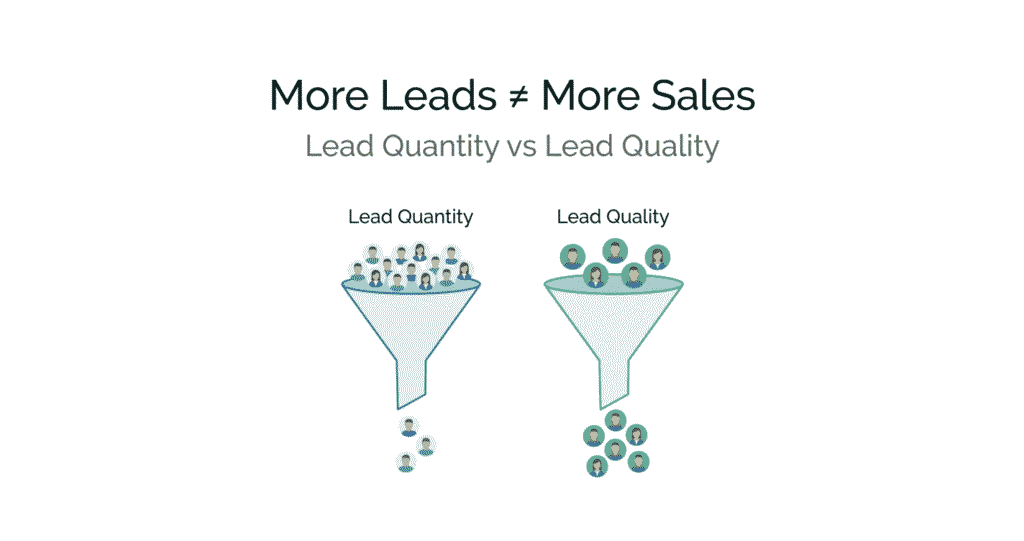
Lead Quantity vs Lead Quality: What Actually Drives Sales for Small Businesses?
Table of Contents
Understanding Lead Quality vs Quantity
Most small businesses start with one common belief:
👉 More leads = more sales
So they focus on:
- Running ads
- Driving traffic
- Collecting as many leads as possible
At first, this feels like progress.
But soon, a problem appears…
- Leads don’t respond
- Follow-ups go unanswered
- Conversions stay low
👉 Even with hundreds of leads, sales don’t increase.
Now compare this with another business:
They generate fewer leads…
But:
- Their leads are highly relevant
- They show clear interest
- They are ready to take action
👉 Result?
They close more deals with less effort.
What’s Really Happening?
The difference is not effort.
The difference is lead quality vs lead quantity.
- One focuses on volume
- The other focuses on intent and conversion potential
👉 And this single shift can completely change your sales results.
The Hidden Problem Most Businesses Ignore
Focusing only on lead quantity creates:
- Wasted time on unqualified prospects
- Higher marketing costs
- Frustration for sales teams
- Unpredictable revenue
👉 You’re working harder—but not getting better results.
The Smarter Approach
Successful businesses don’t just generate leads—they filter, qualify, and prioritize them.
They focus on:
- Getting the right leads
- Understanding buyer intent
- Improving conversion efficiency
➡️ This is what turns marketing efforts into real revenue.
What You’ll Learn in This Guide
In this beginner-friendly guide, you’ll understand:
- What lead quantity and lead quality actually mean
- Why more leads don’t always lead to more sales
- When to focus on quantity vs quality
- How to build a system that balances both effectively
👉 By the end of this article, you’ll know exactly how to stop chasing leads and start converting the right ones.
Lead Quantity vs Lead Quality
Lead quantity focuses on generating more leads, while lead quality focuses on attracting leads that are more likely to convert.
👉 For small businesses, lead quality delivers better results because it improves conversions and reduces wasted effort.
Where Lead Quantity and Quality Fit in the Sales Funnel
To fully understand lead quantity vs lead quality, you need to see where each one fits in your sales funnel.
👉 Because they don’t compete—they work at different stages of the buyer journey.
Simple Funnel Breakdown
- Top of Funnel (Awareness Stage)
👉 Focus: Lead Quantity- Attract a large audience
- Generate traffic and signups
- Build visibility
- Middle of Funnel (Consideration Stage)
👉 Focus: Lead Qualification- Filter and segment leads
- Track behavior and engagement
- Identify serious prospects
- Bottom of Funnel (Decision Stage)
👉 Focus: Lead Quality- Prioritize high-intent leads
- Personalize communication
- Convert leads into customers
What This Means in Simple Terms
- Quantity brings people in
- Qualification filters them
- Quality converts them
👉 Each stage builds on the previous one—this is how a complete sales system works
Why It Matters
Many small businesses fail because they:
- Focus only on generating leads
- Skip proper qualification
- Try to sell too early
👉 Understanding this flow helps you:
- Use the right strategy at the right time
- Avoid wasted effort
- Improve overall conversion efficiency
➡️ This is what turns your funnel into a consistent revenue system
What is Lead Quantity?
Lead quantity refers to the total number of potential customers (leads) your business generates over a period of time.
👉 In simple terms:
It’s about how many people enter your sales funnel, not how likely they are to convert.
What Does “Focus on Volume” Really Mean?
When businesses focus on lead quantity, their goal is to:
- Reach as many people as possible
- Capture maximum contacts (emails, phone numbers, signups)
- Increase traffic and visibility
👉 The strategy is:
“More leads in = more chances to sell”
But this approach doesn’t always consider:
- Whether the lead is interested
- Whether they need your product
- Whether they are ready to buy
Common Examples of Lead Quantity
Here’s how businesses typically generate high volumes of leads:
- Running paid ads to collect email signups or free trial users
- Getting hundreds or thousands of website visitors through SEO or social media
- Offering free resources (eBooks, templates, webinars) to attract signups
- Using giveaways or discounts to increase opt-ins
- Collecting leads through landing pages with broad targeting
👉 These methods are designed to maximize reach and capture attention quickly
Why Businesses Focus on Lead Quantity
Lead quantity plays an important role—especially in the early stages of growth.
1. Builds a Large Audience Quickly
More leads mean more people are aware of your brand.
👉 This is useful for:
- New businesses
- Launching new products
- Expanding reach
2. Improves Brand Awareness
Even if leads don’t convert immediately:
- They recognize your brand
- They may return later
- They can become future customers
👉 Quantity helps you stay visible in the market
3. Supports Top-of-Funnel Marketing
Lead quantity is essential for:
- Filling your marketing funnel
- Creating a pipeline of potential customers
- Generating data for analysis
👉 Without enough leads, you can’t optimize or scale.
4. Helps Test Marketing Strategies
When you generate more leads, you can:
- Test different campaigns
- Analyze what works and what doesn’t
- Improve targeting over time
👉 This is critical for beginners and growing businesses.
Important Insight
Lead quantity is useful—but only to a point.
👉 If you focus only on volume:
- You may attract low-quality leads
- Conversion rates can drop
- Sales teams may struggle with follow-ups
➡️ This is why quantity alone is not enough—it needs to be balanced with quality.
Why It Matters
Lead quantity helps you build opportunities, but it doesn’t guarantee results.
👉 Your goal is to:
- Generate enough leads to create demand
- Then filter and qualify them effectively
➡️ So you turn volume into real revenue
Problems with Focusing Only on Lead Quantity
While generating a high number of leads may look impressive, focusing only on quantity can create serious inefficiencies in your sales process.
Here’s what actually happens behind the scenes:
1. Many Leads Are Not Interested
When you prioritize volume, you attract a broad audience—but not all of them are relevant.
What happens:
- People sign up just for free resources
- Visitors have no real intent to buy
- Leads don’t match your ideal customer profile
👉 Impact:
You end up with a large list of contacts who are unlikely to convert.
2. Low Conversion Rates
More leads don’t automatically translate into more sales.
What happens:
- Most leads are still in the early awareness stage
- They are exploring, not deciding
- Your offers don’t match their immediate needs
👉 Impact:
Even with high traffic and signups, your conversion rate stays low.
3. Wasted Time on Follow-Ups
Your sales team spends time chasing leads that were never serious.
What happens:
- Repeated follow-ups with no response
- Time spent qualifying uninterested leads
- Delays in responding to high-intent prospects
👉 Impact:
You lose both time and opportunities.
4. Higher Marketing Costs
Generating more leads often requires more spending.
What happens:
- Increased ad spend to drive traffic
- Paying for leads that don’t convert
- Poor return on investment (ROI)
👉 Impact:
You spend more money without proportional results.
5. Poor Sales Efficiency
When your pipeline is filled with low-quality leads:
What happens:
- Sales teams feel overwhelmed
- Prioritization becomes difficult
- High-quality leads may get ignored
👉 Impact:
Your entire sales process becomes slower and less effective.
What’s the Real Problem?
The issue is not the number of leads—
👉 It’s the lack of qualification and intent filtering.
More leads without quality = more noise, not more revenue.
Why It Matters
Focusing only on lead quantity can reduce your overall business performance.
👉 Your goal should be to:
- Attract relevant leads
- Identify high-intent prospects
- Focus efforts where conversions are most likely
➡️ Because in reality, more leads don’t mean more revenue—better leads do.
What is Lead Quality?
Lead quality refers to how likely a potential customer is to convert into a paying customer.
👉 In simple terms:
It’s not about how many leads you have—it’s about how ready and relevant those leads are to buy.
What Does “Intent, Fit, and Readiness” Mean?
High-quality leads typically show three key signals:
- Intent → They are actively looking for a solution
- Fit → They match your ideal customer profile (industry, budget, need)
- Readiness → They are close to making a decision
👉 When all three align, the chances of conversion increase significantly.
Common Examples of High-Quality Leads
These are real behaviors that indicate strong buying intent:
- Someone requesting a demo or consultation
- A user visiting your pricing page multiple times
- A business owner asking specific questions about your service
- A lead comparing your product with competitors
- A user downloading case studies or ROI-focused content
👉 These actions show the lead is not just browsing—they are evaluating and considering a purchase
Why Lead Quality Matters
Focusing on high-quality leads can transform your entire sales process.
1. Higher Conversion Rates
Qualified leads are already interested and closer to buying.
👉 This means:
- Less convincing required
- Faster decision-making
- More closed deals
2. Better Use of Time and Resources
Instead of chasing every lead:
- You focus only on serious prospects
- Sales teams work more efficiently
- Follow-ups become more meaningful
👉 Result: More output with less effort
3. Shorter Sales Cycles
High-quality leads move through the funnel faster.
👉 Because:
- They already understand their problem
- They are actively looking for solutions
- They need clarity—not persuasion
4. Higher ROI on Marketing
When your leads are qualified:
- Marketing efforts become more targeted
- Cost per acquisition decreases
- Revenue per lead increases
👉 You get better returns from the same investment
5. Stronger Customer Relationships
High-quality leads are more aligned with your offering.
👉 This leads to:
- Better customer satisfaction
- Higher retention rates
- More referrals and repeat business
Important Insight
Not all leads are equal.
👉 A smaller list of high-quality leads is far more valuable than a large list of unqualified contacts.
Why It Matters
Lead quality directly impacts your ability to generate consistent and predictable revenue.
👉 Your goal is to:
- Attract the right audience
- Identify high-intent signals
- Focus on leads that are ready to take action
➡️ Because in the end, sales growth comes from qualified leads—not just more leads.
👉 To understand how to identify and prioritize high-quality leads, check out our complete guide on Lead qualification for small business sales teams.
Lead Quantity vs Lead Quality
Understanding the difference between lead quantity and lead quality is crucial for building a scalable and profitable sales system.
Quick Visual Flow
Lead Quantity → More Leads → Low Intent → More Effort → Lower Conversions
Lead Quality → Fewer Leads → High Intent → Focused Effort → Higher Conversions
👉 This simple shift changes your entire business outcome.
Side-by-Side Comparison
| Factor | Lead Quantity | Lead Quality |
|---|---|---|
| 🎯 Focus | Volume (more leads) | Conversion potential |
| 🔍 Intent Level | Low to medium | High |
| 👥 Audience | Broad, general | Targeted, specific |
| ⏳ Sales Effort | High (more follow-ups) | Low (focused effort) |
| 📉 Conversion Rate | Lower | Higher |
| 💰 ROI | Lower | Higher |
| ⚡ Sales Cycle | Longer | Shorter |
| 📈 Business Impact | Unpredictable growth | Consistent revenue |
What This Actually Means
🔴 Lead Quantity Approach
- Focus on getting as many leads as possible
- Attracts a wide but less relevant audience
- Requires more time to filter and follow up
- Results in lower overall efficiency
👉 Works best for:
- Brand awareness
- Early-stage growth
- Top-of-funnel marketing
🟢 Lead Quality Approach
- Focus on attracting the right leads
- Targets people with clear intent and need
- Requires less effort to convert
- Delivers higher and faster results
👉 Works best for:
- Conversions and sales
- High-ticket offers
- Predictable revenue growth
The Real Difference
👉 Lead quantity fills your pipeline
👉 Lead quality drives your revenue
Why It Matters
If you only focus on quantity:
You get more leads but fewer sales
If you focus on quality:
You get fewer leads but more conversions
👉The winning strategy is to:
Use quantity to generate opportunities
Use quality to convert them
➡️ That’s how you build a high-performing, scalable sales system.
Real-Life Scenario
Let’s look at a practical example to understand how lead quantity vs lead quality impacts real business results:
❌ Quantity-Focused Approach
- 500 leads generated
- Broad targeting with minimal filtering
- Most leads are low or unclear intent
- Sales team spends time on every lead
- Conversion rate: 2%
👉 Result: 10 customers
What’s Happening Here?
- A large portion of leads are not relevant
- Many are just exploring or looking for free value
- Follow-ups take time but produce little response
- High effort with low return
👉 Even with more leads, efficiency is low
✅ Quality-Focused Approach
- 200 leads generated
- Targeted and filtered based on intent and fit
- Leads match the ideal customer profile
- Sales team focuses only on high-potential prospects
- Conversion rate: 10%
👉 Result: 20 customers
What’s Different Here?
- Leads are already interested and problem-aware
- Communication is more relevant and personalized
- Less time is wasted on unqualified prospects
- Sales conversations are more productive
👉 Fewer leads, but much higher impact
What This Shows
This example highlights a critical truth:
👉 Lead volume alone does not drive revenue—lead quality does
- 500 leads → 10 customers
- 200 leads → 20 customers
👉 That’s 2x better results with less than half the leads
Deeper Insight
When you focus on quality:
- Your conversion rate increases
- Your cost per customer decreases
- Your sales process becomes faster and more predictable
👉 You shift from effort-based growth → efficiency-based growth
Why It Matters
The goal is not to collect leads—it’s to convert the right ones into customers.
👉 Focus on:
- Better targeting (reach the right audience)
- Lead qualification (filter serious prospects)
- High-intent signals (identify ready-to-buy users)
➡️ This allows you to achieve better results with less time, effort, and cost.
Mini Case Study: How Focusing on Lead Quality Increased Revenue
Let’s look at a simple, real-world style scenario to understand how this works in practice.
👉 “Based on common SaaS growth patterns and industry benchmarks”
The Initial Approach (Quantity-Focused)
A small SaaS business was focused on generating as many leads as possible.
- Running broad-target ads
- Offering free resources to attract signups
- Bringing in a high volume of leads
👉 Results:
- 500+ leads per month
- Low engagement from most leads
- Sales team overwhelmed with follow-ups
- Conversion rate around 2–3%
➡️ Despite high lead volume, revenue growth was slow and inconsistent.
The Shift in Strategy
The business decided to shift focus from quantity → quality
They made a few key changes:
- Narrowed their target audience
- Focused on high-intent keywords and content
- Tracked user behavior (pricing page visits, demo interest)
- Prioritized only qualified leads for sales outreach
The Results (Quality-Focused)
Within a few months:
- Leads reduced by ~40%
- Sales team focused only on high-intent prospects
- Conversion rate increased to 8–10%
- Revenue nearly doubled (2x growth)
👉 Fewer leads—but significantly better outcomes.
What Changed?
- Less time wasted on unqualified leads
- More relevant conversations with potential buyers
- Faster decision-making from prospects
- Better alignment between marketing and sales
👉 The focus shifted from activity → effectiveness
Why This Matters
This case study proves a key point:
👉 You don’t need more leads—you need better leads
When you:
- Target the right audience
- Filter leads properly
- Focus on intent
➡️ You can achieve higher revenue with fewer resources
When Should You Focus on Lead Quantity?
Lead quantity plays an important role—but only in the right stage and context.
👉 It’s not about choosing quantity over quality permanently.
It’s about knowing when volume actually helps your growth.
1. When You’re Building Brand Awareness
In the early stages, people don’t know your business yet.
👉 Your goal is to:
- Reach more people
- Increase visibility
- Get your brand in front of your target audience
Example:
- Publishing SEO blog content
- Running awareness ads
- Posting consistently on social media
👉 At this stage, even low-intent leads are valuable because they:
- Recognize your brand
- May return later
- Enter your funnel
2. When You’re in the Early Stage of Your Business
If you’re just starting out, you need data and exposure.
👉 Focusing on quantity helps you:
- Understand your audience
- Learn what works and what doesn’t
- Build an initial lead base
Example:
- Launching your first website or product
- Testing different lead magnets (eBooks, templates)
- Trying multiple marketing channels
👉 Without enough leads, you can’t optimize your strategy.
3. When You Want to Grow Your Audience
Audience growth requires consistent lead generation.
👉 Quantity helps you:
- Build an email list
- Grow your retargeting audience
- Increase long-term opportunities
Example:
- Collecting newsletter subscribers
- Offering free resources
- Running giveaways or campaigns
👉 Even if they don’t convert immediately, they become future potential customers
4. When You’re Testing Marketing Channels
Before optimizing for quality, you need to test what works.
👉 Lead quantity helps you:
- Identify high-performing channels
- Test different messaging and offers
- Gather data for better targeting
Example:
- Testing Google Ads vs Facebook Ads
- Trying different landing pages
- Experimenting with content topics
👉 Once you find what works, you can shift focus to quality.
Strategic Insight
Lead quantity is most effective at the top of the funnel, where the goal is to:
- Attract attention
- Generate interest
- Build a pipeline
👉 But it should always be followed by qualification and filtering
Why It Matters
Focusing on quantity at the right time helps you:
- Build momentum
- Create opportunities
- Generate data for smarter decisions
👉 Your goal is to:
- Use quantity to fill your funnel
- Then use quality to convert leads
➡️ This balance is what drives sustainable business growth.
When Should You Focus on Lead Quality?
While lead quantity helps you create opportunities, lead quality is what turns those opportunities into revenue.
👉 The key is knowing when to shift your focus from volume to conversion and efficiency.
1. When Your Goal is Increasing Conversions
If you already have traffic or leads but low sales, the problem is not quantity—it’s quality.
👉 Your focus should be to:
- Identify high-intent leads
- Improve targeting
- Prioritize ready-to-buy prospects
Example:
- Visitors are coming to your website, but no one is converting
- You have email subscribers, but low response rates
👉 This means you need better-qualified leads, not more leads
2. When You Have Limited Time or Resources
Small businesses often have:
- Limited budgets
- Small sales teams
- Less time for follow-ups
👉 In this case, focusing on quality helps you:
- Avoid wasting time on low-intent leads
- Prioritize high-value opportunities
- Maximize output with minimal effort
Example:
Instead of contacting 100 leads, you focus on the top 20 most qualified ones.
👉 Result: Better efficiency and higher conversions.
3. When You Offer High-Ticket Products or Services
If your product or service is expensive, not everyone is your ideal customer.
👉 You need leads who:
- Understand the value
- Have the budget
- Are serious about solving their problem
Example:
- B2B services
- Consulting or agency work
- SaaS tools with premium pricing
👉 Quality ensures you speak only to decision-makers and serious buyers
4. When You Want Predictable Revenue Growth
Random leads create unpredictable results.
👉 High-quality leads create:
- Consistent conversions
- Reliable sales pipeline
- Better forecasting
Example:
- You know that out of 50 qualified leads, 10 will convert
👉 This makes your business more predictable and scalable.
5. When Your Funnel is Already Generating Leads
Once your top-of-funnel is working:
👉 The next step is optimization, not expansion.
- Improve lead qualification
- Refine targeting
- Focus on conversion stages
Example:
- Your SEO blog is generating traffic
- Your ads are bringing leads
👉 Now you optimize for who converts—not just who clicks
Strategic Insight
Lead quality becomes critical in the middle and bottom of the funnel, where the goal is to:
- Evaluate prospects
- Build trust
- Convert into customers
👉 This is where real revenue is generated.
Why It Matters
Focusing on lead quality helps you:
- Increase conversion rates
- Reduce wasted effort
- Build a more efficient sales system
👉 Your goal is to:
- Attract the right audience
- Identify high-intent signals
- Focus on leads that are ready to act
➡️ Because sustainable growth comes from consistent conversions—not just more traffic.
The Best Strategy: Balance Lead Quantity and Lead Quality
The most successful businesses don’t choose between quantity or quality—they combine both strategically.
👉 Lead quantity fills your pipeline
👉 Lead quality drives your conversions
➡️ When you balance both, you create a scalable and predictable sales system
How the Balanced Approach Works
- First, you attract a large audience (quantity)
- Then, you filter and qualify the right leads (quality)
- Finally, you focus on converting high-intent prospects
👉 This ensures you’re not just generating leads—you’re turning them into revenue
Step-by-Step Strategy to Balance Both
1. Generate Leads (Quantity)
Start by creating a steady flow of leads into your funnel.
👉 Your goal is to:
- Increase visibility
- Attract potential customers
- Build a consistent pipeline
How to do it:
- SEO content: Blog posts targeting high-intent keywords
- Paid ads: Drive traffic to landing pages or offers
- Social media: Share valuable content and attract engagement
👉 At this stage, focus on reach and awareness, not perfection.
2. Qualify Leads (Quality)
Once leads enter your funnel, the next step is to filter and prioritize them.
👉 Your goal is to:
- Identify serious prospects
- Remove low-quality leads
- Focus on those most likely to convert
How to do it:
- Use lead scoring based on actions (clicks, visits, demos)
- Track behavior (pricing page visits, downloads, engagement)
- Segment your audience based on interest, intent, and profile
👉 This step turns raw leads into actionable opportunities
3. Focus on High-Intent Leads (Conversion Stage)
Now, shift your attention to leads that are ready to take action.
👉 Your goal is to:
- Maximize conversions
- Close deals efficiently
- Improve overall ROI
How to do it:
- Prioritize Sales Qualified Leads (SQLs) and Product Qualified Leads (PQLs)
- Personalize your communication based on their needs
- Respond quickly to high-intent actions (demo requests, pricing visits)
👉 This is where real revenue is generated
Strategic Insight
Most businesses fail because they stop at lead generation.
👉 They focus on getting leads—but not converting them.
The winning approach is:
- Quantity → creates opportunities
- Quality → creates results
➡️ Growth happens when both work together.
Why It Matters
Balancing lead quantity and quality helps you:
- Build a consistent lead pipeline
- Improve conversion rates
- Use time and resources efficiently
👉 Your goal is to:
- Attract enough leads to grow
- Qualify them effectively
- Focus on those most likely to convert
➡️ This is how you create a sustainable, scalable, and high-performing sales system.
How AI Helps Improve Lead Quality
Artificial Intelligence (AI) is changing how businesses identify and convert leads. Instead of relying on manual judgment or guesswork, AI helps you analyze data, detect intent, and prioritize the right prospects automatically.
👉 The result: smarter decisions, better leads, and higher conversions.
How AI Improves Lead Quality (In Practice)
1. Identify High-Intent Leads Automatically
AI analyzes user behavior to detect which leads are most likely to convert.
What it looks at:
- Pages visited (especially pricing or demo pages)
- Frequency of visits
- Content engagement (downloads, clicks)
- Actions taken (signups, requests)
👉 Why it matters:
You can instantly identify leads who are ready to take action, instead of treating all leads equally.
2. Automate Lead Scoring
AI assigns scores to leads based on their behavior and profile.
Example scoring logic:
- Email open → +5 points
- Link click → +10 points
- Pricing page visit → +20 points
- Demo request → +30 points
👉 Why it matters:
- No manual sorting
- Clear prioritization
- Sales team focuses on top leads first
3. Track User Behavior Across Channels
AI doesn’t just track one action—it connects data from multiple touchpoints.
It tracks:
- Website interactions
- Email engagement
- Ad clicks
- Product usage (for SaaS tools)
👉 Why it matters:
You get a complete picture of the lead’s journey, helping you understand their intent more accurately.
4. Personalize Outreach at Scale
AI helps you send the right message to the right person at the right time.
What it enables:
- Personalized email sequences
- Behavior-based follow-ups
- Dynamic content recommendations
- Smart timing for outreach
👉 Why it matters:
Personalized communication increases:
- Engagement
- Trust
- Conversion rates
5. Continuously Learn and Optimize
AI systems improve over time by analyzing results.
What it does:
- Identifies which leads convert best
- Refines targeting automatically
- Suggests improvements in campaigns
👉 Why it matters:
Your lead qualification process becomes smarter and more effective over time
Real Business Impact
With AI, businesses can:
- Reduce time spent on manual qualification
- Focus only on high-quality leads
- Improve conversion rates significantly
- Scale operations without increasing workload
👉 This creates a more efficient and predictable sales system
Why It Matters
AI turns lead qualification into a data-driven and scalable process.
👉 Your goal is to:
- Identify the best leads faster
- Automate repetitive tasks
- Improve decision-making accuracy
➡️ So you can convert more leads with less effort and grow your business efficiently.
👉 Explore the Best AI tools for sales and marketing automation to improve lead qualification and outreach efficiency.
Tools to Improve Lead Quality
Improving lead quality is not just about strategy—it also depends on using the right tools to track, analyze, and engage leads effectively.
👉 The right tools help you identify high-intent prospects, automate processes, and make smarter decisions.
1. CRM Tools (Track & Manage Leads)
Customer Relationship Management (CRM) tools help you organize and monitor every lead in your pipeline.
Popular Example:
- HubSpot CRM
What they do:
- Store and manage lead information
- Track interactions (emails, calls, visits)
- Segment leads based on behavior and profile
- Assign lead scores and stages
👉 Why it matters:
You get a clear view of which leads are worth focusing on and where they are in the sales process.
👉 Want to get started with lead management? Explore our HubSpot CRM beginner guide to understand how to organize, track, and convert leads more efficiently.
2. Outreach Tools (Automate Follow-Ups)
Outreach tools help you stay consistent with communication without manual effort.
Popular Example:
- Reply.io
What they do:
- Automate email sequences and follow-ups
- Send personalized messages at scale
- Track responses and engagement
- Manage multi-channel communication (email, LinkedIn, etc.)
👉 Why it matters:
Timely and consistent follow-ups ensure that high-quality leads don’t slip through the cracks.
👉 Check out our Reply.io review to learn how to automate follow-ups and improve response rates.
3. Lead Intelligence & Prospecting Tools (Find High-Quality Leads)
These tools help you identify and filter leads before they even enter your funnel.
Popular Example:
- Apollo.io
What they do:
- Find leads based on job role, company, and industry
- Provide verified contact data
- Filter prospects using advanced targeting
- Identify high-intent signals
👉 Why it matters:
You start with better-quality leads from the beginning, reducing wasted effort later.
👉 Read our detailed Apollo.io review to see how it helps you find and filter high-quality leads.
4. Analytics Tools (Understand Lead Behavior)
Analytics tools help you understand how leads interact with your business.
What they track:
- Website activity (pages visited, time spent)
- Conversion paths
- Content engagement
- Drop-off points in your funnel
👉 Why it matters:
You can identify which leads show strong intent and optimize your strategy accordingly.
How These Tools Work Together
- Apollo.io → Brings in targeted, high-quality leads
- HubSpot CRM → Organizes and tracks them
- Reply.io → Engages and nurtures them
👉 Together, they create a complete lead qualification and conversion system
Why It Matters
Using the right tools helps you:
- Focus only on high-quality leads
- Reduce manual effort
- Improve follow-up consistency
- Increase conversion rates
➡️ Instead of chasing every lead, you build a smart, scalable system that drives real business growth.
👉 Not sure which tool to choose? See our full comparison of Apollo.io vs Reply.io to find the best fit for your business.
Lead Quality Optimization Checklist
Before you try to generate more leads, make sure you’re maximizing the quality of the leads you already have.
👉 Use this simple checklist to evaluate and improve your lead qualification process:
✅ Are You Targeting the Right Audience?
- Are you clearly defining your ideal customer?
- Are your campaigns reaching relevant people?
- Are you avoiding broad or generic targeting?
👉 The right audience = better lead quality from the start
✅ Are You Tracking High-Intent Signals?
- Are you monitoring key actions (pricing page visits, demo requests)?
- Are you identifying engaged users vs passive visitors?
- Are you using data to understand buyer behavior?
👉 Intent signals help you spot leads that are ready to convert
✅ Are You Prioritizing Qualified Leads?
- Are you focusing on high-scoring or high-fit leads first?
- Are you segmenting leads based on intent and profile?
- Are you avoiding time spent on low-quality prospects?
👉 Prioritization improves efficiency and conversion rates
✅ Are You Following Up at the Right Time?
- Are you responding quickly to high-intent actions?
- Are your follow-ups consistent and relevant?
- Are you using automation to avoid delays?
👉 Timing plays a major role in closing deals
How to Use This Checklist
👉 If you answered “No” to any of the above:
- That’s where your lead quality is breaking down
👉 Fixing even one of these areas can:
- Improve conversions
- Reduce wasted effort
- Increase revenue efficiency
Why It Matters
This checklist helps you move from:
- Random lead generation → Structured lead conversion
➡️ Because better systems—not more leads—drive real growth.
Key Takeaway
More leads don’t guarantee more sales.
👉 What truly drives results is not volume—but relevance and intent.
Instead of chasing every lead, focus on:
- Reaching the right audience who actually needs your solution
- Identifying high-intent leads who are ready to take action
- Using smart qualification methods to filter and prioritize effectively
👉 When you shift your focus from quantity to quality:
- Your conversion rates improve
- Your sales process becomes more efficient
- Your efforts produce better outcomes
➡️ This is what turns lead generation into real, measurable business growth
👉 Browse our complete guide on AI workflows for small businesses to see how you can automate sales, marketing, and daily operations using the right tools.s.
Final Thought
👉 The goal is not more leads—it’s better leads that convert.
When you focus on quality:
- You close more deals
- You save time
- You grow faster
➡️ Build a system that prioritizes conversion over volume.
FAQs
-
What is the difference between lead quantity and lead quality?
Lead quantity refers to the number of leads your business generates, while lead quality refers to how likely those leads are to convert into customers.
👉 Quantity focuses on volume, whereas quality focuses on intent and relevance. -
Which is more important: lead quantity or lead quality?
For most small businesses, lead quality is more important because it leads to higher conversion rates and better use of resources.
👉 However, a balance of both is ideal for long-term growth. -
Why do more leads not always increase sales?
More leads don’t guarantee sales because many of them may not be interested, qualified, or ready to buy.
👉 Without proper targeting and qualification, high lead volume can result in low conversions. -
How can small businesses improve lead quality?
Small businesses can improve lead quality by:
Targeting the right audience
Tracking high-intent actions
Using lead qualification methods
Personalizing communication
👉 This helps focus only on leads that are more likely to convert. -
What are high-intent leads?
High-intent leads are prospects who show strong interest in your product or service through actions like visiting pricing pages, requesting demos, or engaging deeply with your content.
👉 These leads are more likely to convert into customers. -
When should a business focus on lead quantity?
Businesses should focus on lead quantity during the early stages, when building brand awareness, growing an audience, or testing marketing channels.
👉 This helps generate data and create opportunities. -
When should a business focus on lead quality?
Lead quality should be the focus when the goal is to increase conversions, improve efficiency, or generate predictable revenue.
👉 This is especially important for small teams and high-ticket services. -
How does lead qualification improve sales results?
Lead qualification helps identify and prioritize the most valuable prospects, allowing businesses to focus their time and effort on leads that are more likely to convert.
👉 This improves efficiency and increases overall sales performance. -
Can you balance lead quantity and lead quality?
Yes, the best strategy is to generate leads first (quantity) and then filter and prioritize them (quality).
👉 This creates a structured and scalable sales process. -
How does AI help improve lead quality?
AI helps improve lead quality by analyzing user behavior, predicting buying intent, automating lead scoring, and personalizing outreach.
👉 This makes lead qualification faster, more accurate, and scalable.