Table of Contents
AI Tools for B2B Lead Generation: Best Tools, Strategies & Workflow (2026 Guide)
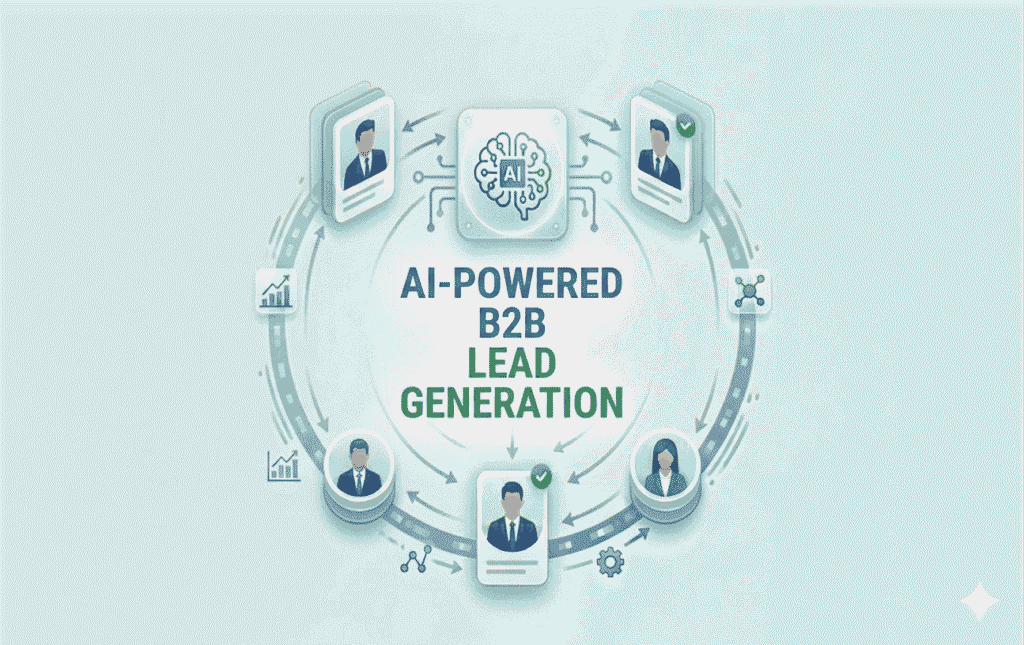
B2B lead generation has undergone a major shift with the adoption of AI. What once required hours of manual research, guesswork, and repetitive tasks can now be executed in minutes using intelligent, data-driven tools. Businesses no longer need to rely on outdated methods to find prospects—instead, they can leverage AI to identify high-quality leads, access verified contact data, enrich profiles with actionable insights, and engage prospects with personalized outreach.
Modern AI tools are designed to streamline every stage of the lead generation process. From discovering the right audience to automating follow-ups, these tools bring speed, accuracy, and scalability into one unified workflow. This not only reduces manual workload but also improves targeting precision, increases response rates, and drives better conversion outcomes.
👉 The biggest advantage is not just automation—it’s the ability to build a predictable and repeatable system for generating leads.
In this guide, you’ll learn:
- The best AI tools for B2B lead generation
- How each tool fits into the overall workflow
- Proven strategies to improve targeting and outreach
- A step-by-step system to build a complete lead generation engine
By the end, you’ll have a clear understanding of how to use AI tools together to consistently generate, manage, and convert high-quality B2B leads.
🆚 AI Tools vs Traditional Lead Generation (Quick Comparison)
Here’s a quick comparison to understand why AI is transforming B2B lead generation:
| Aspect | Traditional Lead Generation | AI-Powered Lead Generation |
|---|---|---|
| Speed | Slow, manual research | Fast, automated prospecting |
| Data Accuracy | Medium (often outdated) | High (real-time verification & enrichment) |
| Scalability | Limited by team size | Easily scalable with automation |
| Manual Effort | High (research, emails, follow-ups) | Low (automated workflows) |
| Targeting | Broad and less precise | Highly targeted (ICP + intent data) |
| Personalization | Manual and time-consuming | Automated with dynamic variables |
| Consistency | Inconsistent follow-ups | Structured and automated sequences |
| Performance Tracking | Limited visibility | Real-time analytics and optimization |
🔑 What This Means for You
- Traditional methods rely heavily on time and manual effort
- AI-powered systems focus on efficiency, accuracy, and scale
👉 This shift allows businesses to generate more leads with less effort and better results
🧩 What Is AI in B2B Lead Generation?
AI in B2B lead generation refers to using artificial intelligence to find, qualify, and engage potential business customers faster and more accurately.
Instead of manual research and guesswork, AI uses data and automation to streamline the entire process.
📌 Simple Definition
👉 AI helps businesses:
- Find the right prospects
- Collect and verify contact data
- Analyze buying intent
- Automate outreach
- Prioritize high-quality leads
🔍 How AI Transforms Lead Generation
Traditional lead generation is:
- Time-consuming
- Manual
- Inconsistent
AI-powered lead generation is:
- Fast and automated
- Data-driven
- Scalable and predictable
👉 This shift allows businesses to move from manual effort → intelligent systems
⚙️ What AI Actually Does
AI tools work behind the scenes to:
- Analyze large datasets (companies, contacts, behavior)
- Identify patterns and intent signals
- Suggest high-quality prospects
- Automate repetitive tasks (search, verification, follow-ups)
- Continuously improve results using data
🎯 Key Benefits for Businesses
- Better targeting → Reach the right audience
- Higher accuracy → Verified and enriched data
- Faster execution → Save hours of manual work
- Improved conversions → Focus on high-intent leads
- Scalable system → Grow without increasing workload
💡 Why It Matters
👉 AI shifts your approach from:
- “Finding random leads”
to - “Targeting the right leads at the right time”
🔑 Key Takeaway
AI in B2B lead generation is not just about automation—it’s about building a smarter, faster, and more efficient system that helps you consistently generate and convert high-quality leads.
🔑 Key Capabilities of AI in B2B Lead Generation
AI transforms B2B lead generation by improving how businesses find, qualify, and convert leads using data, automation, and predictive insights.
🎯 1. Identifying Potential Customers (Smart Prospecting)
AI tools help you find the right audience instead of random leads by scanning large datasets and applying filters based on:
- Industry and niche
- Company size and revenue
- Job roles and decision-makers
- Geographic location
👉 Result: Highly targeted lead lists that improve relevance and conversion potential
📇 2. Extracting Verified Contact Data (Accurate Reach)
AI-powered platforms collect and validate contact details such as:
- Email addresses
- Phone numbers
- Social profiles
They also verify data in real-time to ensure accuracy.
👉 Result:
- Lower bounce rates
- Better email deliverability
- Direct access to decision-makers
🔍 3. Analyzing Intent Signals (High-Quality Leads)
AI identifies prospects who are actively interested by analyzing:
- Website visits
- Content engagement
- Search behavior
- Technology usage
👉 Result:
- Focus on high-intent leads
- Better timing for outreach
- Increased chances of conversion
⚙️ 4. Automating Outreach (Scalable Engagement)
AI tools automate communication while keeping it personalized:
- Send cold emails at scale
- Schedule follow-ups automatically
- Personalize messages using lead data
👉 Result:
- Consistent outreach
- Reduced manual work
- Ability to scale campaigns easily
🧠 5. Scoring & Prioritizing Leads (Smart Focus)
AI evaluates leads and assigns scores based on:
- Engagement level
- Company fit
- Behavioral signals
👉 Result:
- Identify high-value prospects
- Prioritize outreach effectively
- Avoid wasting time on low-quality leads
📈 Why This Matters for B2B Businesses
Using AI in lead generation helps you:
- Reduce manual workload
- Improve targeting accuracy
- Increase outreach efficiency
- Shorten sales cycles
- Boost conversion rates
👉 Overall impact: A faster, smarter, and more predictable lead generation system
🚀 Key Takeaway
AI in B2B lead generation is not just about automation—it’s about building a smarter system that helps you:
👉 Find better leads → Reach them effectively → Convert them faster
When used correctly, AI turns lead generation into a scalable, data-driven growth engine.
🚀 Why Use AI for B2B Lead Generation?
AI has become a major advantage in modern B2B lead generation by transforming slow, manual processes into fast, data-driven, and scalable systems. Instead of relying on guesswork, businesses can use AI to identify the right prospects, improve outreach, and optimize conversions with higher precision.
⚡ Faster Prospecting (Save Time & Effort)
AI tools can scan large datasets, platforms, and databases within seconds to find relevant leads.
- Eliminates hours of manual research
- Instantly generates targeted prospect lists
- Speeds up the entire lead discovery process
👉 Result: Sales teams spend more time closing deals, not searching for leads
🎯 Higher Data Accuracy (Better Deliverability)
AI tools automatically verify and enrich contact data to ensure accuracy.
- Removes invalid or outdated emails
- Eliminates duplicates
- Improves data quality
👉 Result: Higher email deliverability and better chances of reaching real decision-makers
🎯 Better Targeting (Reach the Right Audience)
AI analyzes firmographic and behavioral data to match leads with your Ideal Customer Profile (ICP).
- Industry, company size, revenue
- Job roles and decision-makers
- Engagement and intent signals
👉 Result: More relevant outreach and higher conversion rates
📈 Scalable Outreach (Grow Without Limits)
AI allows businesses to reach a large number of prospects without increasing manual effort.
- Automate email campaigns and follow-ups
- Personalize messages at scale
- Manage multiple campaigns efficiently
👉 Result: Ability to scale lead generation while maintaining quality communication
⏱️ Reduced Manual Workload (Increase Productivity)
AI automates repetitive tasks across the lead generation process.
- Lead research and data collection
- Email verification and list cleaning
- Follow-ups and campaign management
👉 Result: More time for strategy, relationship-building, and closing deals
💰 Improved ROI (Maximize Results)
By combining automation, accuracy, and better targeting, AI improves overall performance.
- Reduces wasted effort and resources
- Increases conversion rates
- Lowers cost per lead
👉 Result: Higher return on marketing and sales investments
🔑 Key Takeaway
AI-powered B2B lead generation helps businesses work smarter, faster, and more efficiently.
👉 By improving speed, accuracy, targeting, and scalability, AI enables you to build a predictable, high-performing lead generation system that drives consistent growth.
🎯 When Should You Use AI for B2B Lead Generation?
AI-powered lead generation is most effective when your goal is to scale, optimize, and systemize your outreach efforts. While it’s powerful, it delivers the best results in specific scenarios where automation and data-driven targeting can make a real difference.
👉 Use AI for lead generation when:
⚡ You Want to Scale Outreach Quickly
If you need to reach hundreds or thousands of prospects, AI tools help you automate campaigns while maintaining personalization.
👉 Ideal for:
- SaaS companies
- Agencies
- Growing sales teams
🕒 Manual Prospecting Is Too Slow
If your team is spending hours searching for leads, collecting emails, and managing spreadsheets, AI can drastically reduce that effort.
👉 AI tools can:
- Find leads instantly
- Extract verified data
- Automate repetitive tasks
🎯 You Need Better Lead Quality
If your current outreach is getting low replies or poor conversions, the issue is often bad targeting.
👉 AI helps by:
- Matching leads to your Ideal Customer Profile (ICP)
- Identifying high-intent prospects
- Improving relevance of outreach
📈 You Want Predictable & Scalable Results
AI transforms lead generation into a repeatable system, not a one-time effort.
👉 This is useful when:
- You want consistent lead flow
- You’re building a long-term pipeline
- You want measurable performance
👥 You Have a Small Team with High Targets
If you don’t have a large sales team, AI tools act as a force multiplier.
👉 They help you:
- Do more with fewer resources
- Automate workflows
- Focus on closing instead of manual tasks
🔑 Quick Decision Insight
👉 If your goal is speed + scale + efficiency, AI is the right choice.
👉 If you want predictable lead generation, AI becomes essential.
Best AI Tools for B2B Lead Generation (Beginner Guide)
Before exploring individual tools, it’s important to understand one core concept:
👉 B2B lead generation is a structured system—not a single tool.
The real power of AI comes from combining multiple tools into a connected workflow where each step supports the next.
📌 Core Workflow (End-to-End System)
A complete AI-powered lead generation system follows this structure:
Find Leads → Get Contact Data → Verify Data → Reach Out → Manage Leads → Prioritize High-Value Prospects
👉 Each stage plays a critical role in moving a prospect from discovery to conversion.
🧠 What Each Stage Means (Simple Breakdown)
- Find Leads → Identify the right companies and decision-makers that match your Ideal Customer Profile (ICP)
- Get Contact Data → Collect accurate emails and contact details to enable outreach
- Verify Data → Ensure emails are valid, active, and deliverable
- Reach Out → Send personalized and automated outreach messages at scale
- Manage Leads → Track conversations, follow-ups, and deal progress in a structured system
- Prioritize Leads → Focus on high-intent and high-quality prospects for better conversions
👉 This structured approach ensures that every lead is handled systematically rather than randomly.
⚙️ Why This Structure Matters
Following a clear workflow provides multiple advantages:
- Keeps your lead generation process organized and consistent
- Ensures no critical step is missed
- Improves data accuracy and outreach effectiveness
- Increases response rates and engagement
- Makes scaling easier with automation and AI tools
- Helps convert more leads into paying customers
👉 Without this structure, even the best tools can produce inconsistent results.
🚀 How AI Tools Fit Into This System
Each AI tool you use is designed to solve a specific part of the workflow:
- Prospecting tools → Find leads
- Email tools → Collect and verify data
- Outreach tools → Engage prospects
- CRM tools → Manage and track leads
- AI scoring tools → Prioritize opportunities
👉 When combined strategically, these tools create a seamless and efficient system.
🔑 Key Insight
The key to success is not using more tools—but using the right tools in the right workflow.
👉 When properly connected, AI tools transform B2B lead generation into a scalable, predictable, and conversion-focused system that drives consistent business growth.
1️⃣ Lead Discovery & Prospecting Tools
🧠 What This Means
Lead discovery and prospecting tools help you answer the most important question in B2B lead generation:
👉 “Who should I target?”
Instead of relying on manual research or guesswork, these tools allow you to identify companies and decision-makers that closely match your Ideal Customer Profile (ICP). This ensures your outreach is relevant, focused, and more likely to convert.
👉 This is the foundation of your entire lead generation system—if your targeting is wrong, everything that follows becomes less effective.
🔍 What You Can Do With These Tools
Prospecting tools help you build highly targeted and qualified lead lists using advanced filters such as:
- Industry, niche, or business category
- Company size, revenue, and growth stage
- Job roles (CEO, Founder, Marketing Head, Sales Leader)
- Seniority level and decision-making authority
- Department (marketing, sales, operations, etc.)
- Geographic location and target markets
👉 This level of targeting ensures you focus only on relevant, high-potential prospects, not random audiences.
⚙️ How These Tools Work
Prospecting platforms maintain large, continuously updated databases of companies and professionals. These databases include structured data such as:
- Company details (industry, size, revenue)
- Employee roles and hierarchy
- Business activity and growth signals
When you apply filters, the tool instantly returns a list of matching prospects based on your criteria.
👉 Many tools also use AI to:
- Suggest similar leads based on your searches
- Recommend new prospect segments
- Improve targeting over time
This makes lead discovery faster, smarter, and more efficient.
🔹 Example Tools
- Apollo.io
- LinkedIn Sales Navigator
💼 Real Use Case
A SaaS startup wants to target marketing agencies for its product. Using a prospecting tool, they apply filters like:
- Industry: Marketing & Advertising
- Location: United States
- Company Type: Agencies
- Job Role: Founder or CEO
👉 Within minutes, they generate a refined list of decision-makers who are highly relevant to their offer.
This list becomes the foundation for:
- Email outreach campaigns
- LinkedIn prospecting
- Sales pipeline building
🎯 Beginner Tip
Always start your lead generation process with prospecting tools.
👉 If your targeting is too broad or inaccurate:
- Your emails will feel irrelevant
- Response rates will drop
- Conversion rates will suffer
👉 A well-defined audience leads to:
- Higher engagement
- Better response rates
- Stronger conversions
🔑 Key Takeaway
Lead discovery tools don’t just find leads—they help you find the right leads.
👉 The more precise your targeting at this stage, the more effective your entire B2B lead generation system will be.
2️⃣ Email Finding & Verification Tools
🧠 What This Means
Once you’ve identified your target audience, the next step is reaching them directly. Email finding and verification tools help you answer a critical question:
👉 “How do I contact these prospects in their inbox?”
These tools allow you to discover professional email addresses and ensure they are valid before starting outreach.
👉 Without accurate contact data, even the best-targeted campaigns will fail.
🔍 What You Can Do With These Tools
Email finding and verification tools help you build a clean, reliable contact list by enabling you to:
- Find email addresses using company domains
- Search emails of specific individuals (name + company)
- Identify multiple contacts within an organization
- Verify if emails are valid and deliverable
- Clean bulk email lists before campaigns
- Reduce bounce rates and protect sender reputation
👉 This ensures your outreach reaches real people, not invalid inboxes
⚙️ How These Tools Work
These tools use a mix of data, patterns, and AI to generate and verify emails.
- Detect common email formats (e.g., firstname.lastname@company.com)
- Use public data and internal databases
- Predict possible email combinations
- Verify emails by checking server responses (without sending emails)
👉 Many tools also provide:
- Status labels (valid, invalid, risky, catch-all)
- Confidence scores to prioritize reliable contacts
🔹 Example Tool
- Hunter.io
💼 Real Use Case
After identifying a target company, you enter its domain into an email finder tool.
👉 The tool returns contacts such as:
- CEO email
- Marketing Manager email
- Sales representative email
Before outreach, you verify these emails to ensure they are safe to use.
👉 Verified contacts are then:
- Added to your email campaigns
- Stored in your CRM
- Used for follow-ups
🎯 Beginner Tip
Never skip email verification.
👉 If you send emails to invalid addresses:
- Bounce rates increase
- Sender reputation gets damaged
- Emails may land in spam
👉 A clean email list leads to:
- Better deliverability
- Higher open rates
- More consistent campaign performance
🔑 Key Takeaway
Email finding and verification tools don’t just help you reach prospects—they help you reach them accurately and reliably.
👉 Clean, verified data is the foundation of successful outreach and long-term email performance.
3️⃣ Cold Email Outreach Automation Tools
🧠 What This Means
After finding and verifying your leads, the next step is outreach. Cold email automation tools help you connect with multiple prospects efficiently while keeping your messages personalized.
👉 In simple terms: send targeted email campaigns automatically instead of manual one-by-one emails
These tools are built to help you:
- Start conversations
- Nurture leads
- Follow up consistently
👉 Ensuring no opportunity is missed
🔍 What You Can Do With These Tools
Cold email automation platforms allow you to scale outreach without losing quality:
- Create multi-step email sequences (intro + follow-ups)
- Send personalized emails using variables (name, company, role)
- Automate follow-ups based on time or actions
- Manage multiple inboxes for better deliverability
- Track performance (opens, replies, engagement)
- Segment campaigns for different audiences
- Test different messages (A/B testing)
👉 This helps you maintain consistent, structured communication at scale
⚙️ How These Tools Work
The process is simple and repeatable:
- Upload your verified lead list
- Create an email sequence (multiple steps)
- Set timing between emails
- Add personalization fields
- Launch the campaign
👉 The tool then:
- Sends emails automatically
- Follows up based on schedule
- Personalizes each message
Advanced features may include:
- Inbox rotation (to avoid spam filters)
- Smart sending times (based on engagement data)
🔹 Example Tools
- Instantly.ai
- Smartlead.ai
💼 Real Use Case
A typical outreach sequence might look like:
- Day 1 → Intro email introducing your offer
- Day 3 → Follow-up with additional value
- Day 7 → Reminder or insight
- Day 10 → Final follow-up
👉 All emails are:
- Pre-written
- Scheduled
- Sent automatically
This ensures consistent follow-ups without manual effort.
🎯 Beginner Tip
Personalization is the key to higher reply rates.
👉 Always include:
- Name
- Company
- Role or context
Avoid generic mass emails.
👉 Personalized emails:
- Feel more human
- Increase engagement
- Improve response rates significantly
🔑 Key Takeaway
Cold email tools don’t just automate outreach—they help you scale conversations without losing personalization.
👉 When used correctly, they turn outreach into a consistent, automated, and high-converting system.
4️⃣ CRM & Lead Management Tools
🧠 What This Means
Once you start generating and contacting leads, you need a system to keep everything organized. This is where CRM (Customer Relationship Management) tools become essential.
👉 A CRM helps you store, manage, and track all leads, conversations, and deals in one place
Without a CRM, your data gets scattered across:
- Emails
- Spreadsheets
- Notes
- Multiple tools
👉 This leads to missed follow-ups and lost opportunities
A CRM solves this by creating a centralized system that supports your entire sales process.
🔍 What You Can Do With These Tools
CRM platforms help you manage leads from first contact to conversion:
- Store and organize all contact details in one database
- Track communication history (emails, calls, meetings)
- Manage leads through a visual sales pipeline
- Assign tasks, reminders, and follow-ups
- Track deal progress from start to close
- Segment contacts based on status or engagement
- Collaborate with team members
- Add notes and context for every interaction
👉 This ensures every lead is tracked, nurtured, and moved forward properly
⚙️ How These Tools Work
In a CRM, each lead becomes a record that contains:
- Contact information
- Interaction history
- Deal status
- Notes and activities
These records move through a sales pipeline, such as:
New → Contacted → Qualified → Proposal → Closed
👉 As you interact with leads:
- Emails are logged
- Calls are recorded
- Status is updated
Modern CRMs also integrate with email and outreach tools, allowing:
- Automatic tracking of conversations
- Real-time updates
- Complete visibility of the lead journey
🔹 Example Tool
- HubSpot CRM
💼 Real Use Case
A sales representative uses a CRM to manage daily activities.
Inside the dashboard, they can see:
- Emails sent to each lead
- Calls scheduled and completed
- Notes from previous conversations
- Proposals shared
- Current deal stage in the pipeline
👉 Everything is visible in one place, making it easy to:
- Track progress
- Decide next actions
- Stay organized
🎯 Beginner Tip
Treat your CRM as your control center.
👉 Best practices:
- Update it consistently
- Log every interaction
- Track every deal
👉 Remember:
- CRM success depends on usage, not features
- Even a simple setup works if used consistently
🔑 Key Takeaway
CRM tools don’t just store data—they help you manage relationships and close deals systematically.
👉 When used properly, a CRM turns your lead generation into a structured, trackable, and conversion-focused process.
5️⃣ AI Lead Scoring & Enrichment Tools
🧠 What This Means
After finding leads, collecting contact data, and starting outreach, the next challenge is knowing where to focus your efforts. This is where AI lead scoring and enrichment tools play a critical role.
👉 They help you answer: “Which leads are most likely to convert?”
Instead of treating every lead the same, AI evaluates each one and assigns a score based on quality, relevance, and buying intent.
👉 This allows you to focus on high-value opportunities instead of wasting time on low-quality prospects
🔍 What You Can Do With These Tools
AI scoring and enrichment tools help you improve lead quality and prioritization:
- Assign scores based on lead fit and behavior
- Identify high-intent prospects more likely to convert
- Enrich lead profiles with missing data (company size, revenue, industry)
- Add or update contact and company details automatically
- Segment leads based on quality or buying stage
- Prioritize outreach based on lead value
👉 This ensures your efforts are focused on leads that matter most
⚙️ How These Tools Work
AI analyzes multiple data points to evaluate each lead:
- Company size, industry, and business type
- Job role and decision-making authority
- Website visits and behavioral signals
- Email engagement and interactions
- Firmographic and demographic data
👉 Based on this analysis, leads are scored as:
- High
- Medium
- Low
Some tools also update scores dynamically as:
- Leads interact with your emails
- New data becomes available
Enrichment tools simultaneously improve your data by:
- Filling missing information
- Updating outdated records
- Keeping your CRM accurate and complete
🔹 Example Tools
- Clearbit
- ZoomInfo
💼 Real Use Case
A business has a list of 500 leads but doesn’t know where to start.
Using AI scoring:
- Top 50 leads are identified as high-quality
- Sales team focuses on these first
- Lower-scoring leads are nurtured or deprioritized
👉 This results in:
- Better use of time
- Higher conversion rates
- More efficient outreach
🎯 Beginner Tip
Don’t treat all leads equally.
👉 Focus on quality over quantity:
- Prioritize high-scoring leads
- Spend more time on valuable prospects
- Avoid wasting effort on low-potential leads
👉 This approach improves both efficiency and results
🔑 Key Takeaway
AI scoring and enrichment tools help you move from random outreach to strategic targeting.
👉 By focusing on high-quality leads, you can increase conversions, save time, and build a more efficient B2B lead generation system.
🔑 Final Beginner Summary
To truly understand AI-powered B2B lead generation, it’s important to see tools not as separate solutions—but as parts of one connected system.
👉 Each tool plays a specific role in moving a lead from discovery → contact → conversion
📌 How the Complete System Works
A high-performing lead generation workflow looks like this:
- Prospecting tools → Identify and find leads that match your Ideal Customer Profile (ICP)
- Email finding tools → Collect accurate contact details to enable direct outreach
- Verification tools → Clean and validate data to improve deliverability and reduce bounce rates
- Outreach tools → Engage leads through automated, personalized email campaigns
- CRM tools → Organize, track, and manage all leads and interactions in one place
- AI scoring tools → Analyze and prioritize leads based on conversion potential
👉 Each step builds on the previous one, creating a seamless and efficient process
⚙️ Why This System Matters
When these components work together, you get:
- A structured and organized lead generation process
- Better targeting and higher-quality leads
- Improved email deliverability and engagement
- Consistent and scalable outreach
- Clear visibility into your pipeline and performance
- Higher conversion rates with focused effort
👉 This transforms lead generation from a random activity into a predictable growth system
🚀 What Makes This Approach Powerful
- Every stage is connected and measurable
- You can identify and fix weak points in the process
- Scaling becomes easier without increasing workload
- Results improve over time through optimization
👉 Instead of working harder, you build a system that works smarter
🔑 Key Takeaway
AI tools deliver the best results when used as a complete workflow, not isolated tools.
👉 When properly combined, they create a scalable, efficient, and conversion-focused B2B lead generation engine that drives consistent business growth.
🔄 Complete AI-Powered B2B Lead Generation Workflow
To generate consistent, high-quality B2B leads, it’s essential to follow a structured workflow rather than using tools randomly. Each step in the process builds on the previous one, creating a system that is not only efficient but also scalable and results-driven.
1️⃣ Find Leads (Targeted Prospecting)
The foundation of any successful lead generation system is identifying the right audience. This step focuses on building a highly targeted list of companies and decision-makers that match your Ideal Customer Profile (ICP).
Using tools like Apollo.io, you can filter prospects based on:
- Industry and niche
- Company size and revenue
- Job roles and seniority
- Location and market
👉 The goal is to create a precise and relevant lead list. Better targeting at this stage leads to higher engagement and conversion rates later in the process.
2️⃣ Extract Emails (Contact Discovery)
Once you’ve identified your prospects, the next step is to gather their contact details—primarily email addresses—so you can initiate communication.
Tools like Hunter.io allow you to:
- Find emails using company domains
- Discover emails of specific individuals
- Build contact lists quickly
👉 This step connects your prospecting efforts with actual outreach by enabling direct communication with decision-makers.
3️⃣ Verify Data (List Cleaning & Accuracy)
Before launching any outreach campaign, it’s critical to verify your email list to ensure accuracy and deliverability.
Email verification helps you:
- Remove invalid or outdated email addresses
- Reduce bounce rates
- Protect your sender reputation
- Improve inbox placement
👉 Clean and verified data is the backbone of successful email campaigns and ensures your messages reach real prospects.
4️⃣ Store in CRM (Centralized Lead Management)
After collecting and verifying your leads, the next step is organizing them in a centralized system. A CRM allows you to manage contacts, track interactions, and monitor deal progress efficiently.
Using HubSpot CRM, you can:
- Store all lead data in one place
- Track communication history (emails, calls, notes)
- Manage leads through a structured pipeline
- Assign tasks and follow-ups
👉 This stage ensures that no lead is lost and every interaction is tracked for better decision-making.
5️⃣ Launch Outreach Campaigns (Engagement & Conversion)
With your leads organized, you can begin outreach using automated email campaigns. This step focuses on engaging prospects with personalized and timely communication.
Tools like Instantly.ai and Smartlead.ai help you:
- Create multi-step email sequences
- Automate follow-ups
- Personalize messages at scale
- Manage multiple sending inboxes
👉 A typical sequence may include:
- Introduction email
- Follow-up message
- Value-driven reminder
- Final outreach
Automation ensures consistency, while personalization increases response rates and engagement.
6️⃣ Track & Optimize (Performance & Scaling)
The final step is analyzing campaign performance and continuously improving your strategy. This is where data-driven decisions help you scale results.
Key metrics to monitor:
- Open rates (subject line effectiveness)
- Reply rates (message relevance)
- Conversion rates (campaign success)
- Bounce rates (data quality)
- Overall engagement
👉 Based on these insights, you can refine targeting, improve messaging, adjust timing, and optimize your sequences for better performance.
🔑 Key Takeaway
This workflow is not a one-time process—it’s a repeatable system. When executed correctly, it allows you to consistently generate, nurture, and convert leads while improving efficiency over time.
👉 By combining prospecting, contact discovery, verification, CRM management, automated outreach, and continuous optimization, you build a complete AI-powered B2B lead generation system that is scalable, structured, and conversion-focused.
🚀 30-Minute Beginner Setup: Launch Your First AI Lead Generation System
If you’re just getting started, you don’t need a complex setup. You can build and launch a simple, working B2B lead generation system in under 30 minutes using the right tools and workflow.
👉 Follow this step-by-step quick start to move from zero → first outreach campaign
⏱️ Step 1: Define Your Ideal Customer Profile (5 Minutes)
Before using any tool, get clear on who you want to target.
👉 Define:
- Industry (e.g., SaaS, agencies, eCommerce)
- Company size (startup, SMB, enterprise)
- Target roles (Founder, CEO, Marketing Head, Sales Manager)
- Location (e.g., US, UK, global)
👉 This ensures your targeting is focused and relevant from the start
🔍 Step 2: Find Your First 50 Leads (5–10 Minutes)
Use a prospecting tool like:
- Apollo.io
👉 Apply filters based on your ICP:
- Industry
- Job role
- Location
👉 Export a list of 50 highly relevant leads to start simple
📧 Step 3: Extract & Verify Emails (5–10 Minutes)
Use an email tool like:
- Hunter.io
👉 Actions:
- Enter company domains or individual names
- Extract email addresses
- Verify emails before using them
👉 This step ensures your list is clean, accurate, and deliverable
🚀 Step 4: Upload Leads & Set Up Outreach (5 Minutes)
Use an outreach tool like:
- Instantly.ai
👉 Upload your verified lead list and create a simple campaign:
Basic sequence example:
- Day 1 → Intro email
- Day 3 → Follow-up
- Day 5 → Reminder
👉 Keep messaging simple and relevant
🧠 Step 5: Launch & Monitor (Ongoing)
Start your campaign and track performance:
- Open rates
- Reply rates
- Bounce rates
👉 Make small improvements:
- Adjust subject lines
- Improve messaging
- Refine targeting
⚙️ What You’ve Built in 30 Minutes
By following this setup, you now have:
- A targeted lead list
- Verified contact data
- A live outreach campaign
- A repeatable system
👉 This is your first working AI-powered lead generation engine
🎯 Beginner Success Tips
- Start small (50–100 leads max)
- Focus on relevance over volume
- Keep emails short and personalized
- Always verify emails before sending
- Track results and improve weekly
🔑 Key Takeaway
You don’t need advanced tools or complex systems to get started.
👉 A simple, structured workflow is enough to:
- Launch campaigns quickly
- Learn what works
- Scale gradually with confidence
🧠 Real-World Use Cases of AI in B2B Lead Generation
AI-powered lead generation is not limited to one industry—it’s used across different business models to streamline prospecting, improve outreach, and increase conversions. Here’s how various professionals and teams apply these tools in real-world scenarios:
💻 SaaS Companies (Driving Demo Bookings)
SaaS businesses use AI tools to identify companies that fit their ideal customer profile and reach out to decision-makers with personalized messaging.
- Target product-fit companies based on industry and size
- Find and verify decision-maker emails
- Run automated email campaigns to book demos
- Track responses and optimize messaging
👉 Result: Consistent demo bookings and a predictable sales pipeline
🏢 Agencies (Building Client Pipelines)
Marketing and service agencies use AI tools to continuously generate new business opportunities.
- Identify businesses that need their services
- Build targeted prospect lists
- Send outreach campaigns to acquire clients
- Manage leads and follow-ups using CRM
👉 Result: Steady flow of qualified leads and new client acquisition
👤 Freelancers (Finding Clients)
Freelancers use AI lead generation to move beyond job platforms and directly reach potential clients.
- Search for businesses in their niche (e.g., startups, local businesses)
- Find contact details of founders or managers
- Send personalized outreach emails
- Track conversations and follow-ups
👉 Result: Direct client acquisition without relying on marketplaces
📊 Sales Teams (Prospecting Decision-Makers)
Sales teams leverage AI tools to improve efficiency and focus on high-value prospects.
- Identify key decision-makers within target companies
- Prioritize leads using AI scoring
- Automate outreach and follow-ups
- Track pipeline and deal progress
👉 Result: Faster prospecting, higher conversion rates, and better pipeline visibility
🧑💼 Recruiters (Sourcing Candidates)
Recruiters use AI-powered tools to find and engage potential candidates more effectively.
- Search for candidates based on skills, roles, and experience
- Extract and verify contact information
- Reach out with personalized messages
- Manage candidate pipelines
👉 Result: Faster candidate sourcing and improved hiring efficiency
🔑 Key Takeaway
AI-powered B2B lead generation is flexible and scalable, making it valuable for SaaS companies, agencies, freelancers, sales teams, and recruiters alike.
👉 Regardless of the use case, the core advantage remains the same: faster prospecting, better targeting, and more efficient outreach leading to higher conversions.
📊 Best Practices for Using AI Tools in B2B Lead Generation
Using AI tools effectively is not just about having access to the right platforms—it’s about how you use them together as a system. Following proven best practices ensures better results, higher conversions, and long-term sustainability of your outreach efforts.
🔗 Combine Multiple Tools (Build a Complete System)
No single tool can handle the entire lead generation process effectively. Each tool is designed for a specific function, such as prospecting, email finding, outreach, or CRM management.
👉 Instead of relying on one platform, combine tools to create a complete workflow:
- Prospecting → Find leads
- Email tools → Get contact data
- Outreach tools → Engage leads
- CRM → Manage pipeline
This integrated approach improves efficiency, accuracy, and scalability.
✅ Always Verify Email Data (Protect Deliverability)
Sending emails to invalid or outdated addresses can damage your sender reputation and reduce inbox placement.
👉 Best practices:
- Verify emails before every campaign
- Remove invalid, risky, or duplicate contacts
- Maintain a clean and updated email list
Clean data leads to higher deliverability, lower bounce rates, and better campaign performance.
🎯 Segment Your Audience Properly (Improve Targeting)
Not all leads are the same, and sending the same message to everyone reduces effectiveness.
👉 Segment your audience based on:
- Industry
- Job role
- Company size
- Use case or pain points
This allows you to create more relevant and targeted messaging, increasing engagement and response rates.
✉️ Personalize Outreach Messages (Increase Replies)
Generic emails are often ignored. Personalization helps your message stand out and feel relevant to the recipient.
👉 Effective personalization includes:
- Using the recipient’s name
- Mentioning their company or industry
- Referencing specific problems or goals
- Customizing the message based on role
Even small personalization improvements can significantly boost reply rates.
⚠️ Avoid Spam-Like Behavior (Maintain Reputation)
Aggressive or careless sending practices can lead to emails being marked as spam or accounts getting blocked.
👉 Avoid:
- Sending too many emails at once
- Using overly promotional or generic content
- Skipping warm-up for new email accounts
- Ignoring unsubscribe or opt-out behavior
Focus on quality outreach rather than mass spamming to maintain long-term deliverability.
📈 Track Performance Metrics (Optimize Results)
Tracking data is essential to understand what’s working and what needs improvement.
👉 Key metrics to monitor:
- Open rates (subject line effectiveness)
- Reply rates (message quality)
- Conversion rates (campaign success)
- Bounce rates (data quality)
👉 Use these insights to:
- Improve messaging
- Adjust targeting
- Optimize timing and sequences
Continuous tracking and optimization lead to better performance over time.
🔑 Key Takeaway
AI tools can significantly improve B2B lead generation, but results depend on how strategically they are used.
👉 By combining tools, maintaining clean data, personalizing outreach, avoiding spam practices, and continuously optimizing performance, you can build a scalable and high-converting lead generation system.
📈 Metrics That Matter: How to Measure Your Lead Generation Performance
Running campaigns is only half the work—the real growth comes from tracking the right metrics and improving over time.
👉 Without clear benchmarks, it’s difficult to know what’s working and where to optimize.
Here’s how to know if your AI lead generation system is actually working:
🎯 Key Metrics You Should Track
These are the core performance indicators for any AI-powered B2B lead generation campaign:
📬 Email Open Rate (First Indicator of Interest)
👉 Good benchmark: 40–60%
This shows how many people opened your email.
What it tells you:
- Effectiveness of your subject line
- Sender reputation
- Timing of your emails
How to improve:
- Write clear, curiosity-driven subject lines
- Avoid spammy words
- Test different variations (A/B testing)
💬 Reply Rate (Real Engagement Metric)
👉 Good benchmark: 5–15%
This measures how many recipients actually respond to your email.
What it tells you:
- Quality of your targeting
- Relevance of your message
- Effectiveness of personalization
How to improve:
- Personalize emails (name, company, context)
- Keep messages short and clear
- Focus on value, not selling
📉 Bounce Rate (Deliverability Health)
👉 Ideal benchmark: Less than 5%
This shows how many emails failed to reach the inbox.
What it tells you:
- Quality of your email list
- Accuracy of your data
- Health of your sender reputation
How to improve:
- Always verify emails before sending
- Clean your list regularly
- Avoid outdated or scraped data
⚙️ Why These Metrics Matter
Tracking these metrics helps you:
- Identify weak points in your campaigns
- Improve targeting and messaging
- Increase deliverability and engagement
- Optimize campaigns for better results
- Scale with confidence using data
👉 Small improvements in these numbers can lead to significant growth in conversions
🔑 Simple Performance Rule
👉 If:
- Open rate is low → Fix subject lines
- Reply rate is low → Improve targeting + messaging
- Bounce rate is high → Clean your data
👉 This gives you a clear direction for optimization
🔑 Key Takeaway
You can’t improve what you don’t measure.
👉 Focus on a few key metrics, track them consistently, and optimize based on data—this is how you turn a basic campaign into a high-performing lead generation system.
⚠️ Common Mistakes to Avoid in AI-Powered B2B Lead Generation
Even with the best AI tools, many businesses fail to get results due to avoidable mistakes. Understanding these common pitfalls will help you build a more effective, scalable, and conversion-focused lead generation system.
❌ Relying on One Tool Only
One of the biggest mistakes beginners make is expecting a single tool to handle the entire lead generation process.
👉 Reality:
- Prospecting, email finding, outreach, and CRM are different functions
- No single tool does all of them effectively
👉 What to do instead:
- Use a combination of tools for each stage
- Build a complete workflow (find → verify → reach → manage)
Focusing on one tool limits your results and creates gaps in your process.
❌ Not Verifying Emails
Skipping email verification can severely impact your outreach performance.
👉 Problems caused:
- High bounce rates
- Emails landing in spam folders
- Damaged sender reputation
👉 What to do instead:
- Always verify emails before campaigns
- Remove invalid or risky contacts
- Maintain a clean and updated list
Clean data is essential for consistent deliverability and campaign success.
❌ Sending Generic Messages
Mass, copy-paste emails with no personalization are often ignored.
👉 Why this fails:
- Messages feel irrelevant
- No connection with the recipient
- Low reply rates
👉 What to do instead:
- Personalize emails using name, company, and role
- Address specific pain points or use cases
- Keep messaging relevant and concise
Even basic personalization can significantly improve engagement.
❌ Ignoring Follow-Ups
Most responses don’t come from the first email—they come from follow-ups.
👉 Common mistake:
- Sending one email and stopping
👉 What to do instead:
- Create multi-step sequences
- Send 2–4 follow-ups spaced over time
- Add value in each follow-up (not just reminders)
Consistent follow-ups increase reply rates and conversions.
❌ Not Organizing Leads in a CRM
Managing leads manually through spreadsheets or emails leads to confusion and missed opportunities.
👉 Problems:
- Lost leads
- Missed follow-ups
- No visibility into pipeline
👉 What to do instead:
- Use a CRM to store and track all leads
- Maintain clear pipeline stages
- Log interactions and set reminders
A structured CRM system ensures no lead is overlooked and improves overall efficiency.
🔑 Key Takeaway
AI tools alone don’t guarantee results—how you use them matters more.
👉 By avoiding these common mistakes and following a structured approach, you can improve targeting, increase response rates, and build a more reliable B2B lead generation system.
⚠️ When NOT to Use AI for Lead Generation
While AI is powerful, it’s not the right solution for every situation. Understanding its limitations helps you avoid wasted effort and build a more effective strategy.
👉 Avoid or delay using AI lead generation in these cases:
🏪 Very Small or Local Businesses with Limited Clients
If your business relies on a small number of clients or local relationships, large-scale outreach may not be necessary.
👉 Example:
- Local service providers
- Small offline businesses
👉 In such cases, direct networking or referrals may work better
❌ No Clear Ideal Customer Profile (ICP)
AI tools depend heavily on targeting inputs. Without a defined ICP, your results will be inconsistent.
👉 If you don’t know:
- Who your ideal customer is
- What industries to target
- Which roles to contact
👉 AI will only amplify poor targeting
📩 No Personalization Strategy
Automation without personalization leads to generic, low-performing outreach.
👉 If you send:
- Mass emails without context
- Copy-paste messages
👉 Results will drop significantly, regardless of the tool used
🤝 Relationship-Based or High-Touch Sales
For businesses that rely heavily on trust, referrals, or deep relationships, AI outreach may not replace human interaction.
👉 Example:
- High-ticket consulting
- Enterprise deals
- Long sales cycles
👉 AI can support—but not replace—relationship-building
🧠 Expecting Results Without Strategy
AI is not a “set and forget” solution.
👉 If you:
- Don’t track performance
- Don’t optimize campaigns
- Don’t refine targeting
👉 You won’t get consistent results
🔑Best Insight
👉 AI tools amplify your strategy—they don’t replace it
- Good strategy → Better results with AI
- Poor strategy → Faster failure with AI
🆚 Traditional vs AI-Based B2B Lead Generation
Understanding the difference between traditional and AI-powered lead generation helps you see why modern businesses are shifting toward automation and data-driven systems. The core advantage of AI lies in speed, accuracy, and scalability, while reducing manual effort.
📊 Key Comparison
| Aspect | Traditional Lead Generation | AI-Based Lead Generation |
|---|---|---|
| Speed | Slow and time-consuming manual research | Fast, automated lead discovery in minutes |
| Accuracy | Medium (prone to outdated or incorrect data) | High (real-time verification and enriched data) |
| Scalability | Limited by manual effort and team size | Highly scalable with automation and AI tools |
| Manual Work | High (research, data entry, follow-ups) | Low (automated workflows and processes) |
🔍 What This Means in Practice
- Speed: Traditional methods require hours of manual searching, while AI tools can generate targeted lead lists instantly.
- Accuracy: AI reduces errors by verifying and enriching data, ensuring you work with reliable contact information.
- Scalability: With AI, you can reach hundreds or thousands of prospects without increasing workload.
- Efficiency: Automation eliminates repetitive tasks, allowing teams to focus on strategy and conversions.
🎯 Why AI-Based Lead Generation Wins
- Faster execution with less effort
- Better targeting and higher-quality leads
- Improved outreach performance and response rates
- Ability to scale campaigns without hiring larger teams
🔑 Key Takeaway
Traditional lead generation methods are manual and time-intensive, making them difficult to scale. In contrast, AI-powered lead generation creates a faster, more accurate, and highly scalable system that improves efficiency and drives better results.
💰 Recommended AI Tool Stack for B2B Lead Generation
To build a high-performing lead generation system, you don’t need dozens of tools—you need the right combination of tools working together.
👉 Below is a simple, proven tool stack that covers the entire workflow from finding leads to closing deals.
🔍 Prospecting Tool → Find the Right Leads
- Apollo.io
Why it fits:
Apollo helps you identify highly targeted prospects using advanced filters like industry, company size, job role, and location.
👉 Key advantages:
- Large B2B database
- Precise ICP targeting
- Built-in lead list creation
👉 Best for: Building qualified lead lists quickly
📧 Email Finding & Verification → Get Accurate Contact Data
- Hunter.io
Why it fits:
Hunter allows you to find and verify professional email addresses, ensuring your outreach reaches real inboxes.
👉 Key advantages:
- Domain-based email search
- Individual email finder
- Built-in verification system
👉 Best for: Ensuring clean, deliverable contact data
🚀 Outreach Automation → Scale Your Campaigns
- Instantly.ai
Why it fits:
Instantly helps you send personalized cold emails at scale with automated follow-ups and inbox rotation.
👉 Key advantages:
- Multi-step email sequences
- High deliverability features
- Campaign performance tracking
👉 Best for: Running scalable outreach campaigns with automation
🧠 CRM & Lead Management → Organize and Track Everything
- HubSpot CRM
Why it fits:
HubSpot acts as your central system to manage leads, track conversations, and monitor deal progress.
👉 Key advantages:
- Visual sales pipeline
- Contact and deal tracking
- Free plan for beginners
👉 Best for: Managing your entire sales process in one place
⚙️ How This Stack Works Together
👉 Each tool plays a specific role in a connected workflow:
- Apollo.io → Finds and builds your lead list
- Hunter.io → Extracts and verifies email contacts
- Instantly.ai → Sends and automates outreach campaigns
- HubSpot CRM → Tracks, manages, and converts leads
👉 This creates a complete, end-to-end system:
Prospecting → Data → Outreach → Management → Conversion
🚀 Why This Stack Works So Well
- Covers every stage of the lead generation funnel
- Beginner-friendly yet scalable
- Reduces manual work significantly
- Improves targeting, delivery, and conversions
- Easy to integrate into a repeatable workflow
👉 You’re not just using tools—you’re building a reliable lead generation engine
🔑 Key Takeaway
The best results don’t come from using more tools—they come from using the right tools in the right workflow.
👉 This recommended stack gives you everything needed to:
- Find high-quality leads
- Reach them effectively
- Manage relationships
- Convert them into customers
FAQs
-
What are AI tools for B2B lead generation?
AI tools for B2B lead generation are software platforms that use artificial intelligence to identify potential customers, find verified contact data, automate outreach, and prioritize high-quality leads. These tools help businesses generate leads faster and more efficiently compared to manual methods.
-
How do AI tools improve B2B lead generation?
AI tools improve lead generation by:
Automating prospect research
Providing accurate and verified data
Personalizing outreach at scale
Identifying high-intent leads
👉 This results in better targeting, higher response rates, and improved conversions. -
Which are the best AI tools for B2B lead generation in 2026?
Some of the best tools include:
Apollo.io for lead discovery
Hunter.io for email finding and verification
Instantly.ai for outreach automation
Smartlead.ai for scalable campaigns
HubSpot CRM for lead management
👉 Combining these tools creates a complete lead generation system. -
Can AI tools replace manual lead generation completely?
AI tools significantly reduce manual work but do not completely replace human involvement. Strategy, personalization, and relationship-building still require human input, while AI handles data processing and automation.
-
Are AI-generated leads accurate and reliable?
Yes, most modern AI tools provide high accuracy by using real-time data, verification systems, and enrichment processes. However, it’s still important to verify data before outreach to maintain deliverability and quality.
-
How do I start using AI tools for lead generation as a beginner?
A simple beginner workflow:
Use prospecting tools to find leads
Extract and verify email addresses
Store leads in a CRM
Launch outreach campaigns
Track and optimize performance
👉 Start simple and scale gradually as you gain experience. -
What is the cost of AI lead generation tools?
Costs vary depending on the tool and features:
Some tools offer free plans (limited usage)
Paid plans typically range from $30 to $200+ per month
Advanced or enterprise tools can cost more
👉 Beginners can start with free or low-cost plans and upgrade as needed. -
How can I improve response rates using AI tools?
To improve response rates:
Personalize your emails
Target the right audience
Use clear and concise messaging
Send follow-ups consistently
Avoid spam-like behavior
👉 AI helps scale outreach, but personalization drives results. -
What is the biggest mistake when using AI for lead generation?
The most common mistake is relying on automation without strategy. Sending generic messages, skipping data verification, and not segmenting leads can reduce effectiveness.
👉 AI should enhance your strategy, not replace it. -
Do I need a CRM when using AI tools?
Yes, a CRM is essential for managing leads, tracking interactions, and organizing your pipeline. Without a CRM, it becomes difficult to maintain consistency and follow-ups.
-
Are AI tools suitable for small businesses and freelancers?
Yes, AI tools are highly beneficial for small businesses and freelancers because they:
Reduce manual workload
Help find clients directly
Enable scalable outreach without a large team
👉 Even with a small budget, you can build an effective lead generation system. -
How long does it take to see results with AI lead generation?
Results can vary, but typically:
Initial responses may come within a few days
Consistent results build over a few weeks
Optimization improves performance over time
👉 Success depends on targeting, messaging, and consistency.
🔗 Explore Related Guides to Master AI Lead Generation
To get the best results from your lead generation system, it’s important to go deeper into each stage of the workflow. The guides below will help you understand specific tools and strategies in more detail so you can improve performance and scale effectively.
👉 Learn how to automate and optimize your outreach campaigns using Instantly.ai in this detailed guide:
➡️ Read our Instantly.ai review and step-by-step setup guide
👉 Want more advanced automation and deliverability strategies? Explore how Smartlead.ai helps you scale campaigns efficiently:
➡️ Check the Smartlead.ai complete guide
👉 If you want to improve your prospecting workflow, learn how to find leads faster using Apollo.io:
➡️ Read the Apollo.io Chrome Extension guide for real-time lead capture
🧾 Final Takeaway
AI tools have fundamentally transformed B2B lead generation from a slow, manual process into a fast, data-driven, and highly scalable system. Instead of relying on guesswork, businesses can now identify the right prospects, access verified data, automate outreach, and manage relationships—all within a streamlined workflow.
👉 The real advantage doesn’t come from using a single tool, but from building a connected system where each tool supports a specific stage of the pipeline.
When you combine:
- Prospecting tools to find the right audience
- Email tools to collect and verify data
- Outreach platforms to engage leads at scale
- CRM systems to manage and track interactions
👉 You create a complete lead generation engine that is efficient, predictable, and built for growth.
🚀 Final Insight
Success with AI in B2B lead generation is not about automation alone—it’s about strategy + structure + consistency.
Businesses that focus on:
- Targeting the right audience
- Sending relevant, personalized outreach
- Maintaining clean and organized data
- Continuously optimizing performance
👉 Will consistently generate high-quality leads and convert them into long-term customers.
In 2026 and beyond, the businesses that win are not the ones using more tools—but the ones using them smarter.