Outbound Marketing Workflow: Complete Campaign Setup Guide for Beginners
Table of Contents
The Lead Generation Problem (And How Outbound Solves It)
Most businesses struggle with one core problem:
👉 Getting consistent, qualified leads
Not because opportunities don’t exist—but because the process is unclear.
• Inbound marketing takes time to build authority
• Paid ads require budget and constant optimization
• Outreach feels confusing without a clear system
The result?
🔻 Random campaigns
🔻 Low response rates
🔻 Unpredictable growth
The Real Problem (What Most Don’t Realize)
The issue isn’t outreach itself.
👉 It’s the lack of a structured outbound marketing workflow
Without a defined system:
• You don’t know who to target
• You don’t know what to send
• You don’t know how to follow up
• You don’t know how to convert replies
This is why most outbound campaigns fail—not because outbound doesn’t work, but because there is no workflow behind it
What Makes Outbound Marketing Powerful?
When done correctly, outbound marketing gives you:
✔ Direct access to decision-makers
✔ Faster lead generation compared to inbound
✔ Full control over targeting and messaging
✔ A predictable way to generate leads
Instead of waiting for traffic, you: Proactively reach your ideal customers
What You’ll Learn in This Outbound Marketing Workflow Guide
In this complete outbound marketing workflow guide, you’ll learn how to:
• Build a structured outbound marketing workflow from scratch
• Identify and target the right audience for your campaigns
• Set up lead generation campaigns step-by-step
• Use tools like Apollo.io for lead sourcing
• Automate outreach using Instantly.ai
• Write simple, high-converting email sequences
• Implement follow-up systems that increase reply rates
• Convert prospects into qualified leads and paying clients
Who This Guide Is For
This guide is designed for:
• Beginners starting with outbound marketing
• Freelancers offering lead generation services
• Small business owners looking for consistent leads
• SaaS founders building outbound pipelines
Whether you’re starting from scratch or improving an existing system, this guide will help you create a scalable outbound marketing workflow
What You’ll Walk Away With
By the end of this guide, you’ll have:
✔ A clear outbound marketing workflow you can follow
✔ A repeatable system for generating leads
✔ A simple campaign setup you can launch immediately
✔ A foundation to scale into a predictable lead generation system
Insight:
Top-performing businesses don’t rely on random outreach.
They build structured outbound marketing workflows that run consistently.
And that’s exactly what you’re going to build in this guide.
If you’re new to outreach, start with our beginner-friendly guide on building a complete cold email system to understand the basics step-by-step.
Quick Summary
- Outbound marketing = Proactive lead generation (you reach out to prospects directly)
- Outbound marketing workflow = Targeting → Outreach → Follow-ups → Conversion
- Goal = Build a predictable pipeline of leads, conversations, and clients
Simple flow:
Audience → Leads → Outreach → Replies → Clients
With a structured outbound marketing workflow:
✔ You generate leads consistently
✔ You control your growth
✔ You scale outreach without guesswork
Quick Outbound Marketing Setup Checklist
Use this simple checklist to set up your outbound marketing workflow step by step.
👉 Follow this once, and you’ll have a complete system ready to generate leads.
Step-by-Step Setup
✔ Define your ICP (Ideal Customer Profile)
Identify your target audience, niche, and key pain points
✔ Build a targeted lead list
Collect relevant prospects with verified business emails
✔ Set up your outreach campaign
Prepare your sending setup, schedule, and automation
✔ Write a simple email sequence
Create 1 main email + 2–3 follow-ups (short and relevant)
✔ Start outreach consistently
Begin with a controlled daily volume and maintain consistency
✔ Track replies and manage leads
Monitor responses and organize conversations for follow-up and conversion
Practical Insight
This checklist covers the core of a working outbound marketing workflow—no complex setup needed
Key Takeaway :
Don’t overcomplicate the process—focus on completing each step and improving over time
What is an Outbound Marketing Workflow?
An outbound marketing workflow is a structured, repeatable system used to generate leads by proactively reaching out to potential customers.
👉 Instead of waiting for traffic or inbound leads, you:
Identify → Reach → Engage → Convert
Simple Definition
An outbound marketing workflow is the process that helps you:
• Identify the right target prospects
• Build a qualified lead list
• Reach out using outbound channels like email
• Follow up consistently to increase responses
• Convert prospects into leads and clients
But in real execution, it’s more than just a process.
How the Outbound Marketing Workflow Works
A practical outbound marketing workflow follows a simple, scalable flow:
Target Audience → Lead Sourcing → Outreach Campaign → Follow-Ups → Replies → Conversion → Clients
What Each Step Means
• Target Audience → Define who you want to reach (industry, role, company size)
• Lead Sourcing → Build a list of prospects using tools like Apollo.io
• Outreach Campaign → Send personalized emails using platforms like Instantly.ai
• Follow-Ups → Increase reply rates with structured sequences
• Replies → Start conversations with interested prospects
• Conversion → Turn replies into calls, meetings, and clients
Each stage connects to the next—creating a complete outbound marketing workflow system.
The Real Meaning (What Most Beginners Miss)
An outbound marketing workflow is not just about sending emails—
It’s about building a connected system where every step supports lead generation
Without a structured outbound marketing workflow:
✗ Outreach feels random
✗ Results are inconsistent
✗ Scaling becomes difficult
With a clear workflow:
✔ You know exactly who to target
✔ You know what to send
✔ You know when to follow up
✔ You can improve results over time
Why Businesses Use Outbound Marketing Workflows
Businesses rely on outbound marketing workflows because they need:
• Faster lead generation
• More control over customer acquisition
• Predictable and scalable growth
Unlike inbound marketing:
• You don’t wait for traffic
• You don’t depend only on SEO
• You don’t rely only on ads
Instead:
You actively create opportunities by reaching out to the right prospects
Key Characteristics of a High-Performing Outbound Workflow
High-performing SaaS and B2B companies build outbound marketing workflows that are:
• 🔁 Repeatable → same process, consistent results
• 📊 Measurable → track replies, conversions, performance
• ⚡ Scalable → increase volume without losing control
• 🎯 Targeted → reach the right audience with precision
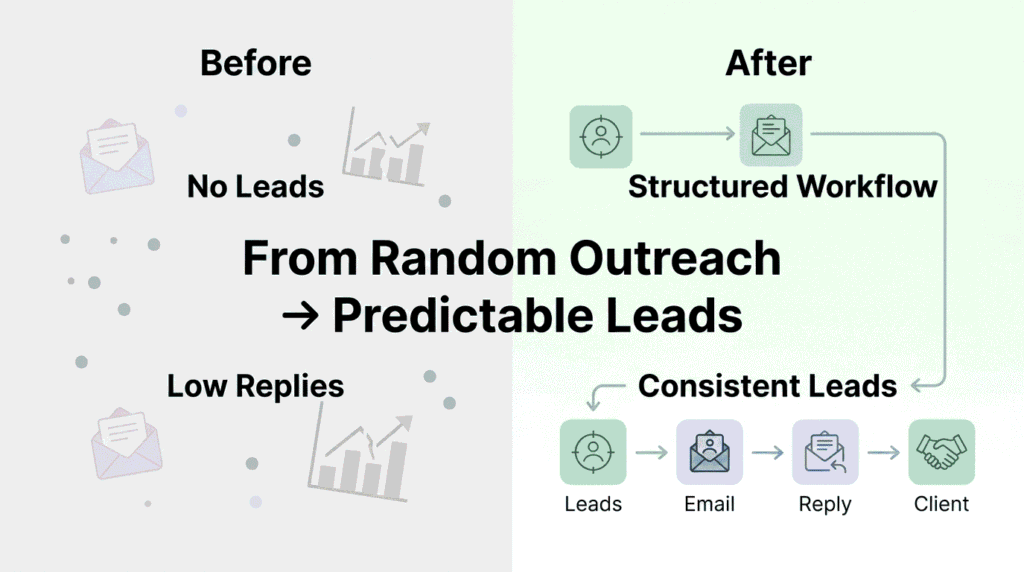
Outbound Workflow vs Random Outreach
Random Outreach
• No clear targeting
• No structured process
• No follow-up system
Result: low replies, no conversions
Outbound Marketing Workflow
• Defined audience
• Structured campaigns
• Consistent follow-ups
Result: predictable lead generation
Insight :
Top SaaS and B2B teams don’t rely on one-time campaigns.
They build outbound marketing workflows that run continuously
Using tools like:
• Apollo.io for lead sourcing
• Instantly.ai for outreach automation
Key Takeaway :
An outbound marketing workflow is not just a strategy—it’s a system that consistently generates leads, conversations, and clients
Why an Outbound Marketing Workflow Matters
Most businesses don’t fail at outreach because of effort—they fail because of lack of structure.
👉 An outbound marketing workflow turns scattered actions into a repeatable lead generation system
Without an Outbound Marketing Workflow
When there is no structured outbound marketing workflow, outreach becomes inconsistent and difficult to scale:
• Random emails sent without clear targeting
• Messaging that doesn’t connect with the right audience
• No follow-up strategy → missed opportunities
• No tracking → no idea what’s working
The result:
🔸 Low response rates
🔸 Wasted time and effort
🔸 No predictable lead flow
Hidden Problems Most Beginners Don’t Notice
Even if you’re “doing outreach,” without a workflow:
• You can’t identify which campaigns are working
• You repeat the same mistakes without improvement
• You lose potential leads due to poor follow-ups
• You rely on guesswork instead of data
This is why many outbound campaigns fail silently
With a Structured Outbound Marketing Workflow
A well-defined outbound marketing workflow changes how your lead generation works:
• 🎯 Predictable lead generation → consistent flow of prospects and replies
• 📊 Better targeting → reach decision-makers instead of random contacts
• 🔄 Systematic follow-ups → maximize response rates
• ⚡ Scalable system → increase volume without losing control
Instead of guessing, you operate with a clear process
How It Impacts Real Business Growth
A structured outbound marketing workflow helps you:
• Build a reliable pipeline of leads
• Reduce dependency on ads or referrals
• Improve conversion rates over time
• Turn outreach into a measurable growth channel
👉 This is how small businesses move from:
❌ Inconsistent results
➡️ ✔ Predictable client acquisition
Real-World Insight
High-performing businesses don’t rely on one-time outreach campaigns.
They treat outbound marketing as a structured, repeatable workflow—not a one-time task
What They Focus On :
- Continuous testing (targeting + messaging)
- Tracking key performance metrics
- Improving each stage of the workflow
👉 This is what turns outbound from random effort into a consistent lead generation system
Key Takeaway :
When you approach outbound as a system, not a task—it becomes scalable and predictable.
Core Components Of An Outbound Marketing Workflow
A high-performing outbound marketing workflow is built on a few critical components.
Each component plays a specific role in turning outreach into consistent lead generation and client acquisition
1. Target Audience Definition (FOUNDATION)
This is the most important step in your outbound marketing workflow.
👉 If targeting is wrong, everything else fails.
What You Need to Define
• Industry (SaaS, agencies, eCommerce, etc.)
• Job role (Founder, CEO, Marketing Head)
• Company size (1–10, 10–50, 50–200 employees)
• Geography (US, UK, global, etc.)
Example ICP
“B2B SaaS founders (1–50 employees, US market)”
Real Insight
Most beginners target too broad:
❌ “All businesses”
High-performing outbound workflows focus on:
✔ Specific niche
✔ Specific role
✔ Specific problem
2. Lead Sourcing (BUILDING YOUR PIPELINE)
Once your audience is defined, the next step is building a qualified lead list
Use tools like:
• Apollo.io
What to Collect
• Name
• Business email
• Company name
• Job role
• Website / LinkedIn
Real Insight
Lead quality > lead quantity
Avoid:
❌ Bulk scraped, unverified data
Focus on:
✔ Relevant prospects
✔ Verified emails
✔ Active companies
Pro Tip (SaaS-Level Execution)
Segment your leads:
• By industry
• By company size
• By problem
This improves personalization and reply rates
Learn how to find and verify high-quality leads using tools like Apollo.io in our complete lead generation guide.
3. Outreach System Setup (EXECUTION ENGINE)
This is where your outbound marketing workflow becomes operational.
Use:
• Instantly.ai
What This Enables
• Send emails at scale
• Automate follow-up sequences
• Track opens, replies, and performance
Real Insight
Tools don’t generate results—systems do
Your focus should be:
✔ Clean setup
✔ Consistent sending
✔ Controlled scaling
Best Practice
• Start: 20–50 emails/day
• Scale gradually
• Monitor reply rates
4. Messaging & Email Sequence (CONVERSION DRIVER)
Your messaging determines whether your outbound marketing workflow works or fails.
Basic Structure
• 1 main email (intro)
• 2–4 follow-ups
• Light personalization
What High-Converting Emails Focus On
• Problem awareness
• Clear value
• Simple language
Example (Simple & Effective)
Subject: Quick question
“Hey {{Name}},
Noticed you’re working on {{problem}}.
We’ve helped similar businesses improve {{result}}.
Worth sharing a quick idea?”
Real Insight
Avoid:
❌ Long emails
❌ Over-selling
❌ Complex language
Focus on:
✔ Clarity
✔ Relevance
✔ Curiosity
5. Follow-Up System (RESPONSE MULTIPLIER)
Most beginners underestimate this step.
But in reality:
Most replies come from follow-ups—not the first email
Best Practices
• Send 2–4 follow-ups
• Keep 2–3 day gaps
• Keep messages short
Example Follow-Up
“Hey {{Name}}, just checking if this is relevant for you?”
Real Insight
Without follow-ups:
❌ You lose 60–80% of potential replies
Follow-ups turn:
• Cold prospects → Interested leads
6. Conversion Process (FROM REPLY TO CLIENT)
This is where your outbound marketing workflow generates revenue.
Conversion Flow
Reply → Conversation → Call → Client
What You Should Do
• Don’t sell immediately
• Ask questions
• Understand needs
• Guide conversation
Use tools like:
• Google Meet
Real Insight
Your goal is not to “sell in email”
Your goal is to:
✔ Start conversations
✔ Book calls
✔ Build trust
Real -World Insight
Successful businesses don’t treat each step of outreach as separate tasks.
They connect everything into a single, structured outbound marketing workflow
How This Works
Each stage in the workflow:
- Feeds into the next step
- Improves over time through testing
- Becomes more efficient with data
Instead of isolated actions, it becomes a connected system
Key Takeaway :
A successful outbound marketing workflow is not one action—it’s a combination of:
- Targeting
- Lead sourcing
- Outreach
- Follow-ups
- Conversion
When these work together, you create a consistent and scalable lead generation system
Step-by-Step Outbound Marketing Workflow(BEGINNER TO SCALABLE)
This step-by-step outbound marketing workflow shows how to move from zero outreach → consistent leads → client acquisition
👉 Follow this process to build a predictable lead generation system
Step 1: Define Your ICP (Ideal Customer Profile)
Everything in your outbound marketing workflow depends on this step.
What to Define
• Clear niche (SaaS, agencies, local businesses, etc.)
• Specific job role (Founder, CEO, Marketing Head)
• Clear pain points (lead generation, growth, sales issues)
Example ICP “B2B SaaS founders (1–50 employees) struggling with lead generation”
Common Mistake
❌ Targeting too broad → “All businesses”
Fix:
✔ Narrow your audience
✔ Focus on one problem
Step 2: Build a Qualified Lead List
Now you turn your ICP into a targeted lead database
Use tools like:
• Apollo.io
Start Simple
Collect:
• Name
• Business email
• Company
• Role
Begin with:
50–100 high-quality leads
Real Insight
50 targeted leads > 500 random leads
Step 3: Set Up Your Outreach Campaign
This is where your outbound marketing workflow becomes active.
Use:
• Instantly.ai
What to Set Up
• Email accounts (warmed up)
• Campaign sequence
• Sending schedule
Pro Tip
Keep your setup simple at the beginning
Avoid:
❌ Over-automation
❌ Too many tools
Step 4: Create a Simple Email Sequence
Your messaging drives your results.
Structure
• 1 main email
• 2–3 follow-ups
• Light personalization
What Works Best
• Short emails
• Problem-focused message
• Clear and simple CTA
Example
Subject: Quick question
“Hey {{Name}},
Noticed you’re working on {{problem}}.
We’ve helped similar businesses improve {{result}}.
Worth sharing a quick idea?”
Avoid
❌ Long explanations
❌ Hard selling
❌ Generic messages
Step 5: Launch Your Campaign
Now start sending emails consistently.
Sending Strategy
• Start with 20–50 emails/day
• Gradually increase volume
• Maintain consistency
Real Insight
Consistency > volume
Sending daily builds momentum in your outbound marketing workflow
Step 6: Track Replies & Manage Leads
Tracking is what turns outreach into a system.
Use:
• CRM tools
• Spreadsheets
You can manage leads using tools like
• HubSpot CRM
What to Track
• Replies
• Positive responses
• Calls booked
• Conversion rate
Real Insight
If you don’t track, you can’t improve
Step 7: Optimize & Scale Your Workflow
This is where your outbound marketing workflow becomes powerful.
What to Improve
• Targeting (better ICP)
• Messaging (test subject lines & copy)
• Sending volume (scale gradually)
What to Test
• Subject lines
• Email length
• Follow-up timing
Real Insight
Small improvements = big results over time
How To Scale Your Outbound Marketing Workflow
Once your outbound marketing workflow starts generating replies and conversations, the next step is scaling.
Scaling is not about sending more emails randomly—it’s about increasing volume while maintaining quality and deliverability
When You’re Ready to Scale
Before scaling, make sure:
• You’re getting consistent replies
• Your messaging is working
• Your targeting is clear
Don’t scale a broken system—optimize first, then grow
Core Scaling Strategies
1. Increase Sending Volume Gradually
Start small and scale in steps:
• 20–50 emails/day → test phase
• 50–100 emails/day → stable phase
• 100+ emails/day → scaling phase
Practical Insight:
Sudden volume spikes can hurt deliverability—gradual scaling protects your email reputation
2. Add Multiple Email Accounts
Instead of sending everything from one account:
• Use multiple domains or inboxes
• Distribute sending volume
• Reduce risk of spam or bans
This helps you scale your outbound marketing workflow safely and sustainably
3. Expand to New ICP Segments
Once one audience works:
• Test similar industries
• Try different job roles
• Explore new markets
Example:
From “SaaS founders” → to “Agencies” or “Consultants”
Practical Insight:
Scaling = expanding horizontally, not just increasing volume
4. Test Multiple Campaign Variations
Don’t rely on one campaign:
• Test different subject lines
• Try new messaging angles
• Experiment with follow-up styles
Run multiple campaigns to identify what performs best
What to Monitor While Scaling
As you scale your outbound marketing workflow, track:
• Reply rate (should stay stable or improve)
• Deliverability (avoid spam issues)
• Conversion rate (quality over quantity)
Common Scaling Mistakes
• Increasing volume too fast
• Ignoring deliverability
• Expanding without clear targeting
• Not tracking performance
These can break your outbound marketing workflow quickly
Real-World Insight
Scaling works best when you:
✔ Improve one variable at a time
✔ Maintain consistency
✔ Focus on quality leads
Key Takeaway
Scaling an outbound marketing workflow is about:
• Controlled growth
• System optimization
• Consistent execution
Done right, it turns outreach into a predictable and scalable lead generation engine
Real Outbound Marketing Workflow
Here’s how everything connects into a complete system:
Apollo.io → Leads → Instantly.ai → Emails → Replies → Calls → Clients
👉 This flow represents a fully functional outbound marketing workflow
Result: Predictable Lead Generation System
When executed consistently, this outbound marketing workflow helps you:
• Generate leads on demand
• Start conversations with ideal clients
• Build a steady pipeline of opportunities
• Convert outreach into revenue
High-Performing SaaS Insight
Top SaaS and B2B teams don’t treat campaigns as one-time efforts.
They run outbound marketing workflows continuously and optimize them weekly
Key Takeaway :
A step-by-step outbound marketing workflow is not about doing more work
It’s about following a clear system that turns outreach into consistent, scalable lead generation
Cold Email Templates (COPY, USE & START)
One of the biggest advantages of a structured outbound marketing workflow is that you don’t need to start from scratch.
👉 Use these simple, proven cold email templates to start conversations and generate replies.
Template 1: First Outreach Email
Subject: Quick question
Email:
Hey {{Name}},
Noticed you’re working on {{problem}}.
Many businesses in your space are trying to improve {{result}} but struggle with {{challenge}}.
We’ve been helping similar companies get better results with a simple approach.
Would it be worth sharing a quick idea?
Why This Works
• Short and easy to read
• Focuses on the prospect’s problem
• Creates curiosity instead of selling
Template 2: Follow-Up Email
Subject: Re: Quick question
Email:
Hey {{Name}},
Just checking if this is relevant for you?
Why This Works
• Simple and non-pushy
• Reminds without overwhelming
• Increases reply chances
How to Customize These Templates
To make these templates effective in your outbound marketing workflow:
• Replace {{problem}} with a real pain point
• Replace {{result}} with a clear benefit
• Keep personalization simple (don’t overdo it)
Example:
“Noticed you’re working on lead generation—many teams struggle with low reply rates.”
Common Mistakes to Avoid
• Writing long emails
• Trying to sell in the first message
• Sending generic, non-personalized content
Keep it:
✔ Short
✔ Relevant
✔ Conversation-focused
Key Takeaway :
You don’t need complex scripts—simple, clear messages work best in a cold email system
Best Tools for Outbound Marketing Workflow
To build an effective outbound marketing workflow, you don’t need dozens of tools.
You need a simple, reliable stack that handles:
• Lead generation
• Outreach automation
• Lead tracking & management
Key Insight:
Tools don’t create results—how you use them in your outbound marketing workflow does
1. Lead Generation (Building Your Prospect Pipeline)
The first step in any outbound marketing workflow is finding the right prospects
Recommended Tool:
• Apollo.io
What It Helps You Do
• Find targeted B2B leads based on filters
• Access verified business emails
• Segment prospects by industry, role, and company size
Why It Matters
Your entire outbound marketing workflow depends on lead quality
If your leads are:
❌ Random → low replies
✔ Targeted → higher conversions
Pro Tip
Start with:
• 50–100 highly targeted leads
• Focus on one niche at a time
To learn how to find, filter, and export high-quality leads step-by-step, check out our complete guide on using Apollo.io for lead generation.
2. Outreach Automation (Running Campaigns at Scale)
This is where your outbound marketing workflow becomes operational.
Recommended Tool:
• Instantly.ai
What It Helps You Do
• Send cold emails at scale
• Automate follow-up sequences
• Track replies and performance
Why It Matters
Manual outreach doesn’t scale
With automation:
✔ You save time
✔ You maintain consistency
✔ You increase reply rates
Best Practices
• Start slow (20–50 emails/day)
• Scale gradually
• Monitor reply rates
For a complete step-by-step setup, explore our detailed guide on how to use Instantly.ai to launch and manage cold email campaigns.
3. CRM (Lead Tracking & Pipeline Management)
A CRM keeps your outbound marketing workflow organized and measurable.
Recommended Tool:
• HubSpot CRM
What It Helps You Do
• Track leads and conversations
• Manage pipeline stages (lead → reply → call → client)
• Organize follow-ups and notes
Why It Matters
Without a CRM:
❌ You lose track of leads
❌ You miss follow-ups
❌ You can’t measure performance
With a CRM:
✔ You build a structured sales pipeline
✔ You improve conversion rates
✔ You scale your outbound marketing workflow
To organize and manage your leads effectively, learn how to use HubSpot CRM in our complete CRM setup guide.
Optional Supporting Tools (Advanced Use)
Once your outbound marketing workflow is stable, you can add:
🔹 Email Verification Tools
Improve deliverability and reduce bounce rates
🔹 Google Sheets
Practical Insight
High-performing businesses don’t rely on complex tool stacks.
They use a focused outbound marketing tool setup to keep things simple and effective
What You Actually Need
✔ A lead sourcing tool
✔ An outreach automation tool
✔ A CRM system to manage conversations
That’s enough to run a structured and scalable outbound marketing workflow
Simple Tool Stack for Beginners
If you’re starting out, keep it minimal:
• Apollo.io → Lead generation
• Instantly.ai → Outreach
• HubSpot CRM → Lead tracking
This combination is enough to:
✔ Launch campaigns
✔ Generate leads
✔ Manage conversations
✔ Convert prospects into clients
Key Takeaway :
You don’t need more tools—you need the right outbound marketing workflow
With a simple tool stack, you can build a consistent and scalable lead generation system
Email Deliverability Basics (CRITICAL FOR OUTBOUND)
Your outbound marketing workflow only works if your emails reach the inbox.
If deliverability is poor, even the best targeting and messaging will fail.
Core Deliverability Practices
• Use a business domain email
Avoid free emails like Gmail. Use a domain-based email (e.g., yourname@yourcompany.com) to build trust and improve inbox placement
• Warm up your email accounts
Start sending emails gradually to build sender reputation before launching campaigns
• Control your sending volume
Begin with 20–30 emails/day and increase slowly to avoid spam flags
• Avoid spam-triggering language
Don’t use overly promotional or aggressive words (e.g., “Buy now,” “Free offer”)
• Maintain consistent sending behavior
Send emails daily in a steady pattern instead of sudden spikes
• Keep email lists clean and relevant
Target the right audience and avoid sending to unverified or outdated contacts
What Happens If You Ignore This
• Emails land in spam
• Open rates drop
• Reply rates go near zero
Practical Insight
Deliverability is not a one-time setup—it’s an ongoing part of your outbound marketing workflow
Key Takeaway :
Before optimizing campaigns, ensure your emails are actually being delivered and seen
Deliverability plays a crucial role in cold email success—learn how to set up a complete email system that avoids spam issues.
Mini Case Example: Outbound Marketing Workflow In Action
To understand how an outbound marketing workflow works in real execution, let’s look at a simple, beginner-friendly scenario.
Example: Small Business Lead Generation Setup
A basic outbound marketing workflow could look like this:
• 100 targeted leads sourced based on a clear ICP
• 50 emails/day sent using a structured outreach campaign
• 2–3 follow-ups scheduled automatically
• Replies tracked and managed consistently
Realistic Results (First 2–3 Weeks)
With consistent execution:
• 3–5 replies within the first week
• 1–2 meaningful conversations started
• 1 client conversion within 2–3 weeks
These are realistic beginner-level outcomes—not inflated numbers
What’s Happening Behind the Scenes
This outbound marketing workflow works because each step supports the next:
• 🎯 Targeted leads → higher relevance
• ✉️ Simple messaging → better response
• 🔄 Follow-ups → increased visibility
• 📞 Conversations → conversion opportunities
It’s not one action—it’s the complete workflow working together
Why This Outbound Marketing Workflow Works
• Targeted outreach reaches the right audience
• Consistent follow-ups capture missed opportunities
• Simple messaging reduces friction
• Structured process builds momentum over time
Even with a small setup, this creates a predictable lead generation system
What Most Beginners Get Wrong
• Expecting instant results without consistency
• Sending emails without follow-ups
• Targeting too broad
This breaks the outbound marketing workflow and reduces results
What This Means for You
You don’t need:
• Hundreds of tools
• Large budgets
• Complex systems
You need:
✔ A clear outbound marketing workflow
✔ Consistent execution
✔ Continuous improvement
Takeaway :
Even a simple outbound marketing workflow can generate leads and clients within weeks—when executed correctly
Inbound vs Outbound Marketing (Quick Context)
To build a complete lead generation system, it’s important to understand how inbound marketing and outbound marketing work together.
Outbound Marketing (Fast & Proactive)
Outbound marketing focuses on reaching out to potential customers directly
What It Delivers
• Faster results and immediate conversations
• Direct access to your target audience
• Control over lead generation
Example:
Cold email campaigns, direct outreach, prospecting
Practical Insight:
Outbound marketing is best when you want to generate leads quickly and test your offer
Inbound Marketing (Long-Term & Compounding)
Inbound marketing focuses on attracting customers through content and value
What It Delivers
• Organic traffic over time
• High-intent leads
• Brand authority and trust
Example:
SEO blogs, content marketing, social media
Practical Insight:
Inbound marketing builds a sustainable lead generation system that grows over time
Key Difference (Simple View)
• Outbound marketing → You go to the customer
• Inbound marketing → Customer comes to you
Best Strategy: Combine Both
The most effective approach is to use both together:
🔹 Outbound Marketing
• Generates immediate leads
• Starts conversations quickly
🔹 Inbound Marketing
• Builds long-term traffic
• Brings warm, high-intent leads
How They Work Together
A simple combined system looks like:
Outbound → Conversations → Clients (short-term)
Inbound → Content → Traffic → Leads (long-term)
Combined:
You create a predictable and scalable lead generation system
Real-World Insight
Businesses that rely only on one channel often struggle:
• Only outbound → constant effort needed
• Only inbound → slow results
Combining both gives:
✔ Speed + sustainability
✔ Control + compounding growth
Key Takeaway :
Outbound marketing drives immediate results
Inbound marketing builds long-term growth
Together, they create a balanced and scalable lead generation strategy
Ready to build your own lead generation system?
Start simple:
• Launch your first outbound campaign to generate initial leads
• Then build inbound SEO to create long-term, consistent growth
Explore next steps:
• Learn how to set up a complete cold email system for beginners.
• Discover how to build a scalable lead generation system for small businesses
Pro Tip: Don’t try to do everything at once—start with one channel, get results, then expand
Common Outbound Marketing Mistakes To Avoid
Even a well-planned outbound marketing workflow can fail if these common mistakes are not addressed.
1. Poor Targeting
Reaching the wrong audience leads to low response rates—no matter how good your message is.
👉 Fix:
• Define a clear ICP (industry, role, company size)
• Focus on one niche and problem
2. No Follow-Up System
Most replies don’t come from the first email—they come from follow-ups.
👉 Fix:
• Send 2–4 follow-ups
• Keep messages short and relevant
• Maintain consistent timing
3. Overcomplicating Tools
Using too many tools or complex setups slows you down and creates confusion.
👉 Fix:
• Start with a simple tool stack
• Focus on execution, not tools
• Scale only after getting results
Practical Insight
Simplicity and consistency outperform complex setups in any outbound marketing workflow
Key Takeaway :
Avoiding these mistakes can significantly improve your:
- Reply rates
- Lead quality
- Overall campaign performance
When Outbound Marketing May Not Work
Outbound marketing is powerful—but it’s not guaranteed to work in every situation.
If your outbound marketing workflow isn’t delivering results, the issue is usually in one of these areas:
Common Reasons for Poor Results
• Wrong Audience
Targeting people who don’t need your offer leads to low or zero responses
• Weak or Unclear Offer
If your value isn’t clear, prospects won’t engage—no matter how many emails you send
• Poor Messaging
Generic, long, or irrelevant emails fail to capture attention
• Lack of Consistency
Sending emails randomly without follow-ups breaks your workflow and momentum
Practical Insight
Outbound marketing doesn’t fail randomly—it fails due to gaps in execution
Fix the inputs (targeting, offer, messaging, consistency), and results will improve
Key Takeaway :
Before changing tools or strategies, review your outbound marketing workflow fundamentals
Expected Results From An Outbound Marketing Workflow
Understanding realistic outcomes helps you stay consistent and avoid early drop-offs.
A well-executed outbound marketing workflow can generate steady leads—but results depend on how you execute each step.
Beginner-Level Benchmarks
When starting out, you can expect:
• 3–8% reply rate from cold email campaigns
• 1–3 clients per month with consistent outreach
• Initial replies within the first 3–7 days
These are practical, achievable results for beginners—not inflated projections
What Influences Your Results
Your outbound marketing workflow performance depends on:
🎯 Targeting Quality
Reaching the right audience improves both reply rate and conversion
📝 Messaging Clarity
Simple, relevant emails perform better than complex or generic ones
🔄 Follow-Up Consistency
Most replies come from follow-ups—not the first email
📈 Sending Consistency
Daily outreach builds momentum and improves results over time
What to Expect in the First Few Weeks
• Week 1 → Initial replies and testing phase
• Week 2 → Better engagement as you refine messaging
• Week 3–4 → First conversions and client opportunities
Outbound marketing workflows improve with iteration—not instant perfection
Practical Insight
Results are not random—they are directly tied to your workflow execution
Small improvements in:
• Targeting
• Messaging
• Follow-ups
Can significantly increase your outcomes over time
Growth Potential (After Optimization)
Once your outbound marketing workflow is refined:
• Higher reply rates (8–12% possible)
• More consistent lead flow
• Scalable client acquisition
This is where outbound becomes a predictable lead generation system
Key Takeaway :
You don’t need perfect results to succeed
You need:
✔ Consistent execution
✔ Continuous improvement
✔ A structured outbound marketing workflow
Key Performance Metrics In Outbound Marketing
Tracking the right metrics is what turns your outbound marketing workflow from guesswork into a measurable system.
Without tracking, you won’t know what’s working—or what needs improvement.
Essential Metrics to Track
• Open Rate
Indicates how many recipients opened your email—helps evaluate subject lines and deliverability
• Reply Rate
Shows how many people responded—direct indicator of message relevance and targeting quality
• Positive Reply Rate
Measures interested responses (not just replies)—helps assess lead quality and intent
• Meetings Booked
Tracks how many conversations convert into calls—shows effectiveness of your outreach and follow-up
• Conversion Rate
Percentage of leads that become clients—final measure of your outbound marketing success
Practical Insight
Each metric highlights a different stage of your outbound marketing workflow:
• Low open rate → improve subject line or deliverability
• Low reply rate → improve targeting or messaging
• Low conversions → improve offer or sales process
This is how you identify problems and optimize performance step-by-step
Key Takeaway :
What gets measured gets improved
Tracking these metrics helps you:
✔ Improve campaign performance
✔ Increase reply rates
✔ Generate more qualified leads
Final Though
You don’t need a complex setup to make outbound work.
With the right approach—and a simple tool stack like
• Apollo.io
• Instantly.ai
—you can build a simple, structured, and scalable outbound marketing workflow
What matters most is not the tools, but:
• Clear targeting
• Consistent outreach
• Continuous improvement
Start small, stay consistent, and refine your process.
Final Takeaway
A well-executed outbound marketing workflow can turn cold outreach into:
• Conversations
• Qualified leads
• Paying clients
Take action, stay consistent, and your results will follow.
Choosing the right tools can simplify your entire process—explore our detailed breakdown of lead generation and outreach tools for beginners.
Frequently Asked Questions (FAQs)
-
What is an outbound marketing workflow?
An outbound marketing workflow is a structured process used to generate leads by proactively reaching out to potential customers through channels like cold email, calls, or direct outreach.
-
How is outbound marketing different from inbound marketing?
Outbound marketing involves reaching out directly to prospects, while inbound marketing focuses on attracting leads through content, SEO, and organic channels.
-
How long does it take to see results from outbound marketing?
Most beginners start seeing replies within 3–7 days, and potential clients within 2–4 weeks, depending on targeting, messaging, and consistency.
-
What is a good reply rate for cold email campaigns?
A typical reply rate for beginners is around 3–8%, while optimized campaigns can achieve higher response rates over time.
-
How many emails should I send per day?
Start with 20–50 emails per day and gradually increase as your email deliverability and system improve.
-
Do I need paid tools to start an outbound marketing workflow?
Paid tools can improve efficiency and scale, but beginners can start with basic tools and upgrade as they grow.
-
What are the best tools for outbound marketing?
Popular tools include:
• Apollo.io for lead generation
• Instantly.ai for outreach automation
• HubSpot CRM for managing leads -
Why are follow-ups important in outbound marketing?
Most replies come from follow-ups. Sending 2–4 follow-up emails significantly increases your chances of getting a response.
-
Can outbound marketing work for small businesses?
Yes, outbound marketing is highly effective for small businesses because it allows direct access to potential customers without waiting for traffic or ads.
-
What is the biggest mistake beginners make in outbound marketing?
The most common mistakes are poor targeting, lack of follow-ups, and inconsistent outreach.