
Table of Contents
Cold Email Follow-Up Sequence That Gets Replies
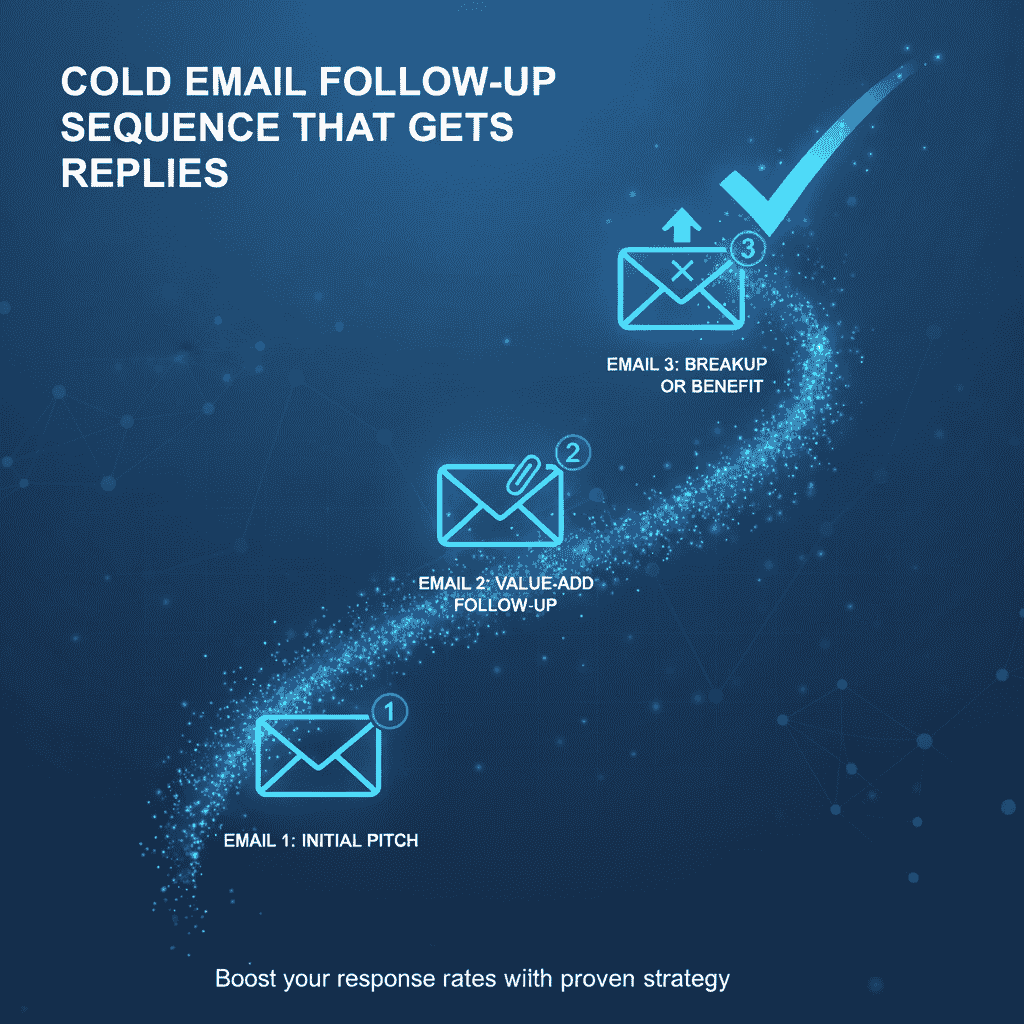
Cold email outreach rarely succeeds with a single email.
Most prospects are busy, receive hundreds of emails daily, and may simply overlook your initial message. That is why strategic follow-up emails are essential for successful cold outreach campaigns.
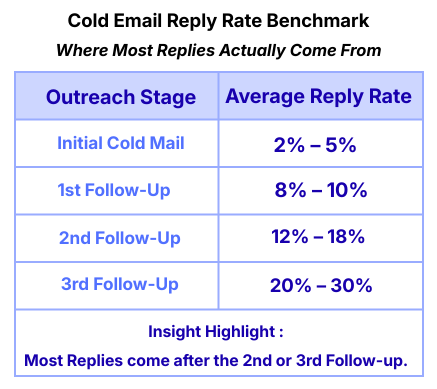
Studies in B2B sales show that more than 70% of replies come after the second or third follow-up email, yet many businesses stop after sending just one message.
A well-designed follow-up sequence helps you:
- Remind prospects about your previous message
- Provide additional value or context
- Build familiarity and trust
- Increase reply and conversion rates
However, sending too many follow-ups or poorly written reminders can make your outreach appear spammy.
In this guide, you will learn how to create an effective cold email follow-up sequence that improves response rates while maintaining professionalism and credibility.
1. Why Cold Email Follow-Ups Are Important
Many cold email outreach campaigns fail not because the message is ineffective, but because businesses stop the outreach process too early. Sending only one email often limits the chances of getting a response, especially when prospects receive dozens or even hundreds of emails every day.
In many cases, prospects simply do not respond immediately. This can happen for several reasons:
- They are busy with work responsibilities and may plan to reply later.
- They missed the initial email in a crowded inbox.
- The timing was not ideal, and they may revisit the email at a later time.
- They intended to respond, but the message got buried under newer emails.
Cold email follow-ups help solve this problem by bringing your message back to the prospect’s attention. A well-timed follow-up can remind recipients about your previous email and give them another opportunity to engage with your message.
Instead of appearing pushy, strategic follow-ups demonstrate professional persistence and genuine interest in starting a conversation. When done correctly, they can significantly improve reply rates and increase the chances of turning a cold prospect into a qualified lead.
If you want to improve reply rates further, explore our guide on Cold Email Personalization Examples That Get Replies, where we share proven message structures and AI-powered personalization techniques.
2.Key benefits of follow-up emails
✔ 2.1 : Increase reply rates
Follow-up emails significantly improve the chances of receiving a response. Many prospects do not reply to the first message simply because they miss it or plan to respond later. Sending a few well-timed follow-ups gives your outreach multiple opportunities to be noticed and increases overall reply rates.
✔ 2.2 : Improve visibility of your message
Busy professionals often receive a large number of emails every day. A follow-up email brings your message back to the top of the prospect’s inbox, making it more likely that they will read and consider your outreach.
✔ 2.3 : Build brand familiarity
Repeated but respectful communication helps prospects become familiar with your brand or service. Even if they are not ready to respond immediately, consistent follow-ups help them recognize your company when they eventually need a solution related to your offering.
✔ 2.4 : Provide additional value to prospects
Follow-up emails allow you to share helpful insights, resources, or examples that may benefit the prospect. Providing additional value in follow-ups can strengthen credibility and demonstrate that your outreach is focused on solving real business problems.
✔ 2.5 : Create more opportunities for conversation
Every follow-up creates another opportunity to start a meaningful conversation. Sometimes prospects simply need a reminder or a clearer understanding of how your solution can help them before they decide to reply.
Consistent and well-structured follow-ups are often the key difference between a missed opportunity and a successful sales conversation. By maintaining professional persistence, businesses can significantly improve the effectiveness of their cold email outreach campaigns.
3. How Many Follow-Up Emails Should You Send?
One of the most common questions in cold outreach is how many follow-up emails should be included in a campaign. In most successful B2B outreach strategies, businesses send 3 to 5 follow-up emails after the initial message. This approach gives prospects multiple opportunities to see and respond to your email without appearing overly aggressive.
Many professionals do not reply to the first email simply because they are busy or the message arrives at the wrong time. Sending a few well-timed follow-ups helps keep your outreach visible and increases the chances of starting a conversation.
3.1 : Typical Cold Email follow-up structure used by many Sales and Marketing Teams
| Email Stage | Purpose |
|---|---|
| Initial Email | Introduce yourself, explain your value proposition, and briefly mention how you can help the prospect. |
| Follow-Up 1 | Send a polite reminder in case the prospect missed your first email. |
| Follow-Up 2 | Add additional value, such as a helpful insight, resource, or example related to the prospect’s industry. |
| Follow-Up 3 | Re-engage the prospect with a simple question or offer to discuss further. |
| Final Follow-Up | Send a respectful closing message acknowledging that the timing may not be right. |
Using a structured follow-up sequence ensures that your outreach remains consistent, professional, and helpful. Instead of repeating the same message, each follow-up should provide a small reminder or additional value to encourage engagement.
Sending multiple follow-ups significantly increases the likelihood that your email will reach the prospect at the right moment, when they are more likely to notice the message and respond.
Before starting outreach campaigns, it is important to find accurate contact details. Our guide on How to Find Business Emails From LinkedIn explains several methods to discover professional email addresses safely.
4. Recommended Cold Email Follow-Up Timeline
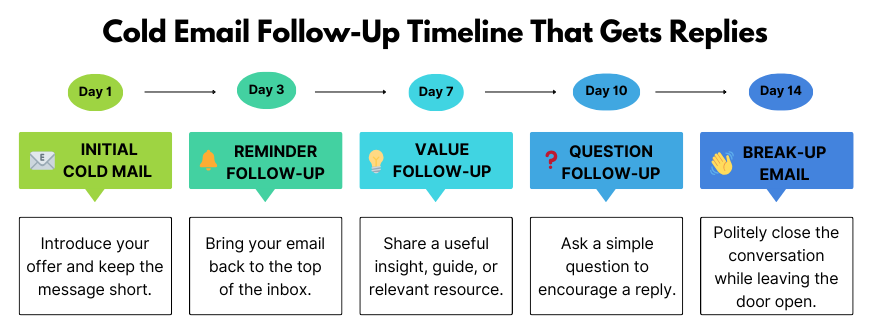
Timing plays a crucial role in the success of cold email outreach campaigns. Even a well-written email may not receive a reply if it reaches the prospect at the wrong time. That is why a structured follow-up schedule is important to keep your outreach visible while maintaining a professional approach.
Sending follow-ups too quickly can make the message feel pushy or aggressive, while waiting too long may cause the prospect to forget your previous email. A balanced follow-up timeline helps maintain consistent communication without overwhelming the recipient.
4.1 : Commonly used Cold Email follow-up schedule adopted by many B2B Sales Teams and Marketers
| Timing | |
|---|---|
| Initial Email | Day 1 |
| Follow-Up 1 | Day 3 |
| Follow-Up 2 | Day 7 |
| Follow-Up 3 | Day 10 |
| Final Follow-Up | Day 14 |
This timeline works well because it gradually increases the spacing between emails while keeping your message visible in the prospect’s inbox. The first follow-up acts as a gentle reminder, while later follow-ups provide additional opportunities for engagement.
A structured schedule like this allows businesses to maintain consistent outreach, improve response rates, and avoid appearing spammy. By giving prospects enough time to review your message while staying present in their inbox, follow-ups significantly increase the chances of starting a meaningful conversation.
5. Cold Email Follow-Up Sequence Example
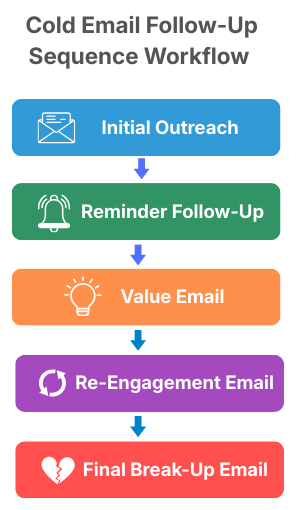
A structured cold email follow-up sequence helps businesses maintain consistency in their outreach campaigns and significantly improves reply rates. Instead of relying on a single message, a sequence allows you to gradually remind prospects about your offer, provide additional value, and create multiple opportunities for engagement.
Many successful B2B outreach campaigns use a five-step email sequence, where each email serves a specific purpose. The goal is not to repeat the same message, but to build context and keep the conversation open without appearing pushy.
Below is an example of a simple and effective follow-up sequence used by many sales and marketing teams.
5.1 : Email 1 – Initial Outreach
The first email introduces you, your company, and the reason for contacting the prospect. It should briefly explain how your product or service can help solve a specific problem or improve a business process.
The initial email should be short, relevant, and focused on the prospect’s needs rather than a sales pitch. A clear and simple value proposition helps the recipient quickly understand why the email is relevant to them.
For example, if you are offering a sales automation tool, you might explain how it helps businesses generate leads or improve outreach efficiency.
Purpose of this email:
- Introduce yourself and your company
- Highlight a potential benefit for the prospect
- Start a professional conversation
5.2 : Email 2 – Reminder Follow-Up
Many prospects do not respond to the first email simply because they are busy or the message gets buried in their inbox. The first follow-up acts as a gentle reminder that brings your email back to their attention.
This message should be short and polite. The goal is not to repeat the entire pitch but to remind the recipient about your previous email.
Example
Hi [Name],
Just checking if you had a chance to review my previous message.
I would be happy to share a few ideas on how we help businesses improve their lead generation process.
Purpose of this email:
- Remind the prospect about your initial message
- Keep your outreach visible in their inbox
- Encourage a quick response
5.3 : Email 3 – Value Follow-Up
Instead of repeating the same message again, the third email should provide additional value or helpful information. This helps demonstrate expertise and shows that your outreach is focused on helping the prospect rather than simply selling a product.
You might share:
- A useful industry insight
- A short guide or resource
- A relevant case study
- A practical idea related to their business challenges
Providing value in follow-ups increases credibility and makes the conversation more meaningful.
Example
Hi [Name],
Many teams we work with struggle with consistent prospecting.
I recently shared a short guide explaining how companies automate their lead generation workflow.
Let me know if you would like me to send it over.
Purpose of this email:
- Provide helpful information
- Demonstrate expertise
- Continue the conversation naturally
5.4 : Email 4 – Soft Re-Engagement
By this stage, the prospect may have seen your previous emails but may still be unsure whether to respond. A soft re-engagement message gives them another opportunity to reply without feeling pressured.
This email should be friendly and conversational, often including a simple question that encourages a response.
Example
Hi [Name],
I just wanted to follow up once more in case this slipped through your inbox.
Would it make sense to discuss this briefly next week?
Purpose of this email:
- Re-engage the prospect
- Offer a simple next step
- Encourage conversation
5.5 : Email 5 – Final Follow-Up
The final follow-up email is often called a “break-up email.” Its purpose is to respectfully close the conversation if the prospect is not interested at the moment.
Interestingly, this email sometimes generates responses because it removes pressure and signals that the outreach sequence is ending.
Example
Hi [Name],
I understand this might not be the right time.
If improving lead generation becomes a priority later, feel free to reach out anytime.
Purpose of this email:
- End the sequence professionally
- Leave a positive impression
- Keep the door open for future communication
To build targeted prospect lists, you can explore our comparison of the Best LinkedIn Email Finder Tools used by modern B2B sales teams.
6. Why This Follow-Up Sequence Works
A structured follow-up sequence works because it gradually builds familiarity while respecting the prospect’s time. Instead of sending repetitive messages, each email adds context or value.
This approach helps businesses:
✔ Stay visible in the prospect’s inbox
✔ Provide useful information during outreach
✔ Increase reply and engagement rates
✔ Build trust before starting a sales conversation
When used consistently, a well-designed follow-up sequence can significantly improve the success rate of cold email campaigns and help businesses generate more qualified leads.
7. Types of Cold Email Follow-Ups That Work
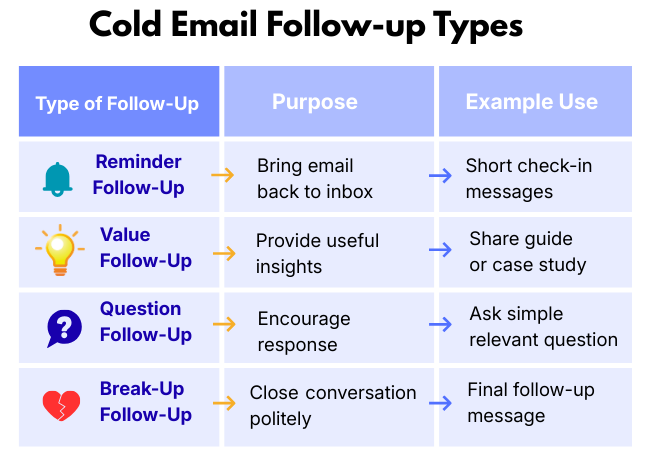
Not all follow-up emails should look the same. Sending identical reminders repeatedly can feel repetitive and reduce engagement. Instead, successful outreach campaigns use different types of follow-up emails, each designed to serve a specific purpose in the conversation.
By varying the type of follow-up message, you can keep the interaction natural, helpful, and engaging, which significantly improves reply rates.
Below are some of the most effective types of cold email follow-ups used by sales teams, marketers, and founders in B2B outreach campaigns.
7.1 : Reminder Follow-Ups
Reminder follow-ups are the simplest and most commonly used type of follow-up email. Their purpose is to bring your previous message back to the prospect’s attention.
Many professionals receive dozens or even hundreds of emails every day. Because of this, it is very common for an email to be missed, forgotten, or postponed for later review. A short reminder helps your message reappear in the prospect’s inbox without repeating the entire pitch.
A good reminder follow-up should be:
- Short and polite
- Non-pushy
- Easy to read quickly
Purpose of reminder follow-ups
- Bring your previous email back into the prospect’s inbox
- Give the prospect another opportunity to respond
- Increase visibility of your outreach
Example structure:
Hi [Name],
Just checking in to see if you had a chance to review my previous message.
I’d be happy to share a few ideas that could help improve your lead generation workflow.
Reminder emails are often effective because they respect the prospect’s time while keeping the conversation open.
7.2 : Value Follow-Ups
Value-based follow-ups are one of the most effective ways to increase engagement in cold email campaigns. Instead of simply reminding the prospect about your offer, these emails provide useful information, insights, or resources that help them solve a problem.
This approach positions you as a helpful expert rather than someone sending a generic sales message.
Examples of value you can provide:
- Industry insights or trends
- Short guides or educational resources
- Case studies from similar companies
- Best practices related to the prospect’s role
- Practical ideas they can apply in their business
For example, if your outreach is about improving sales prospecting, you might share a short guide explaining how businesses automate their lead generation workflows using modern tools.
Value-driven follow-ups help:
- Build trust and credibility
- Demonstrate expertise in your field
- Make the conversation more meaningful
Because these emails provide useful information, they often lead to more positive responses and deeper conversations.
7.3 : Question Follow-Ups
Question-based follow-ups are designed to encourage interaction and start a conversation. Instead of asking for a meeting directly, these emails ask a simple question that is easy for the prospect to answer.
Questions work well because they create a natural response trigger. When someone reads a question that relates to their work, they may feel inclined to respond or share their perspective.
Examples of effective follow-up questions:
- Would it be helpful if I shared how other marketing teams automate their prospecting process?
- Are you currently using any tools to manage your outreach campaigns?
- Is improving lead generation something your team is focusing on this quarter?
The goal of these questions is not to pressure the prospect but to invite them into a conversation.
Benefits of question follow-ups:
- Encourage engagement
- Make emails feel more conversational
- Increase response rates
- Help you understand the prospect’s needs
When used correctly, a simple question can transform a cold email into a meaningful business discussion.
7.4 : Break-Up Follow-Ups
Break-up emails are the final follow-up message in an outreach sequence. Their purpose is to politely close the conversation if the prospect has not responded.
This email typically acknowledges that the timing may not be right and gives the prospect an option to respond if they are interested in the future.
Interestingly, break-up emails sometimes generate responses because they create a psychological trigger. When people see that the conversation is ending, they may respond to keep the opportunity open.
A typical break-up follow-up might look like this:
Hi [Name],
I understand that this might not be the right time to discuss this.
If improving lead generation becomes a priority in the future, feel free to reach out anytime.
Break-up emails work well because they:
- Respect the prospect’s time
- Avoid appearing pushy or aggressive
- Leave a positive final impression
- Keep the door open for future opportunities
Even if the prospect does not reply immediately, they may remember your message later when the need becomes more relevant.
8. Why Using Multiple Follow-Up Types Improves Results
Using different types of follow-ups helps make your outreach more natural and engaging. Instead of repeating the same message multiple times, each email adds a new element to the conversation.
A well-balanced follow-up sequence may look like this:
Initial Email → Reminder → Value Email → Question Email → Break-Up Email
This structure helps businesses:
✔ Maintain consistent communication
✔ Provide useful information to prospects
✔ Build credibility during outreach
✔ Increase reply rates and engagement
When used strategically, these follow-up types help transform cold outreach into productive conversations and potential business opportunities.
9. Best Practices for Cold Email Follow-Ups
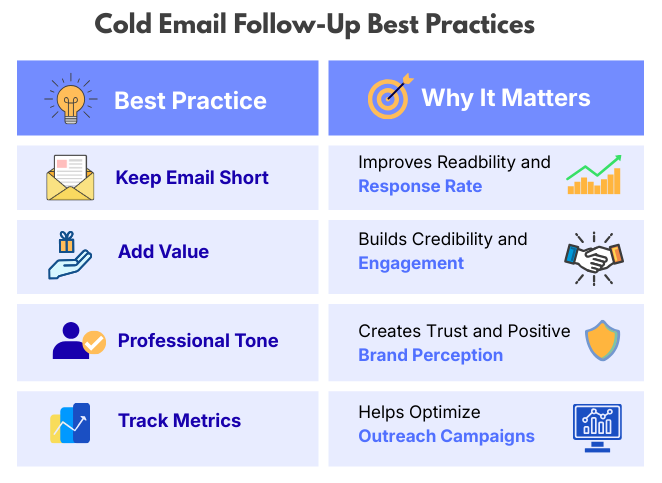
Following the right follow-up practices can significantly improve the success of your cold email campaigns. Many outreach efforts fail not because the offer is weak, but because the follow-up messages are poorly structured, too aggressive, or repetitive.
By applying a few proven best practices, businesses can create follow-up emails that feel professional, helpful, and worth responding to. These practices help maintain a positive impression while increasing the chances of starting meaningful conversations with prospects.
9.1 : Keep Follow-Ups Short and Easy to Read
Most professionals receive a large number of emails every day. Long follow-up messages can be overwhelming and may discourage recipients from reading the entire message.
For this reason, effective follow-up emails are usually short and concise, often consisting of one to three sentences. A brief message allows the recipient to quickly understand the purpose of the email and decide whether they want to respond.
Short emails also work well on mobile devices, where many professionals check their inbox during busy work schedules.
Tips for writing concise follow-ups:
- Focus on one clear message per email
- Avoid long explanations or multiple requests
- Use simple and direct language
Keeping follow-ups brief increases the likelihood that the prospect will read the message and engage with it.
9.2 : Add Value in Each Follow-Up
One of the biggest mistakes in cold outreach is sending repeated reminders without adding anything new. When follow-up emails contain the same message, prospects may feel that the outreach is automated or irrelevant.
Instead, each follow-up should introduce new value or a different perspective. This makes the conversation more meaningful and shows that you are genuinely trying to help.
Examples of value you can add:
- A short industry insight related to the prospect’s role
- A helpful guide or educational resource
- A brief case study or success example
- A practical idea they can apply in their business
Providing value in follow-up emails helps position you as a trusted expert rather than just another salesperson.
9.3 : Maintain a Professional and Respectful Tone
The tone of your follow-up emails plays an important role in how prospects perceive your message. Aggressive or pushy language can quickly damage your credibility and discourage responses.
Professional communication should always remain polite, respectful, and conversational.
Avoid phrases that create pressure, such as:
- “You need to respond quickly”
- “This is your last chance”
- “Why haven’t you replied yet?”
Instead, focus on creating a friendly and professional message that respects the prospect’s time.
A professional tone helps:
- Build trust with potential clients
- Create a positive brand impression
- Encourage natural conversations
Over time, consistent professional communication can strengthen your reputation and improve long-term outreach success.
10. Track Campaign Performance
Cold email outreach should not rely on guesswork. Tracking performance metrics allows businesses to understand what is working and identify areas for improvement.
Monitoring campaign data helps optimize your follow-up strategy and increase the effectiveness of future outreach campaigns.
Important metrics to track include:
Reply Rate
Measures how many recipients respond to your emails.
Open Rate
Indicates how many people open your email messages.
Conversion Rate
Shows how many prospects move forward to the next step, such as booking a meeting or requesting more information.
By analyzing these metrics, businesses can identify:
- Which follow-up emails perform best
- What messaging resonates with prospects
- How to improve campaign performance over time
Data-driven outreach strategies allow businesses to continuously refine their cold email campaigns and achieve higher engagement and better lead generation results.
To understand the full process behind sourcing and verifying leads, check out our LinkedIn lead generation workflow for small businesses article.
11. Common Cold Email Follow-Up Mistakes
Avoiding common mistakes can significantly improve your outreach results and protect your professional reputation. Below are some of the most common follow-up mistakes and how to avoid them.
11.1 : Sending Too Many Emails
Mistake:
Sending too many follow-ups in a short time can make your outreach look spammy and may annoy prospects.
Better approach:
Limit your outreach sequence to 4–5 emails including the initial message. This provides enough opportunities for a response without overwhelming the recipient.
11.2 : Repeating the Same Message
Mistake:
Many follow-ups simply repeat the same email again and again. This reduces interest and makes the outreach feel automated.
Better approach:
Each follow-up should add something new, such as:
- A useful insight
- A helpful resource
- A short case example
- A simple question to encourage conversation
11.3 : Ignoring Prospect Signals
Mistake:
Continuing to email prospects who have not shown interest after multiple attempts.
Better approach:
If there is no response after several follow-ups, it is best to politely end the sequence with a final follow-up email. Respectful communication helps maintain a positive brand impression.
Quick Summary
| Mistake | Better Approach |
|---|---|
| Sending too many emails | Limit sequence to 4–5 emails |
| Repeating the same message | Add new value in each follow-up |
| Ignoring prospect signals | End sequence respectfully |
Following these practices helps maintain professional outreach, better reply rates, and stronger brand credibility.
12 . How Automation Tools Improve Follow-Up Campaigns
Manual follow-ups can quickly become time-consuming and difficult to manage, especially when businesses are contacting dozens or hundreds of prospects. Tracking who has been contacted, when the next follow-up should be sent, and which prospects have replied can become overwhelming without a proper system.
This is why many businesses use cold email automation tools to streamline their outreach campaigns and maintain consistency.
12.1 : Schedule follow-up emails automatically
Automation tools allow you to create a complete follow-up sequence in advance. Once the campaign starts, the system automatically sends follow-up emails based on your chosen schedule, such as after 3 days or 7 days.
12.2 : Track email opens and replies
Most outreach platforms provide analytics that show when a prospect opens an email, clicks a link, or replies. These insights help businesses understand which messages are performing well and which ones need improvement.
12.3 : Pause sequences when prospects respond
Automation tools automatically stop the follow-up sequence when a prospect replies. This prevents sending unnecessary emails and ensures conversations can continue naturally.
12.4 : Personalize outreach at scale
Modern outreach platforms allow personalization using dynamic fields such as:
- First name
- Company name
- Industry
- Job title
This helps businesses send personalized emails to hundreds of prospects without writing every message manually.
12.5 : Manage campaigns from a single dashboard
Automation tools provide a central dashboard where teams can monitor campaign performance, manage lead lists, and track conversation progress.
Because of these benefits, automation tools allow businesses to maintain consistent outreach while saving significant time and effort.
13.How Follow-Ups Improve B2B Sales Results
Consistent follow-ups play a major role in successful B2B lead generation and sales outreach. Many potential deals are lost simply because businesses stop communicating after the first email.
Prospects are often busy, and they may overlook or forget to respond to the initial message. Follow-up emails provide additional opportunities to reconnect and restart the conversation.
Key ways follow-ups improve B2B sales performance
✔ Higher reply rates
Multiple follow-ups increase the chances that your message will be seen and considered.
✔ More qualified leads
Consistent communication helps identify prospects who are genuinely interested in learning more about your solution.
✔ Increased sales conversations
Follow-ups create opportunities to move the conversation toward discovery calls, demos, or meetings.
✔ Improved brand familiarity
Seeing your name multiple times in the inbox helps prospects remember your company and builds familiarity over time.
✔ Better timing for decision-makers
Sometimes the first email arrives at the wrong moment. Follow-ups give prospects another chance to engage when the timing is better.
✔ Higher conversion rates
Businesses that follow structured outreach processes often convert more prospects into customers because they maintain consistent communication.
When done professionally, follow-ups demonstrate persistence, professionalism, and genuine interest in helping the prospect, which are important factors in building long-term business relationships.
14. Conclusion
Cold email follow-up sequences are one of the most effective ways to improve outreach success.
Many prospects simply need a reminder or additional context before responding to an email.
By creating a structured follow-up strategy, businesses can:
- increase reply rates
- maintain consistent outreach
- build stronger sales pipelines
The key is to keep follow-ups short, valuable, and respectful.
When combined with the right prospecting tools and automation platforms, follow-up sequences become a powerful system for generating new business opportunities.
15. FAQs
How many follow-up emails should you send in a cold email campaign?
Most successful cold email campaigns include 3 to 5 follow-up emails after the initial outreach message. Sending multiple follow-ups increases the chances that your message will be noticed, especially since many prospects miss or overlook the first email. However, it is important to keep the sequence professional and avoid sending too many emails that may appear spammy.
What is the best timing for cold email follow-ups?
A common follow-up schedule used by many sales teams is:
Initial email – Day 1
First follow-up – Day 3
Second follow-up – Day 7
Third follow-up – Day 10
Final follow-up – Day 14
This timeline keeps your outreach visible while giving prospects enough time to respond.
Why are follow-up emails important in cold outreach?
Cold email follow-ups are important because many prospects do not respond to the first email. Follow-ups help remind recipients about your message and provide additional opportunities to start a conversation. In many B2B outreach campaigns, the majority of replies come from follow-up emails rather than the initial message.
What should you include in a cold email follow-up?
An effective follow-up email should be short, polite, and relevant. It can include:
A brief reminder of your previous message
Additional value or insight
A simple question to encourage response
A clear but non-pushy call to action
Follow-ups should focus on continuing the conversation rather than repeating the same message.
How long should a cold email follow-up be?
Cold email follow-ups should generally be short and concise, usually between 30 to 80 words. Busy professionals prefer quick messages that are easy to read. Keeping follow-ups brief increases the chances that recipients will read and respond.
Should you send a final break-up email in a follow-up sequence?
Yes, many outreach campaigns include a break-up email as the final follow-up. This message politely acknowledges that the prospect may not be interested at the moment and closes the conversation respectfully. Interestingly, break-up emails sometimes generate replies because they create a sense of finality.
Can cold email follow-ups be automated?
Yes, many businesses automate follow-up sequences using email outreach tools. These tools allow users to schedule follow-ups, track replies, and pause campaigns when prospects respond. Automation helps maintain consistent outreach while reducing manual effort.
What is the biggest mistake in cold email follow-ups?
One of the biggest mistakes is sending repetitive or overly aggressive follow-up emails. Each follow-up should add value or context instead of repeating the same message. Poor follow-ups can harm your reputation and reduce response rates.
Do follow-up emails really increase reply rates?
Yes. Multiple studies in B2B sales show that follow-up emails significantly increase reply rates. Many prospects respond only after the second or third follow-up because the initial email may have been overlooked or received at the wrong time.