Complete Lead Generation System for Small Businesses (2026 Guide)
Table of Contents
Why Most Small Businesses Struggle with Lead Generation
Small businesses face one core challenge:
👉 Getting consistent, qualified leads
Not just traffic. Not just clicks.
👉 But real prospects who convert into customers
The Real Problem
Most businesses try random tactics without a system:
• Inbound marketing (SEO, content) → takes time to show results
• Outbound marketing (cold email, outreach) → feels complex and technical
• Too many tools → no clear workflow
👉 The result: inconsistent lead generation and unpredictable growth
What’s Missing?
It’s not effort—it’s structure.
• No defined lead generation system
• No clear process from traffic → leads → conversion
• No alignment between tools, strategy, and execution
👉 Without a system, even good strategies fail
What You’ll Learn in This Guide
This guide will show you how to build a complete lead generation system for small businesses that is:
• Simple to implement (beginner-friendly setup)
• Structured and repeatable (not random tactics)
• Built for real results (leads, calls, conversions)
What This System Includes
By the end of this guide, you’ll understand:
• How to combine inbound and outbound marketing effectively
• The exact tools and workflow needed to generate leads
• How to create a predictable lead generation process
• How to move from inconsistent results → scalable growth
What Makes This Different
Instead of focusing on just one strategy, this guide shows you:
👉 How to build a complete system where:
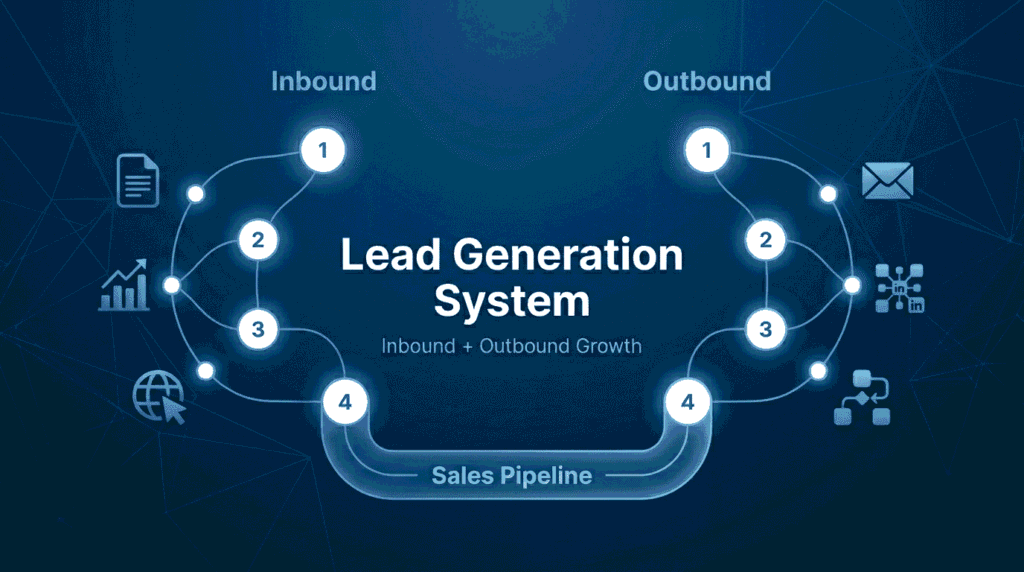
Traffic (inbound) + Outreach (outbound) = Consistent lead flow
Quick Reality Check
You don’t need:
• Complex funnels
• Large teams
• Expensive tools
👉 You need a clear, working lead generation system
This is exactly what you’re going to build next 👇
If you want to dive deeper into outbound lead generation, read our complete guide on building a cold email system for beginners.
Quick Summary : Lead Generation System for Small Businesses
• Leads = Traffic (Inbound Marketing) + Outreach (Outbound Marketing)
• Inbound builds long-term organic traffic, while outbound drives fast lead generation
• The best lead generation system combines both strategies for consistent results
• Tools + structured workflow = predictable and scalable growth
Quick Decision Shortcut
👉 Need leads fast? → Start with outbound marketing (cold email, outreach)
👉 Want sustainable growth? → Build inbound marketing (SEO, content)
👉 Want predictable results? → Combine inbound + outbound into one system
What Is a Lead Generation System?
A lead generation system for small businesses is a structured, repeatable process that turns unknown visitors into qualified leads—and leads into customers.
Instead of relying on random tactics, it creates a clear path from attention → interest → conversion.
What a Lead Generation System Actually Does
A complete system is designed to:
• Attract potential customers through inbound marketing (SEO, content, traffic)
• Capture lead information using forms, landing pages, or signups
• Engage and nurture prospects through outreach, follow-ups, and messaging
• Convert leads into customers through calls, demos, or offers
👉 It replaces guesswork with a predictable lead generation process
How the System Works
Traffic → Leads → Conversations → Customers
• Traffic comes from inbound marketing channels
• Leads are generated via forms or outbound outreach
• Conversations happen through email, calls, or messaging
• Conversions turn leads into paying customers
Key Characteristics of a High-Performing System
• Repeatable → works consistently over time
• Scalable → can grow with your business
• Measurable → track leads, conversions, and ROI
• Automated (partially) → reduces manual effort
👉 This is what separates a system from random marketing efforts
Without a System (Common Reality)
• Inconsistent lead flow
• No clear process
• Poor conversion rates
• Wasted time and budget
👉 Most small businesses struggle here
With a Lead Generation System
• Predictable pipeline of leads
• Better targeting and messaging
• Higher conversion rates
• Clear growth path
👉 This is how small businesses move from inconsistent growth → scalable results
Key Insight :
👉 A lead generation system is not just about getting leads
It’s about building a complete process that consistently turns attention into revenue.
Core Components of a Lead Generation System (Step-by-Step Breakdown)
A high-performing lead generation system for small businesses is built on a few core components that work together—not in isolation.
👉 When these components are aligned, you create a predictable, scalable lead generation workflow
1. Traffic (Inbound Marketing)
This is where your lead generation starts—bringing the right audience to your business.
What it includes:
• SEO-optimized blog content
• Educational resources and guides
• Social media distribution
👉 Goal: Attract organic, high-intent traffic
What Most Blogs Don’t Tell You
• Traffic alone ≠ leads
• You need intent-based content (problem-solving)
• Ranking for the wrong keywords = wasted effort
👉 Focus on buyer-intent keywords, not just traffic volume
Pro Tip
Create content that answers:
• “How to…”
• “Best tools for…”
• “Comparison guides…”
👉 These convert better into leads
2. Lead Sourcing (Outbound Marketing)
Instead of waiting for traffic, outbound helps you find and reach your ideal customers directly.
What it includes:
• Targeted prospect lists
• B2B lead databases
• Audience filtering (industry, role, company size)
👉 Goal: Generate qualified leads on demand
Unique Insight
Most beginners fail because:
• They target too broad an audience
• They don’t segment leads
👉 Better targeting = higher reply rates + better conversions
Pro Tip
Start with:
• Narrow niche
• Specific job roles
• Clear problem
👉 This improves outreach performance instantly
3. Lead Capture (Turning Visitors into Leads)
Getting traffic or leads is not enough—you need a system to capture and store them.
What it includes:
• Landing pages
• Lead forms
• Email opt-ins
• Lead magnets (guides, checklists)
👉 Goal: Convert visitors into usable leads
What Makes It High-Converting
• Clear value proposition
• Simple form (don’t ask too much)
• Strong CTA
👉 Friction kills conversions—keep it simple
Pro Tip
Instead of “Contact Us,” use:
👉 “Get a Free Strategy Guide”
👉 “Download Lead Generation Checklist”
4. Outreach & Follow-Up (Start Conversations)
This is where most of your actual lead generation happens, especially in outbound marketing.
What it includes:
• Cold email campaigns
• LinkedIn outreach
• Automated follow-up sequences
👉 Goal: Turn leads into conversations
Unique Insight (Critical)
Most conversions happen in:
👉 Follow-ups—not the first message
• 1st email = awareness
• 2nd/3rd follow-up = response
👉 Skipping follow-ups = losing leads
Pro Tip
Keep outreach:
• Personalized
• Short
• Problem-focused
👉 Avoid long sales emails
5. Conversion System (Leads → Customers)
This is where your system turns interest into revenue.
What it includes:
• Discovery calls
• Product demos
• Sales conversations
• Closing process
👉 Goal: Convert qualified leads into paying customers
What Most Small Businesses Miss
• No structured sales process
• No qualification step
• No clear offer
👉 Leads don’t convert without a clear next step
Pro Tip
Always guide leads toward:
👉 One action (call, demo, signup)
How These Components Work Together
👉 A complete lead generation system workflow looks like this:
Inbound Marketing → Traffic → Lead Capture
Outbound Marketing → Lead Sourcing → Outreach → Conversations → Conversion
Key Insight
👉 Each component alone is weak
👉 Combined, they create a powerful growth system
• Inbound builds trust and traffic
• Outbound creates speed and control
• Conversion system drives revenue
Simple System View:
Traffic (Inbound)
+
Lead Sourcing (Outbound)
→ Lead Capture → Outreach → Conversion
👉 This is your complete lead generation system for small businesses
Complete Lead Generation Workflow (Step-by-Step Guide)
This is the exact lead generation system workflow for small businesses—designed to help you move from no leads → consistent pipeline → scalable growth.
👉 Follow this step-by-step process to build a predictable lead generation system using inbound and outbound marketing
Step 1: Define Your Target Audience (Foundation of Everything)
Before tools, campaigns, or content—you need clarity.
What to define:
• Industry (e.g., SaaS, agencies, eCommerce)
• Job role (Founder, Marketing Manager, Sales Head)
• Company size (startup, SMB, enterprise)
👉 Goal: Identify your ideal customer profile (ICP)
High-Value Insight
Most campaigns fail because:
• Targeting is too broad
• Messaging is not relevant
👉 Narrow targeting = higher reply rates + better conversions
Pro Tip
Start with:
• One niche
• One role
• One problem
👉 Then expand later
Step 2: Build a Qualified Lead List
Now that you know your audience, you need data (leads).
Use tools like:
• Apollo.io
• Manual research or CSV imports
👉 Goal: Create a high-quality, targeted lead database
Unique Insight (Competitive Edge)
• Quality > quantity
• Bad data = poor deliverability + low replies
👉 Verified, relevant leads = better ROI
Pro Tip
Filter leads by:
• Industry + role
• Recent activity
• Company growth signals
Step 3: Set Up Your Outreach System
Now it’s time to activate your outbound lead generation system.
Use tools like:
• Instantly.ai
👉 Goal: Automate cold email campaigns at scale
What Most Beginners Miss
• Sending too many emails too fast
• Not setting up warm-up
👉 Deliverability = success factor
Pro Tip
Start with:
• 20–50 emails/day per inbox
• Gradually increase volume
Learn how to combine Apollo.io with cold email tools to build a scalable outbound system.
Step 4: Create High-Converting Email Sequences
This is where leads turn into responses and conversations
Basic structure:
• 1 personalized intro email
• 1–2 follow-ups
• Clear CTA
Unique Insight (Critical)
👉 Most replies come from follow-ups, not first emails
• Email 1 = introduction
• Email 2–3 = conversion
Pro Tip
Keep emails:
• Short (50–100 words)
• Personalized
• Problem-focused
👉 Avoid long sales pitches
Step 5: Capture Inbound Leads (Don’t Miss Passive Opportunities)
While outbound brings fast leads, inbound builds long-term lead generation
What to set up:
• SEO blog content
• Landing pages
• Lead magnets (checklists, guides)
👉 Goal: Convert website visitors into leads
High-Value Insight
Inbound works best when:
• Content matches your outbound audience
• Messaging is consistent
👉 Alignment = higher conversions
Step 6: Manage & Track Leads (System Control)
Without tracking, you lose opportunities.
Use CRM tools like:
• HubSpot CRM
👉 Goal: Organize, track, and manage your lead pipeline
What Most Small Businesses Miss
• No follow-up tracking
• Lost leads
• No visibility into pipeline
👉 CRM = control + consistency
Pro Tip
Track:
• Replies
• Status (contacted, interested, closed)
• Follow-ups
Step 7: Optimize & Scale the System
Once your system works, focus on improvement and growth
What to optimize:
• Targeting (better ICP)
• Email subject lines
• Messaging angles
• Sending volume
Unique Insight (Growth Lever)
👉 Scaling without optimization = wasted budget
• Test small → scale what works
• Data-driven decisions = better ROI
Pro Tip
Optimize one variable at a time:
• Subject line
• Opening line
• CTA
Complete Workflow (Simple View)
Target Audience → Lead List → Outreach → Replies → CRM → Conversion → Optimization
Key Insight
👉 This is not just a workflow—it’s a complete lead generation system for small businesses
• Outbound = fast results
• Inbound = long-term growth
• CRM = control
• Optimization = scale
Real Lead Generation System Flow (How It Works in Practice)
This is how a complete lead generation system for small businesses actually works when you combine inbound marketing + outbound marketing into one structured workflow.
👉 The goal is simple: create a predictable and scalable lead generation process
Inbound Marketing Flow (Long-Term Traffic Engine)
Content → Traffic → Leads
• Create SEO-optimized blog content targeting high-intent keywords
• Attract organic traffic from search engines
• Convert visitors using forms, CTAs, and lead magnets
👉 Outcome: A steady flow of inbound leads over time
Outbound Marketing Flow (Fast Lead Generation Engine)
Lead Source → Outreach → Replies → Conversations
• Build targeted lead lists using tools like Apollo.io
• Launch campaigns using platforms like Instantly.ai
• Send cold email outreach + follow-ups
• Generate replies and start conversations
👉 Outcome: Immediate lead generation and faster feedback
Combined System (High-Performance Growth Model)
When you combine both:
Inbound Traffic + Outbound Outreach = Predictable Lead Flow
• Inbound builds trust, authority, and long-term visibility
• Outbound creates speed, control, and consistent opportunities
• Together, they form a complete lead generation system
What Makes This System Powerful
Most competitors treat inbound and outbound separately.
High-performing systems combine:
• Content that supports outreach messaging
• Outreach that validates content ideas
• Shared audience targeting across both channels
👉 This alignment creates higher conversion rates and better ROI
Practical Example (Simple View)
Inbound:
Blog → SEO traffic → Lead capture
Outbound:
Apollo → Lead list → Instantly → Email campaign → Replies
👉 Combined:
Traffic + Outreach → Conversations → Customers
Key Insight
Inbound marketing = compounding growth
Outbound marketing = immediate results
👉 Together = consistent, scalable lead generation system
Why This Works for Small Businesses
• Reduces dependency on one channel
• Balances short-term results + long-term growth
• Creates a repeatable and predictable pipeline
For a detailed breakdown of inbound vs outbound marketing strategies, check out this complete comparison guide.
Real Example: How a Small Business Builds a Lead Generation System
Instead of theory, here’s what a practical lead generation system for small businesses looks like:
Simple Setup
• Use Apollo.io to create a targeted lead list
• Launch cold email campaigns using Instantly.ai
• Publish SEO-optimized blog content in your niche
• Capture leads using forms, landing pages, or lead magnets
What Happens in the First Few Weeks
• Outbound campaigns start generating early replies and conversations
• You begin identifying what messaging and targeting works
• Inbound content starts getting indexed and initial traffic
👉 Result: You move from no leads → early pipeline
What Happens Over Time
• Outbound continues generating consistent leads
• Inbound traffic grows and brings organic leads
• Messaging improves based on real data
👉 Result: A predictable and scalable lead generation system
Why This System Works
• Outbound marketing gives speed and feedback
• Inbound marketing builds long-term authority and traffic
• Combined, they create a balanced growth engine
Key Takeaway
👉 You don’t need complex funnels
With the right tools + workflow, you can build a
simple, repeatable lead generation system that scales over time
Best Tools for Lead Generation (Inbound + Outbound Stack)
To build a high-performing lead generation system for small businesses, you don’t need dozens of tools—you need the right tools for each stage.
👉 The goal is to create a simple, connected tool stack that supports your entire workflow:
Traffic → Leads → Outreach → Conversion
Inbound Marketing Tools (Traffic & Authority)
These tools help you attract organic traffic and inbound leads through content and SEO.
What to use:
• SEO tools → keyword research, ranking optimization, content planning
• Content platforms → blog publishing, landing pages, lead capture
• Analytics tools → track traffic, engagement, and conversions
👉 Goal: Build a long-term inbound lead generation engine
High-Value Insight
Most beginners focus on traffic—but:
👉 Traffic without intent = no leads
• Target buyer-intent keywords
• Create content that solves specific problems
👉 This improves conversion rates, not just traffic
Outbound Marketing Tools (Lead Generation & Outreach)
These tools help you generate targeted leads and run scalable outreach campaigns
Core tools:
• Apollo.io → for building qualified lead lists
• Instantly.ai → for cold email automation and outreach
👉 Goal: Create a predictable outbound lead generation system
See how Instantly.ai works for cold email automation and campaign scaling.
What Makes Outbound Tools Effective
• Accurate lead data = better targeting
• Email automation = scale outreach
• Deliverability features = higher inbox placement
👉 Tools don’t create results—how you use them does
Compare Smartlead.ai vs Instantly.ai pricing to choose the best tool for your needs.
Pro Tip
Start simple:
• One lead source
• One outreach tool
• One campaign
👉 Avoid overcomplicating your system early
Learn how to use Apollo.io for lead generation in this step-by-step guide.
CRM & Lead Tracking Tools (Pipeline Management)
Once leads start coming in, you need to organize and manage them
Use tools like:
• HubSpot CRM
👉 Goal: Track leads from first contact → conversion
What Most Small Businesses Miss
• Not tracking conversations
• Losing follow-ups
• No visibility into pipeline
👉 A CRM turns chaos into a structured sales process
Pro Tip
Track key stages:
• New lead
• Contacted
• Replied
• Qualified
• Closed
👉 This improves conversion rates and follow-up efficiency
Simple Tool Stack (Beginner-Friendly)
You don’t need complex setups to start:
• Inbound → Content + basic SEO tools
• Outbound → Apollo.io + Instantly.ai
• CRM → HubSpot CRM
👉 This is enough to build a complete lead generation system for small businesses
How These Tools Work Together
• Inbound tools → bring traffic and awareness
• Outbound tools → generate direct leads and conversations
• CRM → manages and converts leads into customers
👉 Together, they create a scalable and predictable lead generation system
Here’s a detailed workflow showing how to combine Apollo and cold email tools to build a scalable outreach system.
Key Insight
👉 The best lead generation systems are not tool-heavy—they are workflow-driven
• Tools support the process
• Strategy drives results
Cost Breakdown: Inbound vs Outbound Lead Generation
Understanding the cost of a lead generation system for small businesses is not just about tools—it’s about how time, money, and efficiency translate into ROI.
👉 The smartest approach is to balance inbound marketing (long-term) and outbound marketing (short-term)
Inbound Marketing Costs (Long-Term Investment)
What you invest:
• Content creation cost → blogs, SEO articles, landing pages
• Time investment → research, writing, ranking
• Optional tools → SEO tools, analytics platforms
👉 Goal: Build a sustainable inbound lead generation system
Real Value Insight
• Inbound marketing is slow initially
• But over time, cost per lead decreases significantly
👉 One high-ranking article can generate leads for months or years
Hidden Cost Most Ignore
• Time delay (3–6 months for results)
• Content consistency required
👉 Inbound fails when businesses quit too early
Outbound Marketing Costs (Direct Investment)
What you invest:
• Tool cost → cold email platforms, automation tools
• Lead data cost → prospect databases
• Setup effort → deliverability, campaign creation
👉 Goal: Generate immediate and predictable leads
Real Value Insight
• Outbound gives faster ROI
• You control volume, targeting, and messaging
👉 Ideal for testing offers and generating quick pipeline
Hidden Cost Most Ignore
• Poor targeting = wasted spend
• Bad deliverability = low inbox rates
👉 Execution quality directly impacts ROI
Inbound vs Outbound Cost Comparison
| Factor | Inbound Marketing | Outbound Marketing |
|---|---|---|
| Initial Cost | Low to medium (content-focused) | Medium (tools + lead data) |
| Time to Results | Slow (3–6 months) | Fast (1–7 days) |
| Cost Per Lead | Decreases over time | Depends on campaign performance |
| Scalability | Compounds over time | Scales with budget |
What This Means for Your Strategy
• Use inbound marketing to reduce long-term cost per lead
• Use outbound marketing to generate immediate results
👉 The best lead generation system combines both for balanced ROI
Key Insight (Most Important)
👉 The real cost is not just money—it’s:
• Time (inbound)
• Speed (outbound)
• Execution quality (both)
👉 A cheap system with poor execution = low ROI
👉 A balanced system = predictable and scalable growth
Pro Strategy (What High-Performing Businesses Do)
• Start with outbound marketing to validate offers
• Invest in inbound marketing for long-term traffic
• Optimize both to reduce overall cost per lead
Time to Results: Inbound vs Outbound Lead Generation
One of the biggest factors in choosing the right lead generation system for small businesses is understanding how quickly you can expect results.
👉 This is where inbound marketing and outbound marketing differ significantly
Inbound Marketing Timeline (Long-Term Growth)
Expected time: 3–6 months (sometimes longer)
What happens during this period:
• Content gets indexed by search engines
• SEO rankings gradually improve
• Traffic starts building consistently
• Leads begin to come in organically
👉 Reality: Results are slow at the start but compound over time
Real Value Insight
• First 30–60 days → little to no traffic
• 60–120 days → gradual visibility
• 3–6 months → consistent inbound leads
👉 Once it works, inbound becomes a low-cost, long-term lead source
Common Mistake
• Expecting instant results from SEO
• Stopping content too early
👉 Inbound fails when consistency is missing
Outbound Marketing Timeline (Fast Results)
Expected time: 1–7 days
What happens quickly:
• Campaigns go live
• Emails reach prospects
• Replies start coming in
• Conversations begin
👉 Reality: You can generate leads almost immediately
Real Value Insight
• Day 1–2 → campaign setup
• Day 3–5 → initial replies
• Week 1 → real conversations
👉 Outbound is ideal for quick lead generation and validation
Common Mistake
• Sending too many emails too fast
• Ignoring deliverability setup
👉 Poor execution = poor results
Inbound vs Outbound: Time Comparison
| Factor | Inbound Marketing | Outbound Marketing |
|---|---|---|
| Speed | Slow (3–6 months) | Fast (1–7 days) |
| Predictability | Increases over time | Immediate but variable |
| Effort Type | Content + SEO | Campaign setup + outreach |
| Long-Term Impact | High (compounding growth) | Depends on continuous effort |
What This Means for Your Strategy
• Use outbound marketing when you need fast results
• Use inbound marketing to build long-term growth
👉 The best lead generation system combines both:
Outbound → Immediate leads
Inbound → Sustainable pipeline
Key Insight
👉 Speed vs sustainability is the real difference
• Inbound = slow but scalable
• Outbound = fast but requires optimization
👉 Together, they create a balanced and predictable lead generation system
Beginner Setup Path: Build a Lead Generation System Step-by-Step
If you’re starting from scratch, don’t try to build everything at once.
👉 The most effective lead generation system for small businesses follows a simple path:
Start fast → Validate → Build → Scale
Step 1: Start with Outbound Marketing (Get Quick Wins)
Begin with outbound lead generation to generate results quickly.
What to do:
• Build a small, targeted lead list
• Launch a basic cold email campaign
• Focus on one offer and one audience
👉 Goal: Generate early leads and real conversations
Why This Matters
• You don’t have to wait months like inbound
• You get instant market feedback
• You understand what works (and what doesn’t)
Pro Tip
Keep it simple:
• One niche
• One message
• One campaign
👉 Simplicity = faster learning
Step 2: Validate Your Offer & Messaging
Once outreach starts, focus on learning from results
What to analyze:
• Who replies?
• Which messages work?
• What objections come up?
👉 Goal: Find a repeatable pattern that generates responses
Real Value Insight
Most beginners skip this step and fail.
👉 Success comes from:
• Testing
• Adjusting
• Improving messaging
Pro Tip
Track:
• Reply rate
• Positive responses
• Conversion to calls
👉 Data = better decisions
Step 3: Build Inbound Marketing (Scale Sustainably)
Now that you know what works, build inbound marketing around it
What to do:
• Create SEO blog content
• Target proven keywords (based on outreach insights)
• Build landing pages and lead magnets
👉 Goal: Turn validated insights into a long-term inbound lead generation system
Why This Works
• You’re not guessing topics
• You already know what your audience cares about
👉 This increases content performance and conversions
Pro Tip
Write content based on:
• Questions prospects asked
• Problems they mentioned
• Objections they raised
Step 4: Combine Inbound + Outbound (Build a Complete System)
This is where you move from tactics → system
What to do:
• Use inbound to generate traffic and trust
• Use outbound to reach prospects directly
• Align messaging across both channels
👉 Goal: Create a predictable and scalable lead generation system
High-Value Insight
• Inbound supports outbound (credibility)
• Outbound supports inbound (faster testing)
👉 Together = stronger results
Final System View
Outbound → Leads → Validation
Inbound → Traffic → Authority
👉 Combined → Consistent lead flow + scalable growth
Key Insight
👉 Don’t try to build everything at once
The best approach is:
Outbound first → Validate → Inbound → Scale
Final Takeaway
You don’t need complex funnels or advanced systems to start.
👉 You need a clear, step-by-step lead generation path
Follow this:
• Start simple
• Learn fast
• Scale smart
If you’re new, this beginner-friendly cold email setup guide will help you launch your first campaign.
Common Lead Generation Mistakes (That Kill Results)
Even with the right tools and strategies, most small businesses fail because of a few critical mistakes in their lead generation system.
👉 Fixing these alone can dramatically improve your results
1. Poor Targeting (Biggest Reason Campaigns Fail)
What happens:
• Targeting too broad an audience
• No clear ideal customer profile (ICP)
• Messaging doesn’t match the audience
👉 Result: Low reply rates, poor conversions, wasted effort
Real Value Insight
👉 Targeting > Tools > Messaging
Even the best tools won’t work if:
• You’re reaching the wrong people
• Your offer doesn’t match their needs
How to Fix It
• Define a clear niche + role + problem
• Focus on one segment at a time
• Use data (replies, engagement) to refine targeting
👉 Better targeting = higher ROI instantly
2. No Follow-Ups (Most Missed Opportunities)
What happens:
• Sending only one email
• Not following up with prospects
• Giving up too early
👉 Result: Lost leads and missed conversations
Real Value Insight
👉 Most replies come from:
2nd or 3rd follow-up—not the first message
• First email = awareness
• Follow-ups = conversion
How to Fix It
• Always include 2–3 follow-ups
• Space them over a few days
• Keep them short and relevant
👉 Consistent follow-up = more replies without extra leads
3. Overcomplicating Tools & Setup
What happens:
• Using too many tools
• Trying advanced automation too early
• Getting stuck in setup instead of execution
👉 Result: No campaigns launched, no leads generated
Real Value Insight
👉 Complexity slows down execution
• More tools ≠ better system
• Simpler workflows perform better (especially for beginners)
How to Fix It
Start with a simple stack:
• One lead source
• One outreach tool
• One CRM
👉 Focus on execution, not perfection
4. Ignoring Deliverability (Hidden Growth Killer)
What happens:
• Emails go to spam
• No warm-up setup
• Sending too many emails too fast
👉 Result: Low open rates, poor campaign performance
Real Value Insight
👉 If emails don’t reach the inbox, nothing else matters
Deliverability directly impacts:
• Open rates
• Replies
• ROI
How to Fix It
• Warm up email accounts properly
• Start with low sending volume
• Use clean, verified lead data
5. No Tracking or Optimization
What happens:
• Not tracking results
• No testing or improvement
• Repeating the same mistakes
👉 Result: Stagnant performance
Real Value Insight
👉 What gets measured gets improved
Without tracking:
• You don’t know what works
• You can’t scale effectively
How to Fix It
Track key metrics:
• Reply rate
• Positive responses
• Conversion rate
👉 Optimize one variable at a time
Key Takeaway
👉 Most lead generation failures are not strategy problems—they are execution mistakes
Fix these:
• Target better
• Follow up consistently
• Keep systems simple
• Protect deliverability
• Track and optimize
👉 And your lead generation system becomes predictable and scalable
Expected Results from a Lead Generation System
When you implement a structured lead generation system for small businesses, the results are not random—they become measurable, predictable, and scalable.
👉 But outcomes depend heavily on execution quality, consistency, and optimization
What You Can Realistically Expect
1. Consistent Lead Flow
• Regular inbound leads from SEO and content
• Daily/weekly leads from outbound outreach
• Reduced dependency on one channel
👉 Result: A steady pipeline instead of unpredictable spikes
2. Higher Reply Rates (Outbound Performance)
• Improved targeting → better engagement
• Personalized messaging → more responses
• Follow-up sequences → increased conversions
👉 Result: More conversations from the same number of leads
3. Predictable Growth (System-Based Scaling)
• Clear workflow → repeatable results
• Data tracking → continuous improvement
• Ability to scale campaigns gradually
👉 Result: A predictable and controllable lead generation process
What Drives These Results (Core Factors)
Your success depends on how well you execute:
• Lead quality → better targeting = better outcomes
• Deliverability → inbox placement impacts replies
• Messaging → clarity and relevance drive engagement
• Follow-ups → increase total conversions
• Consistency → systems work over time, not instantly
👉 Strong execution = strong ROI
Realistic Benchmarks (For Beginners)
While results vary, here’s what a basic system can achieve:
• Reply rates: 3% – 10%+ (with good targeting)
• Positive replies: 1% – 5%
• Lead flow: consistent weekly pipeline after setup
👉 These improve significantly with optimization
What Most Guides Don’t Tell You
• Results are not instant for inbound marketing
• Outbound works fast—but needs iteration
• First campaigns are for learning, not perfection
👉 Expect improvement over time, not overnight success
How to Maximize Your Results
• Start with a simple system (don’t overcomplicate)
• Test messaging and targeting continuously
• Optimize based on real data
• Combine inbound + outbound for balance
👉 This is how small businesses build a scalable lead generation system
Key Insight
👉 A lead generation system doesn’t guarantee results—
👉 It creates a framework where results become predictable
Final Takeaway
With the right system, you move from:
❌ Random leads
❌ Inconsistent growth
❌ Trial-and-error
👉 To:
✔ Consistent lead flow
✔ Measurable performance
✔ Scalable business growth
✅ Lead Generation System Checklist
Use this to make sure your system is complete:
• Defined target audience (ICP)
• Built a qualified lead list
• Set up cold email outreach system
• Created email sequences with follow-ups
• Published SEO content for inbound traffic
• Set up CRM for lead tracking
• Started optimizing campaigns
👉 If you checked all → your lead generation system is ready to scale
Next Steps to Build Your System
Want to go deeper?
• Learn how to generate leads using Apollo.io
• See how Instantly.ai works for cold email automation
• Explore complete outbound workflows and campaign setup
👉 These guides will help you implement this system step-by-step
Final Thought: Build a Simple, Scalable Lead Generation System
You don’t need a complex setup, expensive tools, or advanced automation to get started.
👉 What you need is a clear, structured lead generation system for small businesses
With tools like:
• Apollo.io for lead sourcing
• Instantly.ai for outreach and automation
👉 You can build a simple, effective system that generates consistent leads
What Actually Matters
• Clear targeting
• Consistent outreach
• Basic inbound support
• Continuous optimization
👉 Not complexity—but execution
Final Takeaway
Start simple.
Validate what works.
Then scale with confidence.
👉 Because the businesses that win are not the ones with the most tools—
👉 They’re the ones with the best systems and consistent execution
FAQs
-
What is a lead generation system for small businesses?
A lead generation system for small businesses is a structured process that helps attract, capture, and convert potential customers into leads using a combination of inbound marketing (SEO, content) and outbound marketing (cold email, outreach).
-
How can a small business generate leads consistently?
Small businesses can generate consistent leads by:
• Combining inbound and outbound marketing
• Using tools like Apollo.io for lead sourcing
• Running cold email campaigns with Instantly.ai
• Creating SEO content for long-term traffic
👉 Consistency comes from having a repeatable system, not random tactics -
What is better: inbound or outbound lead generation?
Both have different roles:
• Inbound marketing → builds long-term organic traffic
• Outbound marketing → generates fast leads
👉 The best approach is to combine both into one lead generation system -
How long does it take to see results from lead generation?
• Inbound marketing: 3–6 months
• Outbound marketing: 1–7 days
👉 Outbound gives quick results, while inbound builds sustainable growth -
What tools are needed for a lead generation system?
A simple beginner-friendly stack includes:
• Apollo.io → lead generation
• Instantly.ai → outreach automation
• HubSpot CRM → lead tracking -
Is cold email still effective for lead generation in 2026?
Yes, cold email is still effective when done correctly:
• Proper targeting
• Good deliverability setup
• Personalized messaging
• Follow-up sequences
👉 It remains one of the fastest ways to generate B2B leads -
How many emails should I send per day as a beginner?
Start with:
• 20–50 emails per day per inbox
• Gradually increase as deliverability improves
👉 Sending too many emails too fast can harm your results -
What are the most common lead generation mistakes?
• Poor targeting
• No follow-ups
• Ignoring deliverability
• Overcomplicating tools
👉 Fixing these can significantly improve performance -
How do I know if my lead generation system is working?
Track key metrics:
• Reply rate
• Positive responses
• Conversion rate
• Leads generated per week
👉 A working system shows consistent improvement over time -
Can I build a lead generation system without a big budget?
Yes. You can start with:
• Basic tools
• Simple outreach campaigns
• SEO content
👉 Focus on execution and consistency, not expensive tools