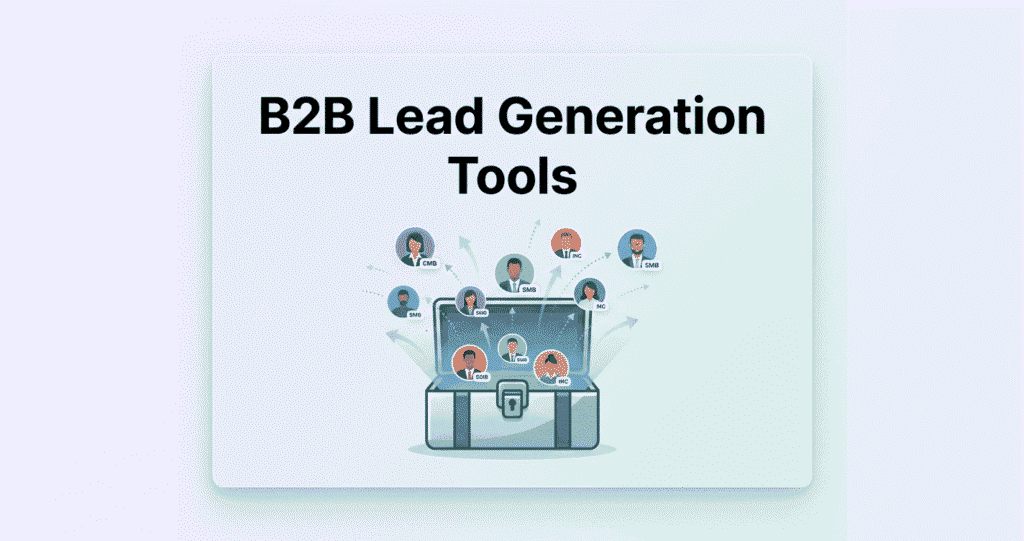
B2B Lead Generation Tools for Small Businesses
Generating consistent, high-quality leads is one of the biggest challenges for small businesses — especially when you’re competing with larger companies that have bigger budgets and dedicated sales teams.
Without the right tools, your lead generation process often becomes:
• Time-consuming and manual
• Inconsistent in results
• Difficult to scale
• Dependent on guesswork
You may struggle with:
• Finding the right prospects who actually need your product or service
• Reaching decision-makers instead of gatekeepers
• Managing outreach campaigns across multiple platforms
• Tracking conversations and follow-ups
• Converting leads into paying customers
👉 Over time, this leads to missed opportunities, lower conversions, and slow business growth.
Why This Problem Matters
Lead generation is not just about getting contacts — it’s about:
✔ Attracting the right audience
✔ Starting meaningful conversations
✔ Building trust
✔ Converting interest into revenue
👉 Without a system, even great products fail to reach the right customers.
How B2B Lead Generation Tools Help
This is where B2B lead generation tools become essential.
These tools are designed to simplify and automate the entire process, helping you:
✔ Discover targeted prospects based on your ideal customer profile
✔ Access accurate contact data (emails, roles, companies)
✔ Automate outreach campaigns (cold emails, follow-ups)
✔ Track engagement and performance
✔ Manage leads in one centralized system
👉 In short, they help you find, connect, and convert prospects efficiently, saving time while improving results.
Real Impact for Small Businesses
With the right tools, you can:
• Generate leads consistently instead of occasionally
• Reduce manual effort and operational costs
• Scale outreach without hiring a large team
• Improve conversion rates with better targeting
👉 This turns lead generation into a predictable and repeatable growth system.
What Are B2B Lead Generation Tools?
B2B lead generation tools are software platforms that help businesses identify, attract, and convert potential customers (other businesses).
They act as the backbone of your sales process by handling everything from prospecting to outreach and tracking.
Core Functions of Lead Generation Tools
Most tools help businesses:
• Identify potential customers based on industry, role, or company size
• Collect and verify contact information (emails, phone numbers)
• Automate outreach through email campaigns and sequences
• Track interactions such as opens, replies, and clicks
• Manage and organize leads in a structured way
🧠 Simple Explanation
👉 Think of these tools as a complete system for turning strangers into business opportunities.
Instead of manually searching for leads and sending emails one by one, these tools:
✔ Do the research for you
✔ Help you reach the right people
✔ Automate communication
✔ Track results
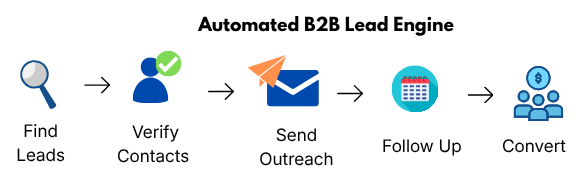
🔄 How the Process Works
A typical workflow looks like this:
Find Leads → Verify Contacts → Send Outreach → Follow Up → Convert
👉 Each step is supported by different tools or features.
💡Why This Matters for Beginners
If you’re new to B2B marketing:
✔ You don’t need a large team
✔ You don’t need advanced technical skills
✔ You can start small and scale gradually
👉 These tools give you a shortcut to building a professional lead generation system.
🔑 Key Takeaway
B2B lead generation tools are not just software — they are growth enablers.
👉 When used correctly, they help small businesses:
✔ Reach the right audience
✔ Automate repetitive tasks
✔ Increase conversions
✔ Build a scalable sales pipeline
Why Small Businesses Need Lead Generation Tools
Small businesses often operate with limited time, budget, and manpower — which makes consistent lead generation one of the biggest challenges.
Unlike large companies, you may not have:
• A dedicated sales team
• Expensive marketing campaigns
• Advanced CRM systems
👉 This makes it harder to find, reach, and convert the right prospects consistently.
⚠️ The Real Problem Without Tools
When you rely only on manual methods:
• Prospecting takes hours every day
• Outreach becomes inconsistent
• Follow-ups are often missed
• Lead tracking becomes messy
• Growth becomes unpredictable
👉 As a result, you may struggle to build a steady pipeline of potential customers.
How Lead Generation Tools Solve This
Using the right tools transforms your process from Manual effort → Automated system.
These tools help you:
✔ Save time on manual prospecting
Instead of searching for leads one by one, tools provide ready-to-use contact data and filters.
✔ Reach highly targeted audiences
You can filter prospects by industry, job role, company size, and more — ensuring better relevance.
✔ Improve conversion rates
With better targeting and personalization, your chances of getting replies and closing deals increase.
✔ Scale outreach without hiring large teams
Automation allows you to reach hundreds or thousands of prospects with minimal effort.
Real Business Impact
When implemented correctly, these tools help you:
• Generate leads consistently
• Reduce operational costs
• Increase sales efficiency
• Shorten the sales cycle
👉 This creates a predictable and scalable growth system for your business.
Example Scenario
A small business owner manually sending emails might reach:
👉 20–30 prospects per day
With lead generation tools:
👉 200–500+ targeted prospects per day
✔ With better tracking
✔ Better follow-ups
✔ Better results
Why This Is a Game-Changer
Lead generation tools don’t just save time — they multiply your output and efficiency.
They allow small businesses to:
✔ Compete with larger companies
✔ Operate like a structured sales team
✔ Focus on closing deals instead of chasing leads
Beginner Insight
Even if you’re just starting:
👉 You don’t need a big team
👉 You don’t need complex systems
✔ Start with 1–2 tools
✔ Build a simple workflow
✔ Scale as you grow
🔥 Key Takeaway
Lead generation tools are no longer optional — they are essential for modern business growth.
👉 They help small businesses work smarter, scale faster, and generate consistent results without increasing workload.
Best B2B Lead Generation Tools for Small Businesses
Choosing the right tools can completely transform your lead generation process — from manual effort to a scalable system.
Below are some of the most effective and beginner-friendly B2B lead generation tools, explained in a simple and practical way.
1. Apollo.io (All-in-One Prospecting + Outreach)
Apollo.io is one of the most powerful platforms for end-to-end B2B lead generation, combining data, outreach, and CRM features in one place.
Key Features
• Access to a large B2B contact database
• Built-in email finder and verifier
• Cold email outreach automation
• CRM and workflow integrations
What This Means in Real Use
Instead of using multiple tools, Apollo.io allows you to:
👉 Find leads
👉 Verify emails
👉 Reach out to prospects
👉 Manage conversations
—all within a single platform.
Example Use Case
Let’s say you want to target marketing managers in SaaS companies:
✔ Filter by industry + role
✔ Get verified email addresses
✔ Launch outreach campaigns
👉 Result: Faster prospecting + Better targeting
💡Why It’s Valuable
Apollo.io is ideal if you want:
✔ An all-in-one solution
✔ Less tool switching
✔ Better workflow efficiency
Best For
✔ Small businesses starting lead generation
✔ Teams that want everything in one platform
✔ Users who prefer simplicity over complexity
Explore this in-depth Apollo.io vs ZoomInfo comparison to understand features, pricing, and best use cases.
2. Instantly.ai (Cold Email Automation & Scaling)
Instantly.ai is designed specifically for scaling cold email outreach while maintaining high deliverability.
Key Features
• Connect unlimited email accounts
• AI-powered email warm-up system
• Inbox rotation for safe sending
• Automated campaign sequences and follow-ups
What This Means in Real Use
Instead of worrying about spam or limits, you can:
👉 Send emails at scale
👉 Maintain inbox health
👉 Automate follow-ups
👉 This makes it perfect for consistent outreach.
📌 Example Use Case
If you want to send 500–1000 emails per day:
✔ Distribute emails across multiple inboxes
✔ Automate follow-ups
✔ Track replies
👉 Result: Higher reply rates with safer scaling
💡Why It’s Valuable
Instantly focuses on one thing — getting your emails delivered and replied to.
✔ Better inbox placement
✔ Safer scaling
✔ Less technical setup
🎯Best For
✔ Businesses focused on cold email outreach
✔ Agencies managing multiple campaigns
✔ Users who want to scale quickly
For a deeper understanding of email outreach, explore this complete Instantly.ai review covering features, pricing, and use cases.
3. Hunter.io (Email Finder Tool)
Hunter.io is a simple and reliable tool for finding professional email addresses quickly.
🔑 Key Features
• Domain-based email search
• Built-in email verification
• Easy-to-use Chrome extension
🧠 What This Means in Real Use
You can:
👉 Find emails linked to a company domain
👉 Verify if they are valid
👉 Use them for outreach
—all in a few clicks.
📌 Example Use Case
If you want to contact a company:
✔ enter the website domain
✔ get a list of email addresses
✔ verify before sending
👉 Result: Faster and more accurate outreach
💡Why It’s Valuable
Hunter.io is perfect for:
✔ Quick prospecting
✔ Small teams
✔ Beginners
👉 It keeps things simple and efficient.
🎯 Best For
✔ Freelancers and Startups
✔ Small teams doing Manual outreach
✔ Users who need quick Email lookup
If you want accurate contact data, explore these Best Email finder tools for B2B lead generation.
4. Snov.io (Lead Generation + Outreach Automation)
Snov.io is a versatile platform that combines email finding, verification, and outreach automation in one tool.
🔑 Key Features
• Email finder and Verifier
• Automated drip campaigns
• Lead management dashboard
• Chrome extension for quick prospecting
🧠 What This Means in Real Use
Instead of switching between tools, you can:
👉 Find leads
👉 Verify emails
👉 Send automated campaigns
👉 Track responses
—all from a single dashboard.
📌 Example Use Case
If you’re targeting startup founders:
✔ Find emails using domain search
✔ Create a drip campaign
✔ Automate follow-ups
👉 Result: Consistent outreach with minimal manual work
💡 Why It’s Valuable
Snov.io is a strong alternative to all-in-one tools because:
✔ It combines prospecting + outreach
✔ It’s budget-friendly
✔ Easy to use for small teams
🎯 Best For
✔ Startups and growing Businesses
✔ Small teams managing outreach
✔ Users who want a balance of features and simplicity
5. ZoomInfo (Enterprise-Level Lead Data)
ZoomInfo is a premium platform known for its high-quality B2B data and advanced targeting capabilities.
🔑 Key Features
• Extensive B2B contact database
• Intent data (buying signals)
• Advanced segmentation filters
• Data enrichment
🧠 What This Means in Real Use
Instead of guessing who to contact, you can:
👉 Identify companies actively looking for solutions
👉 Target decision-makers directly
👉 Build highly qualified lead lists
📌 Example Use Case
If you’re selling SaaS tools:
✔ Find companies showing buying intent
✔ Filter by company size and tech stack
✔ Target decision-makers
👉 Result: Higher-quality leads and better conversions
💡 Why It’s Valuable
ZoomInfo focuses on data quality and precision targeting.
✔ Better lead accuracy
✔ Higher conversion potential
✔ Advanced targeting options
🎯 Best For
✔ Enterprise teams
✔ High-budget businesses
✔ Companies focused on high-value deals
6. Lusha (Simple & Accurate Contact Data)
Lusha is known for its accuracy and ease of use, especially for finding direct contact details.
🔑 Key Features
• Contact enrichment
• LinkedIn integration
• Simple interface
• Quick data access
🧠 What This Means in Real Use
You can:
👉 Find contact details directly from LinkedIn
👉 Enrich lead data instantly
👉 Build targeted contact lists
📌 Example Use Case
While browsing LinkedIn:
✔ Use Lusha extension
✔ Extract contact details
✔ Save leads for outreach
👉 Result: Fast and efficient prospecting
💡 Why It’s Valuable
Lusha is perfect for:
✔ Quick lead generation
✔ Accurate contact data
✔ Simple workflows
🎯 Best For
✔ Recruiters and Sales reps
✔ Small teams
✔ LinkedIn-based prospecting
🔥 Final Insight
👉 These tools are powerful individually — but even better together.
💡 Best Combination Strategy:
✔ Apollo.io / ZoomInfo → Lead database
✔ Hunter.io / Lusha → Email verification & enrichment
✔ Instantly.ai / Snov.io → Outreach & automation
👉 This creates a complete B2B lead generation system
Key Takeaway
The best tool depends on your goal:
✔ Need data → ZoomInfo / Apollo
✔ Need outreach → Instantly / Snov
✔ Need quick emails → Hunter / Lusha
👉 Smart businesses don’t rely on one tool — they build a stack that works together.
How to Choose the Right B2B Lead Generation Tool
Choosing the right tool is not about picking the most popular option — it’s about selecting what fits your business goals, workflow, and stage of growth.
Different tools solve different problems. Understanding this will help you avoid wasting time and money.
🧠 Identify Your Primary Goal
Start by asking:
👉 What is my biggest challenge right now?
• Finding leads?
• Getting email contacts?
• Sending outreach campaigns?
• Scaling results?
👉 Your answer determines the right tool.
🔍 If You Need Lead Data (Prospecting)
Use tools like:
• Apollo.io
• ZoomInfo
These tools help you:
✔ Find targeted prospects
✔ Access verified business contacts
✔ Filter leads by role, industry, and company size
👉 Best for: building a high-quality lead list
📧 If You Need Email Outreach & Automation
Use tools like:
• Instantly.ai
These tools help you:
✔ Send cold emails at scale
✔ Automate follow-ups
✔ Improve deliverability
👉 Best for: Turning leads into conversations
🔎 If You Need Simple Email Lookup
Use tools like:
• Hunter.io
These tools help you:
✔ Find email addresses quickly
✔ Verify contact details
✔ Support manual outreach
👉 Best for: Quick prospecting and Small-scale campaigns
🔄 Real Strategy (What Actually Works)
👉 Most successful businesses don’t rely on just one tool.
Instead, they combine tools based on workflow:
✔ Lead database → For finding prospects
✔ Email finder → For verification
✔ Outreach tool → For sending emails
👉 This creates a complete and efficient lead generation system
⚠️ Common Mistake to Avoid
❌ Choosing a tool based only on features
❌ Using one tool for everything
❌ Ignoring workflow integration
👉 Always choose tools based on how they work together
🔑 Key Takeaway
The right tool is not the one with the most features — it’s the one that fits your process and helps you get results faster.
⚙️ Complete B2B Lead Generation Workflow
To understand how these tools work together, here’s a simple and effective workflow:
🔄 Step-by-Step Process
Find Leads → Verify Emails → Send Outreach → Follow Up → Convert
🧠 What Each Step Means
✔ Find Leads
Use tools like Apollo.io or ZoomInfo to identify your ideal prospects.
✔ Verify Emails
Use tools like Hunter.io to ensure email accuracy and reduce bounce rates.
✔ Send Outreach
Use Instantly.ai to send personalized cold emails at scale.
✔ Follow Up
Automate follow-ups to increase reply rates (most replies come here).
✔ Convert Leads
Turn interested prospects into calls, demos, or customers.
📌 Example Workflow (Real Scenario)
Let’s say you run a digital marketing service:
- Find business owners using Apollo.io
- Verify emails with Hunter.io
- Send cold emails using Instantly.ai
- Follow up automatically
- Book calls and close deals
👉 Result: Consistent lead generation system
Lead Tools Stack Flow:
Apollo → Hunter → Instantly → Follow-Up → Conversion
💡 Why This Workflow Works
✔ Structured and repeatable
✔ Easy to scale
✔ Reduces manual effort
✔ Improves conversion rates
👉 It turns random outreach into a Predictable Business System
🔥 Key Takeaway
Lead generation is not about tools alone — it’s about how you use them together.
👉 When you combine the right tools with the right workflow, you create a powerful system for consistent business growth.
Best Practices for Using Lead Generation Tools
Using the right tools is important — but how you use them determines your actual results.
To get consistent leads and better conversions, follow these proven best practices:
🎯 1. Target a Specific Audience
Instead of reaching out to everyone, focus on a well-defined ideal customer profile (ICP).
👉 Narrow down by:
• Industry
• Job role
• Company size
• Location
✔ This improves relevance
✔ Increases reply rates
✔ Reduces wasted effort
✉️ 2. Personalize Your Outreach
Generic messages rarely get replies.
👉 Add personalization like:
• Recipient’s name
• Company details
• Specific pain points
✔ Makes your email feel human
✔ Builds trust instantly
✔ Increases engagement
🔁 3. Use Follow-Ups Consistently
Most replies don’t come from the first email — they come from follow-ups.
👉 Best practice:
• Send 2–4 follow-ups
• Space them over a few days
• Keep them short and polite
✔ Improves response rates significantly
✔ Keeps you top of mind
🧪 4. Test Different Strategies
What works for one audience may not work for another.
👉 Test variations of:
• Subject lines
• Email copy
• Call-to-action
• Sending times
✔ Helps you identify what works best
✔ Improves campaign performance over time
📊 5. Track Performance Metrics
Always measure your results to improve.
👉 Track key metrics like:
• Open rates
• Reply rates
• Bounce rates
• Conversion rates
✔ Helps you optimize campaigns
✔ Shows what’s working (and what’s not)
🔄 6. Build a Repeatable System
Instead of random campaigns:
✔ Create a structured workflow
✔ Document what works
✔ Scale successful strategies
👉 This turns lead generation into a predictable growth engine
🔑 Key Insight
👉 Tools alone don’t generate results — strategy + execution does.
When used correctly, these tools can:
✔ Save time
✔ Increase efficiency
✔ Generate consistent leads
⚠️ Common Mistakes to Avoid
Even with the best tools, small mistakes can lead to poor results or wasted effort.
Avoid these common pitfalls:
❌ 1. Targeting the Wrong Audience
If your targeting is off:
• Your emails won’t be relevant
• Reply rates will be low
• Conversions will suffer
👉 Always define your audience before starting outreach.
❌ 2. Sending Generic Emails
Copy-paste emails are easy to ignore.
👉 Common signs:
• No personalization
• Vague messaging
• Overly salesy tone
✔ Fix: make emails specific, relevant, and value-driven
❌ 3. Not Verifying Email Addresses
Sending to invalid emails can:
• Increase bounce rates
• Damage your sender reputation
• Reduce deliverability
👉 Always verify emails before sending.
❌ 4. Ignoring Follow-Ups
Stopping after one email is a major mistake.
👉 Most prospects:
• Are busy
• Forget to reply
• Need reminders
✔ Follow-ups significantly increase success rates.
❌ 5. Relying on One Tool Only
No single tool does everything perfectly.
👉 Limitation examples:
• One tool may lack data
• Another may lack automation
✔ Best approach: Combine tools for better results.
❌ 6. Focusing Only on Volume, Not Quality
Sending more emails doesn’t guarantee better results.
👉 Poor targeting + high volume = low conversions
✔ Focus on:
• Quality leads
• Relevant messaging
• Proper segmentation
🔑 Key Takeaway
Avoiding these mistakes can:
✔ Improve deliverability
✔ Increase reply rates
✔ Boost conversions
👉 Small improvements in strategy can lead to big results over time
FAQs
-
What are B2B lead generation tools?
B2B lead generation tools are software platforms that help businesses find potential customers, collect contact data, automate outreach, and convert leads into paying clients.
-
What is the best B2B lead generation tool for small businesses?
The best tool depends on your goal. All-in-one platforms like Apollo.io are great for prospecting, while tools like Instantly.ai are ideal for scaling outreach campaigns.
-
Do I need multiple tools for lead generation?
In most cases, yes. Many businesses combine tools for better results—for example, one tool for finding leads, another for verifying emails, and another for outreach automation.
-
Are B2B lead generation tools worth it for small businesses?
Yes, these tools save time, improve targeting, and increase conversion rates, making them a valuable investment for consistent business growth.
-
How do B2B lead generation tools improve conversion rates?
They help you target the right audience, personalize outreach, and automate follow-ups—leading to higher engagement and better chances of closing deals.
-
What is the difference between lead generation and lead nurturing?
Lead generation focuses on finding new prospects, while lead nurturing involves building relationships and guiding those prospects toward becoming customers.
-
Can beginners use B2B lead generation tools?
Yes, many tools are beginner-friendly and offer simple interfaces, automation features, and easy setup, making them accessible even without technical skills.
-
How much do B2B lead generation tools cost?
Pricing varies depending on features and scale. Some tools offer affordable plans for small businesses, while advanced platforms may cost more for premium data and automation.
-
What is the best strategy for using lead generation tools?
The best strategy is to combine tools with a clear workflow: find leads, verify contacts, send personalized outreach, follow up consistently, and track performance.
-
How much do B2B lead generation tools cost?
Pricing varies depending on features and scale. Some tools offer affordable plans for small businesses, while advanced platforms may cost more for premium data and automation.
-
What is the best strategy for using lead generation tools?
The best strategy is to combine tools with a clear workflow: find leads, verify contacts, send personalized outreach, follow up consistently, and track performance.
-
How can I get more replies from cold emails?
To improve reply rates, focus on personalization, keep messages short and relevant, use a clear call-to-action, and send follow-ups consistently.
-
Are email finder tools accurate?
Most modern tools provide high accuracy, especially when combined with email verification features. However, it’s always best to verify emails before sending campaigns.
-
Can I automate my entire lead generation process?
Yes, many tools allow automation of prospecting, outreach, follow-ups, and tracking. However, personalization and strategy are still essential for best results.
Conclusion: Turn Tools Into a Lead Generation System
B2B lead generation tools are no longer optional — they are essential for small businesses that want to grow consistently in a competitive market.
On their own, these tools help you:
✔ Find accurate and targeted prospects
✔ Automate outreach and follow-ups
✔ Save time on manual work
✔ Improve campaign performance
But the real power comes when you use them together as a system.
🔄 The Winning Formula
Success doesn’t come from using more tools — it comes from using the right combination strategically:
✔ A lead database to find prospects
✔ An email finder to verify contacts
✔ An outreach tool to connect and follow up
👉 This creates a complete lead generation engine that works continuously in the background.
📈 What This Means for Your Business
When implemented correctly, you can:
• Generate leads consistently (not randomly)
• Build a predictable sales pipeline
• Increase reply and conversion rates
• Scale your outreach without increasing workload
👉 Instead of chasing leads, you start attracting and converting them systematically.
💡 Final Insight
Many small businesses fail not because of poor tools — but because of:
❌ Lack of strategy
❌ Inconsistent execution
❌ No clear workflow
👉 Fixing these can completely change your results.
What You Should Do Next
If you’re just getting started:
✔ Pick 1–2 tools based on your needs
✔ Define your target audience clearly
✔ Start with simple outreach campaigns
✔ Track results and improve gradually
👉 Don’t try to do everything at once — start small, then scale smartly.
🔥 Final Takeaway
B2B lead generation tools are not just software — they are growth enablers.
👉 When combined with the right strategy, they help you:
✔ Work smarter, not harder
✔ Compete with bigger companies
✔ Build a scalable and predictable business
👉 Ready to start generating consistent leads?
Begin with:
✔ A lead generation tool (to find prospects)
✔ An outreach tool (to connect and convert)
👉 Build your system, test your approach, and scale what works.
💡 The sooner you implement the right system, the faster you’ll start seeing real business results.